Daily Routine & Sleep for Toddlers (0–3 Years)

Daily Routine & Sleep for Toddlers (0–3 Years)

The early years of a child’s life are full of rapid growth, learning, and development. For toddlers aged 0–3 years, having a consistent daily routine and healthy sleep habits plays a crucial role in their physical, emotional, and cognitive well-being.

Why Routine Matters

A predictable daily routine helps toddlers feel safe and secure. Knowing what comes next—feeding, playtime, naps, or bedtime—reduces anxiety and tantrums while encouraging better behavior. Routine also supports brain development, helping children understand time, structure, and expectations.

Building a Balanced Daily Routine

A toddler’s day should include a healthy mix of feeding, play, rest, and bonding time. Mornings are ideal for active play, tummy time, or outdoor walks. As the day progresses, quieter activities like reading, music, or simple puzzles help toddlers gradually wind down. Mealtimes should happen at regular intervals to support digestion and energy levels.

[BMIAKC_kid_calc lang=”English” id_calc=”e1772211112″ units=”both” ]

Understanding Toddler Sleep Needs

Sleep requirements change as toddlers grow. Newborns may sleep up to 14–17 hours a day, while 1–3-year-olds typically need 11–14 hours, including naps. Adequate sleep supports immune health, emotional regulation, memory, and physical growth.

Establishing Healthy Sleep Habits

A consistent bedtime routine is key to better sleep. Activities like a warm bath, gentle massage, reading a book, or soft lullabies signal to your toddler that it’s time to rest. Keep bedtime and wake-up times consistent, even on weekends, to regulate their internal clock.

Creating a Sleep-Friendly Environment

Ensure the sleep space is calm, quiet, and comfortable. Dim lighting, a cool room temperature, and minimal noise help toddlers fall asleep faster and stay asleep longer. Limiting screen exposure before bedtime is especially important, as screens can interfere with sleep patterns.

Supporting Better Sleep

Sleep regressions, night wakings, and resistance to naps are common in toddlers. Patience, reassurance, and consistency are essential. Avoid sudden changes in routine, and respond calmly to nighttime awakenings to help your child feel secure.

Final Thoughts

A well-structured daily routine combined with healthy sleep habits lays a strong foundation for your toddler’s overall development. With consistency, care, and a little flexibility, you can help your child grow into a happy, well-rested little human.

Frequently Asked Questions (FAQs)

What is the ideal bedtime for a toddler?

A consistent bedtime helps regulate your toddler’s internal clock. Most toddlers do best when put to bed around the same time each night, often between early evening and just after dinner. Sticking to this daily routine — even on weekends — makes it easier for them to fall asleep and wake up naturally.

Effective bedtime routines are predictable but not too long — typically 20–45 minutes. This gives kids time to wind down without dragging out activities that can stimulate them instead of calming them. Common steps include bathing, brushing teeth, putting on pajamas, and reading a quiet story before lights out.

Choose calming, predictable activities like a warm bath, brushing teeth, putting on pajamas, reading a bedtime story, or singing a lullaby. These activities signal that the day is ending and prepare both the body and mind for restful sleep

Encourage your child to go to bed when drowsy but still awake instead of already asleep in your arms. This helps them learn to self-soothe and fall asleep on their own — an important skill for longer, uninterrupted sleep.

Resistance is common and can be reduced with consistency and calm leadership. Maintain the same sequence of activities each night, keep the environment calm and dimly lit, and avoid stimulating activities like screen time right before bed. Giving toddlers limited choices within the routine (like picking which story to read) can also make them feel more in control.

Yes. Regular daytime naps help toddlers sleep better at night. However, avoid very late afternoon naps, as these can make it harder for them to feel tired at bedtime. Consistent nap scheduling supports healthy overall sleep patterns

Occasional night waking can be normal. But if your toddler consistently struggles to fall back asleep, avoid screens and keep responses calm and soothing so they can learn to self-settle again. If problems persist despite a solid routine, it may help to consult a pediatrician.

A consistent bedtime helps regulate your toddler’s internal clock. Most toddlers do best when put to bed around the same time each night, often between early evening and just after dinner. Sticking to this daily routine — even on weekends — makes it easier for them to fall asleep and wake up naturally.

Effective bedtime routines are predictable but not too long — typically 20–45 minutes. This gives kids time to wind down without dragging out activities that can stimulate them instead of calming them. Common steps include bathing, brushing teeth, putting on pajamas, and reading a quiet story before lights out.

Choose calming, predictable activities like a warm bath, brushing teeth, putting on pajamas, reading a bedtime story, or singing a lullaby. These activities signal that the day is ending and prepare both the body and mind for restful sleep

Encourage your child to go to bed when drowsy but still awake instead of already asleep in your arms. This helps them learn to self-soothe and fall asleep on their own — an important skill for longer, uninterrupted sleep.

Resistance is common and can be reduced with consistency and calm leadership. Maintain the same sequence of activities each night, keep the environment calm and dimly lit, and avoid stimulating activities like screen time right before bed. Giving toddlers limited choices within the routine (like picking which story to read) can also make them feel more in control.

Yes. Regular daytime naps help toddlers sleep better at night. However, avoid very late afternoon naps, as these can make it harder for them to feel tired at bedtime. Consistent nap scheduling supports healthy overall sleep patterns

Occasional night waking can be normal. But if your toddler consistently struggles to fall back asleep, avoid screens and keep responses calm and soothing so they can learn to self-settle again. If problems persist despite a solid routine, it may help to consult a pediatrician.

Choosing the Right School Board: School Admission Guide for Parents

Choosing the right school and education board is one of the most important decisions in a child’s academic journey. From understanding admission procedures to selecting the appropriate board, parents often find themselves overwhelmed. This guide simplifies the process and helps you make an informed choice for your child’s future.

Understanding the School Admission Process

School admissions usually begin several months before the academic year starts. The process may include filling out application forms, submitting required documents, attending interaction sessions, and sometimes entrance assessments. Parents should keep track of admission timelines, eligibility criteria, and age requirements to avoid last-minute stress.

Key documents commonly required include birth certificates, address proof, previous academic records, and transfer certificates. Early preparation ensures a smooth admission experience.

Along with admissions, ensuring your child’s safety matters — check out our toddler safety tips.

Types of School Boards in India

India offers a variety of education boards, each with its own curriculum and teaching approach:

  • CBSE (Central Board of Secondary Education): Focuses on a structured syllabus with national-level competitive exam preparation.

  • ICSE (Indian Certificate of Secondary Education): Known for its detailed curriculum and strong emphasis on English and overall development.

  • State Boards: Follow state-specific curricula and are often preferred for regional language focus and affordability.

  • International Boards (IB / Cambridge): Offer global exposure, inquiry-based learning, and international recognition.

Choosing the right board depends on your child’s learning style, long-term goals, and adaptability.

Factors to Consider While Choosing a School

Apart from the board, parents should evaluate infrastructure, teaching quality, student-teacher ratio, extracurricular activities, safety measures, and distance from home. A balanced environment that supports both academics and personal growth is essential.

Choosing the right school is part of thoughtful parenting — explore our parenting support guides for more insights.

[fc-walking-test]

Tips for Parents

  • Start researching schools at least a year in advance

  • Attend school open houses or virtual tours

  • Understand the curriculum and assessment pattern

  • Prioritize your child’s comfort and learning needs

Final Thoughts

School admission and board selection play a crucial role in shaping a child’s educational foundation. By staying informed and proactive, parents can ensure their child receives the right start, paving the way for academic success and holistic development.

Primary Classes (1–5): Building the Strong Foundation for Your Child’s Future

Primary class study material helps children build strong basics in Maths, English, Hindi, and EVS. At MomSaathi, we provide free worksheets and notes for Class 1 to 5 students.

Primary education plays a crucial role in shaping a child’s academic journey and overall personality. Classes 1 to 5 are the years when children develop essential learning skills, values, and confidence that stay with them for life. A strong foundation during these early school years helps students succeed not only in academics but also in social and emotional development.

Importance of Primary Classes (1–5)

Primary classes focus on nurturing curiosity, creativity, and a love for learning. During this stage, children transition from basic recognition skills to structured learning. Subjects such as Mathematics, English, Environmental Studies, and regional languages help improve logical thinking, communication, and awareness of the world around them.

Well-designed primary education encourages children to ask questions, explore ideas, and develop problem-solving abilities. It also helps build discipline, responsibility, and teamwork through classroom activities and group learning.

Curriculum Focus in Primary Education

The curriculum for Classes 1–5 is designed to be child-centric and activity-based. Instead of rote learning, students are encouraged to understand concepts through examples, stories, projects, and practical exercises.

Key learning areas include:

  • Language Skills: Reading, writing, vocabulary, and communication

  • Mathematics: Numbers, basic operations, reasoning, and patterns

  • Environmental Studies: Nature, society, health, and surroundings

  • Creative Learning: Art, craft, music, and physical education

This balanced approach ensures overall growth and keeps children engaged and motivated.

Parenting Styles & Discipline: Finding What Works for Your Family

Parenting doesn’t come with a manual, and discipline is one of the areas where many parents feel the most pressure. Should you be strict or gentle? Set firm rules or let kids figure things out on their own? The truth is, discipline isn’t about punishment—it’s about teaching. Understanding different parenting styles can help you choose an approach to discipline that supports your child’s growth while still maintaining healthy boundaries.

The Four Main Parenting Styles

Psychologists generally describe four primary parenting styles, each with a different approach to discipline and behavior management.

1. Authoritative Parenting
Often considered the most balanced style, authoritative parents combine warmth with clear expectations. Rules are explained, not just enforced, and discipline focuses on guidance rather than punishment. For example, if a child breaks a rule, the parent discusses what went wrong and applies a fair consequence. Children raised this way often develop strong self-control, confidence, and social skills.

2. Authoritarian Parenting
This style emphasizes obedience and strict rules, with little room for discussion. Discipline is often punitive—“because I said so” is a common phrase. While this approach can produce well-behaved children in the short term, it may also lead to fear, low self-esteem, or difficulty making independent decisions later in life.

3. Permissive Parenting
Permissive parents are warm and loving but tend to avoid setting firm boundaries. Discipline is minimal, and children often have significant freedom to make their own choices. While kids may feel emotionally supported, they can struggle with self-discipline, authority, and limits because expectations are unclear.

4. Uninvolved Parenting
This style is marked by low responsiveness and low demands. Parents provide basic needs but are largely detached from their child’s emotional or behavioral development. Lack of consistent discipline and guidance can leave children feeling unsupported and may negatively impact their development.

Discipline as Teaching, Not Punishment

Regardless of parenting style, effective discipline works best when it’s viewed as a teaching tool. Discipline comes from the word disciple, meaning “to teach or guide.” Instead of focusing on what children did wrong, healthy discipline helps them understand what they can do better next time.

Key principles of constructive discipline include:

  • Consistency: Children feel more secure when rules and consequences are predictable.

  • Age-appropriate expectations: A toddler and a teenager need very different types of guidance.

  • Natural and logical consequences: Letting kids experience the results of their choices (when safe) can be more effective than punishment.

  • Emotional connection: Correcting behavior works best when children feel heard and respected.

Blending Styles to Fit Your Family

Most parents don’t fit perfectly into one category—and that’s okay. Many families naturally blend approaches depending on the situation, the child’s temperament, and cultural values. What matters most is being intentional. Ask yourself: Does my approach help my child learn responsibility, empathy, and self-control?

Discipline should evolve as children grow. What works for a preschooler won’t necessarily work for a teenager. Staying flexible, reflective, and open to learning helps parents adjust their strategies over time.

Final Thoughts

There is no single “perfect” parenting style, but discipline rooted in respect, consistency, and connection tends to be the most effective in the long run. By understanding different parenting styles and focusing on teaching rather than punishing, parents can guide their children toward becoming confident, responsible, and emotionally healthy adults.

Sibling Relationships: How to Build Strong Bonds Between Brothers and Sisters

Edited by: MomSaathi Editorial Team

Reviewed by: Based on relevant research and trusted global sources

Relationships with siblings are some of the longest-lasting connections in a person’s life. From childhood to adulthood, brothers and sisters play a crucial role in emotional development, social skills, and overall family dynamics.

Learning how to help siblings get along not only reduces conflicts but also builds strong bonds that can last a lifetime.

Why Sibling Relationships Are Important

Sibling relationships influence many aspects of a child’s growth. Positive interactions help children develop:

  • Kindness and empathy
  • Cooperation and teamwork
  • Problem-solving skills
  • Emotional resilience

Even conflicts between siblings can be valuable learning experiences. They teach children how to handle disagreements and develop coping skills.

Studies suggest that strong sibling relationships are linked to higher self-esteem and better mental health in adulthood.

Common Problems in Sibling Relationships

Conflicts between siblings are completely normal. However, understanding the causes can help parents manage them better.

Common reasons include:

  • Age differences
  • Personality clashes
  • Competition for attention
  • Unequal parental time or focus

Sibling rivalry may appear as teasing, arguments, or fights over toys and resources. While occasional disagreements are healthy, constant tension may need parental guidance.

How to Help Siblings Get Along

Parents and caregivers play a key role in building healthy sibling relationships. Here are some practical strategies:

1. Encourage Cooperation Over Competition

Promote activities where siblings work together instead of competing.

2. Spend Quality Time Together

Encourage shared activities like playing, reading, or hobbies.

3. Teach Respectful Communication

Guide children to express feelings calmly and listen to each other.

4. Celebrate Individuality

Appreciate each child’s unique strengths without comparison.

5. Teach Empathy

Help children understand and respect each other’s eThe Role of Parents in Sibling Relationships

Parents have a strong influence on how siblings interact.

  • Avoid favoritism
  • Listen to both sides during conflicts
  • Set clear and consistent rules
  • Provide emotional support

Creating a fair and supportive environment helps reduce rivalry and builds trust among siblings.

When to Be Concerned

While occasional fights are normal, parents should pay attention if:

  • Conflicts become frequent or aggressive
  • One child is consistently dominant or withdrawn
  • Emotional distress is visible

In such cases, guidance and support become essential.

[irp]

Frequently Asked Questions

Why are sibling relationships important?

They help children develop emotional skills, social behavior, and lifelong support systems.

Is sibling rivalry normal?

Yes, it is a natural part of growing up and helps children learn conflict resolution.

How can parents reduce sibling fights?

By encouraging cooperation, setting rules, and avoiding comparisons.

When should parents intervene in sibling conflicts?

When conflicts become frequent, intense, or emotionally harmful.

Final Thoughts

Sibling relationships play a vital role in shaping a child’s emotional and social development. While conflicts are a normal part of growing up, the right guidance can turn these moments into valuable life lessons.

By encouraging respect, empathy, and cooperation, parents can help siblings build strong, lifelong bonds.

🔗 Expert Insights & Resources

Self-Care for Moms: Easy and Realistic Ways to Rejuvenate Every Day

Edited by: MomSaathi Editorial Team
Reviewed by: Based on maternal mental health and wellbeing guidelines from WHO & UNICEF

Momsaathi.com provides informational and educational content only. It is not intended to replace professional medical advice, diagnosis, or treatment. Always consult a healthcare provider if you are experiencing severe burnout, anxiety, depression, or physical exhaustion.

Being a mother is beautiful, rewarding, and deeply fulfilling — but it can also be exhausting. Between managing family responsibilities, work, household chores, and emotional labor, many Indian moms forget one very important person: themselves. That’s why self-care for moms is not selfish — it’s essential.

Self-care for moms means intentionally taking small moments to recharge your mental, emotional, and physical well-being. It doesn’t require expensive spa days or long vacations. Even 10–15 minutes of me time can reduce stress, improve patience, and make you a calmer, happier mom.

Why Self-Care for Moms Is So Important

When you constantly give to your kids, partner, in-laws, and work, your energy runs low. As a result, stress, irritability, guilt, and emotional exhaustion begin to build. However, practicing self-care for moms helps restore energy and improve overall well-being.

Benefits of Me Time for Moms:

  • Lower stress and burnout

  • Better mood and emotional balance

  • More patience with children and family

  • Increased energy and productivity

  • Positive role modeling for children

Common Challenges Indian Moms Face with Self-Care

Even though many moms understand its importance, they often struggle due to:

  • Lack of time

  • Mom guilt (“I should be with my child”)

  • Constant responsibilities (home, work, family expectations)

  • Feeling overwhelmed or “selfish.”

The key is to redefine self-care. It doesn’t have to be long or perfect — it just needs to be consistent and intentional.


[fc-calories-calculator]


Simple & Realistic Self-Care Ideas for Busy Indian Moms

Here are practical and easy self-care ideas that fit into everyday life:

1. Start with 10 Minutes a Day

Wake up slightly earlier or take a quiet moment after your kids sleep. Sip chai, breathe deeply, or sit in silence.

2. Create a Quick “Me Time” Routine

Light a diya or candle, play calming music or bhajans, write a few lines in a journal, or simply relax your mind.

3. Move Your Body Gently

Take a short walk, stretch, or follow a simple yoga routine. Movement helps improve mood and energy levels.

4. Say No Without Guilt

Protect your energy. It’s okay to decline extra responsibilities when you feel overwhelmed.

5. Ask for Help

You don’t have to do everything alone. Share responsibilities with your partner or family members whenever possible.

6. Enjoy a Quiet Hobby

Read, listen to a podcast, doodle, or spend time with plants — anything that helps you relax.

7. Practice Deep Breathing or Gratitude

Spend a few minutes breathing slowly or writing down things you’re grateful for. This reduces stress and improves mental clarity.

8. Take a Weekly “Mom Break.”

Even 1–2 hours of personal time — coffee, temple visit, or a quiet walk — can recharge you deeply.

When to Seek Professional Help

Consult a healthcare provider if you experience:

  • Constant burnout or fatigue

  • Anxiety or emotional overwhelm

  • Loss of interest in daily activities

  • Sleep issues or mood changes

Seeking help is a sign of strength, not weakness.

Frequently Asked Questions

Why is self-care important for moms?

Self-care helps reduce stress, improve emotional balance, and increase energy, making daily responsibilities easier to manage.

How can busy moms find time for self-care?

Even 10–15 minutes daily can make a big difference. Small, consistent habits work best.

Is self-care selfish for mothers?

No, self-care is essential. Taking care of yourself helps you care better for your family.

What are simple self-care ideas for Indian moms?

Walking, meditation, journaling, hobbies, and asking for help are simple and effective options.

Final Thoughts

Self-care for moms is not a luxury — it’s a necessity. Start small, stay consistent, and let go of guilt. A well-rested and emotionally balanced mom creates a happier and healthier home.

You are doing your best, and you deserve care too.

Which self-care habit are you starting this week? Share in the comments — let’s support each other!

Motherhood v/s Wifehood : Finding Harmony, Not Competition

motherhood and wifehood balance tips for Indian moms

Edited by: MomSaathi Editorial Team

Reviewed by: Based on mental health and relationship wellbeing guidelines from WHO & UNICEF

Momsaathi.com provides content for informational and educational purposes only. It is not intended to serve as a substitute for professional medical advice, diagnosis, or treatment. Always consult a counselor, therapist, or gynecologist if you’re feeling overwhelmed, resentful, or disconnected in your marriage or motherhood.

The journey of motherhood is beautiful, rewarding, and deeply fulfilling — but it often creates a silent tug of war inside many women. Somewhere between school runs, sleepless nights, emotional meltdowns, and endless responsibilities, moms quietly ask themselves: “Where did the wife in me go?” This struggle over motherhood and wifehood balance is one of the biggest unspoken challenges Indian moms face.

Society glorifies selfless motherhood while wifehood quietly fades into the background. As a result, the two roles start to feel like competitors — each demanding time, energy, and emotional presence. The truth is: they are not rivals. They are partners.

Why Motherhood and Wifehood Feel Like Competition in Indian Families

The struggle isn’t because women fail — it’s because expectations multiply after children arrive.

Emotional overload

Mothers often carry the emotional weight of the entire household: children’s needs, partner’s expectations, family pressures, and social comparisons. This leaves little space for nurturing the marriage.

Guilt-driven priorities

Many moms believe choosing children over marriage makes them a “good mother,” while choosing marriage feels selfish. This mindset creates guilt, exhaustion, and emotional disconnection.

Lack of open conversations

Many couples never talk about how parenting shifts relationship dynamics. Silence breeds assumptions — and assumptions lead to resentment.

Motherhood Changes You — But It Doesn’t Erase the Wife in You

One of the biggest myths is: “To be a good mother, I must lose myself as a wife.” That’s not true. Motherhood adds a beautiful layer to your identity — it doesn’t replace the others. You are still:

  • A partner
  • A woman
  • An individual with emotional needs

Ignoring these aspects doesn’t make you stronger — it makes you depleted.

Harmony Begins with a Mindset Shift

Stop Choosing — Start Integrating

Motherhood and wifehood are not roles you switch on and off. They coexist. For example:

  • You can be nurturing and romantic
  • You can be present for your child and emotionally connected to your partner
  • You can be tired and still intentional

Harmony begins when you stop seeing life in “either/or” terms.

Communication: The Bridge Between Both Roles

After children, conversations often revolve around logistics: school, food, expenses, and schedules. But emotional conversations disappear.

Therefore, ask each other:

  • “How are you really feeling?”
  • “What do you miss about us?”
  • “How can we support each other better?”

Emotional intimacy survives through conversation — not assumption.

Making Marriage a Priority Without Neglecting Children

You don’t need grand gestures or luxury getaways. Small, consistent moments matter:

  • Tea together after the kids sleep
  • Checking in emotionally once a day
  • Laughing over shared memories
  • Physical affection without expectations

Children benefit when they see their parents emotionally connected.

Strong Marriage = Secure Children

Research and real-life experience show:

  • Children thrive when parents are emotionally healthy
  • A strong marital bond creates emotional security at home
  • Love between parents models healthy relationships for children

Prioritizing marriage is not neglecting children — it’s nurturing them indirectly.

Sharing Responsibilities: A Team, Not a Solo Act

When one partner carries most of the load, imbalance is inevitable. Therefore:

  • Share emotional labor
  • Share household responsibilities
  • Share parenting decisions

Equality isn’t about perfection — it’s about effort and empathy.

Self-Care: The Missing Piece in the Balance

A woman balancing motherhood and wifehood must first care for herself. Self-care doesn’t mean luxury — it means:

  • Rest when possible
  • Saying no without guilt
  • Asking for help
  • Protecting mental health
  • Reconnecting with yourself

A fulfilled woman shows up better in every relationship.

Warning Signs That Balance Is Breaking

Pay attention if you feel:

  • Constant irritation toward your partner
  • Emotional distance
  • Feeling unseen or unheard
  • Resentment over responsibilities
  • Loss of intimacy

These are not failures — they are signals to pause, communicate, and reset.

Redefining Balance: What Harmony Actually Looks Like

Balance does NOT mean:

  • Equal time every day
  • Perfect routines
  • No conflicts

Balance DOES mean:

  • Mutual understanding
  • Flexibility
  • Communication
  • Emotional safety
  • Compassion for yourself

Some seasons demand more motherhood. Others need more wifehood. Harmony lies in adapting — not comparing.

Frequently Asked Questions

How can I balance motherhood and marriage?

Balance comes from communication, shared responsibilities, and making small efforts to stay emotionally connected with your partner.

Is it normal to feel disconnected from your partner after having kids?

Yes, it’s common. However, with open communication and intentional time together, connection can be rebuilt.

Does prioritizing marriage affect children negatively?

No, a strong marriage actually creates a more secure and emotionally stable environment for children.

What are the signs of imbalance in marriage after kids?

Emotional distance, constant irritation, lack of communication, and loss of intimacy are common signs.

Final Thoughts

Motherhood and wifehood balance was never meant to be a competition. There are two powerful roles held by one strong woman — you.

When you:

  • Release guilt
  • Communicate openly
  • Share responsibilities
  • Care for yourself

You create a life where love flows freely — toward your children, your partner, and yourself.

Harmony isn’t perfection. Its presence.

Which part of motherhood and wifehood balance feels hardest for you right now? Share in the comments — let’s support each other.

Related Articles on Momsaathi

Trusted External Resources

Tip: Reading trusted resources alongside expert-backed articles helps you make informed decisions and supports emotional well-being during motherhood.

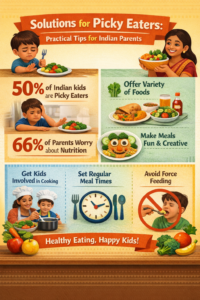
Solutions for Picky Eaters: Practical Tips for Indian Parents

Edited by: MomSaathi Editorial Team Reviewed by: Based on child nutrition and feeding guidelines from  WHO & UNICEF
Momsaathi.com provides content for informational and educational purposes only. It is not intended to serve as a substitute for professional medical advice, diagnosis, or treatment. Always consult your pediatrician if your child is losing weight, avoiding entire food groups, or showing signs of nutritional deficiency.

Dealing with a picky eater can be one of the most stressful parts of parenting — especially for Indian moms. If your toddler refuses vegetables, avoids new foods, or insists on the same meal every day, you’re definitely not alone. Many parents struggle with fussy eating habits in toddlers and young children.

The good news? With patience and the right solutions for picky eaters, mealtimes can become less stressful and more enjoyable over time.

In this guide, we share practical, realistic, mom-approved solutions for picky eaters tailored for Indian families — no force-feeding, no guilt, just gentle strategies that work.

Why Children Become Picky Eaters – Understanding the Root Cause

Before applying picky eater solutions, it helps to know why it happens.

Common reasons:

  • Natural developmental phase (especially ages 1–3)
  • Food neophobia (fear of new foods)
  • Sensory sensitivities (texture, smell, color)
  • Desire for independence and control
  • Too many snacks or milk between meals

Understanding the cause allows you to respond calmly instead of feeling frustrated.

1. Never Force or Pressure Your Child to Eat

Pressuring children to eat usually backfires — it increases resistance and creates negative associations with food.

Instead of saying:

  • “Finish your plate.”
  • “No play until you eat.”

Try saying:

  • “You can try one bite if you want.”
  • “This is today’s dinner option.”

Keep mealtimes relaxed and positive — pressure often makes picky eating worse.

2. Serve Very Small Portions First

Large portions can overwhelm picky eaters and make them shut down.

Best practice:

  • Start with tiny amounts (1–2 spoonfuls)
  • Offer bite-sized pieces
  • Serve food items separately instead of mixing everything

Children feel more comfortable when food looks manageable.

3. Make Food Fun and Visually Appealing

Presentation matters a lot for toddlers.

Simple ideas:

  • Use colorful plates
  • Cut food into fun shapes (cookie cutters)
  • Make smiley faces with fruits and veggies
  • Use bento-style lunch boxes

When food looks exciting, kids are more willing to try it.

4. Stick to a Consistent Meal and Snack Routine

Constant snacking reduces appetite at mealtimes.

Follow a schedule:

  • 3 main meals
  • 2 healthy snacks
  • Avoid juice or milk right before meals

Routine builds healthy eating habits and prevents grazing.

5. Introduce New Foods Slowly & Pair with Favorites

It can take 8–15 exposures before a child accepts a new food.

Tips:

  • Pair new foods with favorites (e.g., broccoli with rice)
  • Don’t expect instant acceptance
  • Celebrate small wins (“You touched it — great job!”)

Consistency is key — don’t give up after one refusal.

6. Be a Role Model – Eat Together as a Family

Children copy what they see.

If parents:

  • Eat vegetables
  • Try new dishes
  • Enjoy healthy food

Kids are more likely to follow.

Family meals make a big difference — eat together whenever possible.

7. Involve Kids in Cooking & Food Prep

Children are far more likely to eat what they help prepare.

Let them:

  • Wash vegetables
  • Stir ingredients
  • Arrange food on plates

Cooking builds curiosity and ownership.

8. Avoid Labeling Your Child as “Picky.”

Labels can reinforce behavior.

Instead of saying:

“My child is a picky eater”

Say:

“We’re still exploring new foods together.”

Positive language matters.

Healthy Snack Ideas for Picky Eaters (Indian-Friendly)

  • Banana peanut butter rolls
  • Vegetable paratha with yogurt
  • Fruit yogurt smoothies
  • Cheese cubes with whole-grain crackers
  • Boiled corn with butter

Keep snacks nutritious but simple.

When to Seek Professional Help

Consult a pediatrician or feeding specialist if:

  • Your child is losing weight
  • Avoids entire food groups for months
  • Gags or vomits frequently
  • Shows extreme sensory issues or oral aversion

Sometimes, picky eating needs medical guidance.

Frequently Asked Questions

What causes picky eating in toddlers?

Picky eating is often a normal developmental phase influenced by independence, sensory preferences, and exposure to foods.

How can I encourage my child to try new foods?

Introduce foods slowly, pair them with favorites, and avoid pressure.

Should I force my child to eat vegetables?

No, forcing can create negative associations. Encourage gently instead.

How long does picky eating last?

Most children outgrow picky eating with consistent exposure and positive mealtime habits.

Final Thoughts for Indian Moms

Picky eating is often a temporary phase, not a permanent problem. Stay patient, stay consistent, and avoid power struggles.

Remember: Your job is to provide healthy options. Your child’s job is to decide how much to eat.

With the right solutions for picky eaters, mealtimes can become less stressful and more enjoyable for the whole family.

Which picky eater solution are you trying first? Share your experience in the comments — let’s support each other.

Related Articles on Momsaathi

Trusted External Resources

Tip: Exploring both internal guides and trusted external resources helps parents make informed decisions and supports better child nutrition.

Fitness for Mothers in India: Postpartum Workout Tips & Health Guide

fitness for mothers in India postpartum workout tips

Edited by: MomSaathi Editorial Team

Reviewed by: Based on general health guidelines from WHO & UNICEF

Momsaathi.com provides content for informational and educational purposes only. It is not intended to serve as a substitute for professional medical advice, diagnosis, or treatment. Always consult your gynecologist or physiotherapist before starting any fitness routine for mothers in India, especially postpartum or if you have diastasis recti, pelvic floor issues, or other health concerns.

Motherhood is beautiful, rewarding, and deeply fulfilling — but it can also be exhausting. Between managing family responsibilities, work, household chores, and emotional labor, many Indian moms place their own health at the bottom of the priority list. However, fitness for mothers India isn’t about appearance — it’s about building strength, stamina, and long-term well-being so you can show up fully for your family.

Prioritizing fitness for mothers in India is not selfish. It’s essential. A stronger, more energetic mom creates a healthier, happier home.

In this guide, we’ll cover practical postpartum workout tips for mothers in India along with simple habits to stay fit, active, and healthy.

Why Fitness for Mothers in India Matters So Much

When you stay physically active, you gain more than just strength. Regular movement helps you:

  • Feel more energetic throughout the day
  • Improve posture and reduce back pain (common after pregnancy)
  • Manage weight in a healthy, sustainable way
  • Boost mood and reduce stress
  • Improve sleep quality
  • Prevent lifestyle-related health issues

A healthy mom creates a healthier home environment.

[fc-bmi-cal]

Simple Fitness Habits Every Indian Mom Can Follow

You don’t need one hour at the gym. Even 20–30 minutes of daily movement can create noticeable results.

Start Small and Stay Consistent

Begin with short, realistic sessions. For example:

  • Morning stretching (5–10 min)
  • Brisk walking around the building or park
  • Light yoga or bodyweight exercises

Consistency is more important than intensity.

Strength Training Is a Game Changer for Moms

Many mothers focus only on cardio, but strength training is essential for long-term health.

Benefits:

  • Builds lean muscle
  • Speeds up metabolism
  • Reduces joint pain
  • Improves bone health (especially postpartum)

Start with:

  • Bodyweight squats
  • Wall push-ups
  • Lunges
  • Resistance bands (very affordable in India)

Two to three sessions per week are enough.

Healthy Nutrition Supports Fitness for Mothers in India

Fitness and nutrition go hand in hand.

Focus on:

  • Protein-rich foods (dal, eggs, paneer, sprouts)
  • Fresh fruits and vegetables
  • Whole grains (ragi, jowar, brown rice)
  • Healthy fats (nuts, seeds, ghee in moderation)
  • Plenty of water

Avoid skipping meals, especially breakfast — it keeps energy stable.

Postpartum Fitness Tips – Start Slow & Safe

For new moms, recovery is key.

Safe starting steps:

  • Gentle walking (start with 10–15 min/day)
  • Pelvic floor exercises (Kegels) — very important
  • Focus on breathing techniques and core reconnection
  • Avoid heavy workouts until cleared by your doctor (usually 6–8 weeks)

Healing comes first. Fitness follows.

👉 If you’re looking for a detailed plan, check our guide on postpartum workout tips for mothers in India.

[irp]

Manage Stress Alongside Physical Health

Mental and physical health are deeply connected.

Try:

  • 10 minutes of meditation or deep breathing
  • Evening family walks
  • Digital detox before bedtime
  • Prioritizing 6–8 hours of sleep

When your mind is calm, your body responds better to exercise.

A Realistic Weekly Fitness Plan for Busy Indian Mothers

  • Monday: Full-body strength (bodyweight)
  • Tuesday: Walk + stretching
  • Wednesday: Light yoga or mobility work
  • Thursday: Strength training
  • Friday: Light cardio (brisk walk/dance)
  • Saturday: Family outdoor activity
  • Sunday: Rest and recovery

Adjust based on your energy — listen to your body.

Overcoming Common Fitness Challenges for Moms

“I don’t have time.” → However, you can break workouts into short 10-minute sessions (morning + evening).

“I feel guilty.” → In reality, self-care is not selfish — it helps you show up better for your family.

“I feel tired.” → But regular exercise actually increases energy levels over time.

Small changes today create long-term benefits.

Frequently Asked Questions

When can I start exercising after delivery?

Most mothers can begin light activities like walking early, but structured workouts should start after doctor approval (usually 6–8 weeks).

Is a workout safe after a C-section?

Yes, but only after medical clearance. Start slowly and avoid core strain initially.

How can I lose belly fat after pregnancy?

Focus on a combination of a healthy diet, walking, strength training, and consistency.

How much exercise do new mothers need?

Even 20–30 minutes of daily movement is enough to see long-term benefits.

Final Thoughts

Being a strong mother isn’t just emotional — it’s physical too. Your body carries you through long days and sleepless nights. Investing in fitness for mothers in India ensures you can continue to show up for your family with energy, strength, and confidence.

Start today. Stay consistent. Choose progress over perfection.

👉 Building a routine around fitness for mothers in India helps improve long-term health and overall well-being.

Related Articles on Momsaathi


Trusted External Resources

Tips: Exploring both internal guides and trusted external resources helps you make informed decisions and improve overall health awareness.