From Stress to Stillness: Why Yoga is the Ultimate Tool for Busy Moms

Edited by: MomSaathi Editorial Team

Reviewed by: Aarti Subudhi – Certified Yoga Instructor & Women’s Wellness Expert

Motherhood is a beautiful journey, but let’s be honest: it’s also incredibly overwhelming. Between managing the household, caring for children, and attempting to find a single moment for yourself, stress often becomes a constant, quiet companion.

Do you feel tired even after a full night’s sleep? Perhaps you’ve noticed increased irritability, mood swings, or a persistent sense of being “on edge.” In the middle of the daily chaos, it is easy to feel like you’ve lost yourself.

This is where yoga for busy moms comes in. It isn’t just another task on your to-do list; it is a gentle return to your true self.

What Does Yoga Really Mean for a Mother?

Many people mistake yoga for a simple physical workout. In reality, yoga is a form of self-therapy—a practice that consciously connects your body, breath, and emotions.

For a busy mother, yoga offers the opportunity to:

  • Slow down in a fast-paced world.

  • Listen inward to your own needs.

  • Create space where your mind can finally rest.

By practicing yoga, you develop a powerful tool to shift your internal state from constant stress to deep, restorative stillness.

Why Moms Need More Than Just Physical Fitness

You may already stay active or hit the gym, but stress doesn’t just live in the muscles—it lives in the mind and the nervous system. This is why many women feel:

  • Mentally exhausted despite being physically fit.

  • Emotionally drained by the end of the day.

  • Unable to relax, even during rare “free time.”

Yoga addresses these issues by working on a deeper level. It helps in calming the nervous system, balancing hormones, releasing emotional tension, and significantly improving your focus and patience.
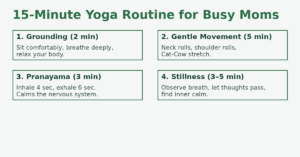
A Simple 15-Minute Yoga Routine for Busy Moms

You don’t need hours to see results; you only need intention. Try this simple 10–15 minute sequence to reset your day:

1. Grounding (2 Minutes)

Sit comfortably and close your eyes. Take slow, deep breaths. Focus on feeling your body relax further with every exhale.

2. Gentle Movement (5 Minutes)

Move slowly and with total awareness. Incorporate neck rotations, shoulder rolls, and the Cat-Cow stretch. Ensure your breath guides every movement.

3. Breathwork / Pranayama (3 Minutes)

Practice deep belly breathing. Inhale for a count of 4, then exhale for a count of 6. This specific rhythm signals your nervous system to switch from “fight or flight” to “rest and digest.”

4. Stillness (3–5 Minutes)

Sit quietly and observe your breath. Allow thoughts to come and go without reacting to them. This is where true emotional healing begins.

[fc-bmi-cal]

The Real Transformation: Beyond the Mat

With regular practice, the benefits of yoga will begin to spill over into your daily life. You will likely notice:

  • Increased patience with your children.

  • Better emotional balance during stressful moments.

  • Reduced anxiety and a lower sense of overwhelm.

  • A much deeper connection with yourself.

Scientific Studies & Articles (for credibility & “why it works”)

You won’t just feel less stressed; you will feel centered, calm, and back in control of your life.

Post Delivery Care for Mothers in India: Complete Recovery Guide for New Moms

Post delivery care for mothers in India is vital for physical healing, emotional well-being, and long-term health after childbirth. The postpartum period (first 6–8 weeks) involves recovery from vaginal delivery or C-section, hormonal shifts, breastfeeding challenges, and adjusting to motherhood.

In India, this time often follows traditional practices like the 40-day confinement (Sutika Paricharya in Ayurveda), where rest, family support, warm nourishing foods, daily oil massages, and herbal remedies help restore balance (especially calming Vata dosha). These blend beautifully with modern guidelines from the World Health Organization (WHO) and Indian Academy of Pediatrics (IAP) for safe recovery.

Always consult your gynecologist or pediatrician for personalized advice, follow-up check-ups (within 2–6 weeks), and any concerns like heavy bleeding or mood changes.

Why Postpartum Care Matters for Indian Mothers

After birth, your body undergoes major changes:

  • Uterus contracts back to normal size (causing afterpains, especially during breastfeeding).
  • Lochia (vaginal discharge) lasts 4–6 weeks.
  • Hormones fluctuate, leading to possible baby blues.
  • C-section moms need extra wound care and rest.

Indian traditions emphasize rest and nourishment to prevent complications like infection, anemia, or postpartum depression. Combine them with evidence-based tips for faster healing.

Physical Recovery: Do’s and Don’ts for Post Delivery Care

Do’s:

  • Rest as much as possible (aim for short naps when baby sleeps).
  • Stay hydrated (2.5–3 liters daily, more if breastfeeding).
  • Gentle movement (short walks after doctor approval) to improve circulation.
  • Pelvic floor exercises (Kegels) to strengthen muscles.
  • Keep perineal area or C-section incision clean and dry.

Don’ts:

  • Lift heavy objects or do strenuous household work early.
  • Use tampons (use pads to monitor bleeding).
  • Ignore pain – take prescribed painkillers.
  • Rush into intense exercise.

For C-section: Avoid stairs initially; watch for redness/swelling at incision.

Nutrition: Healing Diet for Postpartum Care Indian Mothers

A nourishing, warm diet supports healing, boosts milk supply, and combats fatigue. Ayurveda recommends Vata-pacifying foods (warm, moist, easy-to-digest).

Recommended Foods:

  • Warm soups/stews (moong dal khichdi with ghee, vegetable soups).
  • Protein-rich (paneer, lentils, eggs/chicken if non-veg, nuts).
  • Lactation boosters (fenugreek/methi laddoo, fennel, ajwain water, shatavari).
  • Iron & calcium (spinach, dates, ragi, milk, curd).
  • Ghee (clarified butter) in meals for lubrication and digestion.

Sample Daily Meal Ideas (Vegetarian-Focused):

Meal Time Suggestions Benefits
Early Morning Warm ajwain/jeera water + soaked almonds/dates Digestion, energy, milk supply
Breakfast Oats porridge with banana + nuts or ragi dosa Sustained energy, fiber
Mid-Morning Herbal tea (fenugreek/shatavari) + khakhra Lactation support
Lunch Khichdi with ghee + palak sabzi + curd Easy digestion, iron-rich
Evening Snack Methi laddoo or dry fruits Boost milk, strength
Dinner Roti + paneer curry + vegetable soup Light yet nourishing
Bedtime Warm turmeric milk (haldi doodh) Anti-inflammatory, better sleep
Avoid: Cold foods/drinks, spicy/oily street food, caffeine excess.

[fc-walking-test]

Traditional Ayurvedic & Cultural Practices in India

Many Indian families follow these for 40 days:

  • Daily oil massage (Abhyanga): Warm sesame/coconut oil by family or dai – improves circulation, reduces pain.
  • Belly binding: Use cotton saree or binder to support abdomen and posture.
  • Herbal remedies: Dashamoolarishtam or Sukumara kashayam (consult Ayurvedic doctor).
  • Rest & seclusion: Limited visitors/activity to focus on healing.
  • Herbal baths/fumigation: Warm water with neem/turmeric for hygiene.

These practices aid recovery when combined with modern care.

Emotional & Mental Health Support

Baby blues (mood swings) affect many; watch for postpartum depression signs (persistent sadness, anxiety).

  • Talk to family/partner.
  • Rest and accept help.
  • Gentle yoga/breathing after 4–6 weeks.
  • Seek professional help if needed.

When to Seek Medical Help

Contact doctor immediately if:

  • Heavy bleeding (soaking pad in 1 hour).
  • Fever >100.4°F.
  • Severe pain, swelling/redness at wound.
  • Signs of infection or depression.

Follow-up visits: Within 2–3 weeks, then 6 weeks.

Post delivery care for mothers in India combines tradition and science for strong recovery. Prioritize rest, nutrition, and self-care.

FAQs for New Indian Moms

How long is the postpartum period?

6–8 weeks physically; emotional recovery may take longer.

When can I start exercise?

Gentle walking immediately; core work after doctor clearance (6–8 weeks).

Is belly binding safe? Yes, if comfortable and not too tight – supports muscles.

Explore more on MomSaathi:

Share your postpartum tips or questions in the comments – you’re not alone! Follow @momsaathi on Instagram for daily support.

Mom Guilt is Real: How to Stop Feeling Guilty as a Working Indian Mom

Mom Guilt is Real: How to Stop Feeling Guilty as a Working Indian Mom

Mom guilt hits hard for working moms in India—it’s that constant voice saying you’re not doing enough at home while chasing deadlines, or that your child misses you because you’re at the office. In 2025–2026, it’s still widespread: studies show up to 80% of Indian moms experience guilt or self-doubt about parenting, with working moms facing extra pressure from cultural expectations of “perfect” motherhood, family judgments, lack of support, and the “supermom” myth. Recent reports highlight that 34–50% of women leave jobs due to work-life imbalance and guilt, often amplified by societal views that mothers should prioritize home over career. But guilt doesn’t mean you’re failing—it means you’re human, caring deeply in a system that demands too much from moms.

Celebrities like Yami Gautam and Neha Dhupia have openly shared their struggles (e.g., guilt over long shoots or missing milestones), and everyday Indian moms on Instagram, Reddit (r/TwoXIndia), and blogs echo the same: tears at the door leaving for work, anxiety about creche safety, or feeling selfish for self-care. The good news? You can reduce it significantly. Here’s a realistic, Indian-mom-approved guide based on expert tips, psychologist advice (like Kamna Chhibber), and shared experiences.

Why Mom Guilt Feels So Intense in India

  • Cultural pressure — Expectations of self-sacrifice, joint family opinions (“Beta ko time nahi deti”), and the idea that “good moms stay home.”
  • Practical realities — Long commutes (especially in Karnataka cities), limited creches/flexible work, and extra household load even with help.
  • Internal loop — You work for your child’s future (better education, security), but then worry they’re missing “quality time.”
  • Consequences — It leads to stress, anxiety, burnout, and sometimes career exits—health impacts include depression, physical aches, and emotional exhaustion.

Related Articles on MomSaathi

10 Practical Ways to Beat Mom Guilt (Tested by Desi Working Moms)

  1. Reframe the Narrative Remind yourself: Working isn’t selfish—it’s providing stability, role-modeling ambition, and financial independence. Many moms say, “My kids see me as strong and capable—that’s a gift.” Replace “I’m failing” with “I’m doing my best in both roles.”
  2. Focus on Quality Over Quantity. Prioritize meaningful moments: 30–60 min dedicated play/story time after work (no phones), weekend rituals (park, family movie), or bedtime cuddles. Indian moms often share that kids remember love and presence more than hours.
  3. Set Realistic Boundaries & Routines. Create predictable schedules—e.g., fixed family dinner or morning hugs. Communicate at work (if possible) for flex hours. Psychologists suggest routines reduce anxiety; one mom tip: “Plan weekly goals—work wins + family wins—so guilt feels less overwhelming.”
  4. Build a Strong Support System. Involve partner/family fairly (shared chores, childcare). If creche/maid, trust and check in calmly. Join mom communities (Instagram groups, local WhatsApp circles) for validation—many say “hearing others struggle normalizes it.”
  5. Practice Self-Compassion & Let Go of Perfection Accept “good enough” parenting—no one is supermom. Drop comparison (Instagram highlights vs. real life). Daily affirmations: “I’m enough” or reminders like “Your kids love you more than you think.”
  6. Carve Out Self-Care (Even 10 Min) Short walks, chai in peace, or hobbies—guilt lessens when you’re recharged. Moms note: “When I’m happier, I’m a better mom and employee.”
  7. Celebrate Small Wins Track positives: “Today I finished that project AND read a book to my toddler.” Praise yourself—kids pick up on your pride in your work.
  8. Challenge External Judgments Politely set boundaries: “I’m doing what’s best for our family.” If elders criticize, respond with “Doctor/pediatrician says it’s fine” or share positive stories.
  9. Seek Professional Help if Needed. If guilt turns to constant anxiety/depression, talk to a counselor (iCall helpline, NIMHANS teleconsults, or apps like YourDOST). Therapy helps unpack cultural conditioning.
  10. Remember the Long Game. Kids of working moms often grow independent, value equality, and admire their moms’ strength. One Reddit thread from adult daughters: Many don’t resent working parents—they appreciate the sacrifices and security.

[fc-walking-test]

Quick Reminders for Tough Days (From Indian Mom Shares)

  • You’re not alone—millions juggle this.
  • Your child benefits from a happy, fulfilled mom.
  • Guilt fades with time and practice; it doesn’t define you.
  • You’re modeling resilience and balance for your kids.

Mom guilt is real, but it doesn’t have to run the show. Start with one small shift today—like a guilt-free evening cuddle or saying “no” to extra chores. You’ve got this—balancing career and motherhood is a strength, not a failure.

Postpartum Depression in Indian Mothers: Signs, Real Stories & Where to Get Help

Postpartum Depression in Indian Mothers: Signs, Real Stories & Where to Get Help

Postpartum depression (PPD) is a serious but treatable mental health condition that affects many new mothers—far more than the temporary “baby blues” (which fade in 1–2 weeks). In India, cultural expectations of instant joy in motherhood, family pressures, stigma around mental health, and limited awareness often make moms suffer in silence. But PPD is real, common, and not a sign of weakness or bad parenting. You’re not alone, and help is available.

Prevalence in India (2026 Perspective)

Recent studies and meta-analyses (including systematic reviews from 2020–2025) show:

  • Pooled prevalence of PPD in India is around 19–22% (some estimates up to 30% in certain groups or regions).
  • Higher in southern India (~26%) vs. northern (~15%).
  • Rates can reach 28% in some hospital-based studies, with postpartum anxiety even higher (~34%).
  • Many cases go undiagnosed due to low mental health literacy (only ~50% of moms have adequate knowledge) and stigma.
  • Risk factors common in Indian contexts: financial stress, lack of husband/family support, domestic violence, marital conflict, birth of a girl child (in some studies), unplanned pregnancy, low education, past mental health issues, or labor complications.

These numbers come from sources like PMC reviews, WHO-linked data, and Indian journals—higher in rural/low-resource areas, but urban moms face it too due to isolation, work pressure, or high expectations.

Common Signs & Symptoms

PPD usually starts within weeks to months after birth (can last months if untreated). It differs from baby blues by intensity and duration.

Key signs (often overlapping):

  • Persistent sadness, hopelessness, or crying spells (without clear reason).
  • Extreme fatigue or low energy (beyond normal new-mom tiredness).
  • Loss of interest/pleasure in things, including bonding with baby.
  • Irritability, anger outbursts, or feeling overwhelmed by everything.
  • Guilt, worthlessness, or thoughts like “I’m a bad mom” or “Baby would be better without me.”
  • Changes in sleep (insomnia or oversleeping) or appetite (weight loss/gain).
  • Anxiety/panic attacks, racing thoughts, or fear of harming self/baby.
  • Difficulty concentrating or making decisions.
  • Physical aches (headaches, stomach issues) with no medical cause.

Red flags for immediate help: Thoughts of self-harm or harming the baby, severe detachment from baby, hallucinations, or inability to function/care for self/baby.

Related Articles on MomSaathi

If symptoms last >2 weeks or interfere with daily life, seek help—early intervention works best.

Real Stories from Indian Moms (Anonymized/Adapted from Shared Experiences)

Many Indian moms share bravely on Instagram, blogs, YouTube, and forums—breaking the silence.

  • Shalini from Pune (shared on mental health sites): After her first baby, she felt constant sadness, cried endlessly, and couldn’t bond. Family said “It’s normal, adjust kar lo,” but she felt like a failure. Eventually sought counseling—therapy + family understanding helped her recover. She now advocates: “It’s not ‘just hormones’—it’s real, and asking for help saved me.”
  • Riya from Chennai (from Live Love Laugh Foundation blog): Struggled silently for months with guilt, exhaustion, and detachment. Thought “Good moms don’t feel this.” Therapy helped her see it as illness, not character flaw. She emphasizes: “Talking to someone who listens without judgment changes everything.”
  • Other common themes from desi moms (Instagram reels, YouTube): Overwhelm from “perfect” expectations, pressure to breastfeed/exclusively care without rest, isolation in nuclear families, or elders dismissing feelings as “weakness.” Many recover with therapy, meds (if needed), support groups, and open family talks. One mom shared: “I thought I was broken—turns out I was sick, and treatment made me whole again.”

These stories show hope: With help, most moms get better and enjoy motherhood.

Where to Get Help in India (2026 Resources)

Don’t wait—reach out. Start with your gynecologist/pediatrician (many screen now), but specialized support exists.

Helplines (Free, Confidential, 24/7 or extended hours):

  • The Live Love Laugh Foundation Helplines: Multiple verified lines for stress/anxiety/depression (check thelivelovelaughfoundation.org/find-help for regional numbers in multiple languages).
  • iCall (TISS Mumbai): 022-25521111 (Mon–Sat, 8 AM–10 PM) – counseling for maternal mental health.
  • Vandrevala Foundation: 9999666555 or help@vandrevalafoundation.com.
  • 1Life Helpline: 24/7 support (1life.org.in).
  • Voice That Cares (VTC): PAN-India psychological first aid.

Other Support:

  • NIMHANS (Bengaluru): Maternal mental health clinics (especially relevant in Karnataka—teleconsults available).
  • Local psychiatrists/psychologists via Practo or hospital OPDs (many offer perinatal focus).
  • NGOs like Sangath or BasicNeeds for community support.
  • Online: Apps like YourDOST or tele-counseling platforms; Instagram communities (@mompower360, desi mom groups) for peer support.
  • If severe: Emergency—go to nearest hospital or call 104/108 ambulance.

Tips for Starting:

  • Tell a trusted person (partner, mom, friend): “I’m struggling more than normal—can we talk?”
  • Track symptoms for 1–2 weeks.
  • Self-care basics: Rest, nutrition, short walks, hydration—while seeking professional help.

PPD is treatable—therapy (CBT), meds (safe for breastfeeding), support groups all help. In India, awareness is growing (thanks to WHO, NMHS, and advocates). You’re strong for recognizing this—reaching out is the bravest step.

Postpartum Mental Health (Blues & Depression)


Baby Blues vs Postpartum Depression: Key Differences, Symptoms, and Support for New Moms

Welcoming a newborn brings immense joy, but the postpartum phase can also stir intense emotions for many mothers. Hormonal shifts, physical healing, sleep deprivation, and adjusting to parenthood often challenge mental well-being. Two frequent experiences are baby blues and postpartum depression (PPD). Knowing the difference between baby blues and postpartum depression helps new moms in India seek timely support and feel less alone.

In India, where family plays a big role but mental health stigma lingers, these issues affect many. Baby blues impact up to 80% of new mothers worldwide, while PPD affects around 19% in India (based on recent studies from 2020-2024). This guide explains symptoms, timelines, and when to get help.

What Are Baby Blues?

Baby blues (or maternity blues) are mild, short-lived emotional dips that most new moms face. They stem from sudden hormone drops after birth, plus fatigue and adjustment stress.

  • Affects 70-85% of mothers globally.
  • Starts 2-3 days after delivery.
  • Peaks in the first week and fades within 2 weeks.

Common baby blues symptoms include:

  • Mood swings or sudden tears.
  • Irritability or restlessness.
  • Mild anxiety or feeling overwhelmed.
  • Trouble sleeping (even when exhausted).
  • Brief sadness without a deep cause.

These pass naturally with rest, family help, healthy meals, and self-care. No medical treatment is usually needed.

[fc-blood-type]

What Is Postpartum Depression (PPD)?

Postpartum depression is a deeper, longer-lasting condition that disrupts daily life and bonding with your baby. It can start anytime in the first year, often in the initial months.

In India, PPD rates reach 19-22% due to factors like limited support, financial stress, or cultural expectations. It’s treatable but needs professional care.

Key postpartum depression symptoms include:

  • Ongoing sadness, hopelessness, or emptiness.
  • Severe anxiety, panic attacks, or constant worry.
  • Loss of interest in hobbies, food, or baby care.
  • Difficulty bonding with or feeling detached from the baby.
  • Major sleep or appetite changes (too much or too little).
  • Intense guilt, worthlessness, or thoughts of harm (to self or baby—seek urgent help).

PPD doesn’t resolve alone and may worsen without intervention.

Baby Blues vs Postpartum Depression: Quick Comparison

Aspect Baby Blues Postpartum Depression (PPD)
Prevalence 70-85% of new moms 10-20% globally; ~19% in India
Onset 2-3 days after birth Anytime in the first year
Duration Up to 2 weeks Weeks to months (or longer untreated)
Severity Mild and fluctuating Intense and persistent
Common Symptoms Tears, irritability, mild anxiety Deep sadness, detachment, severe anxiety
Resolution On its own with support Needs therapy, counseling, or medication
Impact on Daily Life Minimal Significant—may affect baby care


When to Seek Help for Postpartum Mental Health

If symptoms last beyond 2 weeks, intensify, or include harmful thoughts, contact a doctor immediately. In India:

  • Talk to your gynecologist or pediatrician.
  • Reach mental health helplines like Vandrevala Foundation (available 24/7) or iCall (TISS).
  • Consider therapy apps or counselors specializing in perinatal mental health.

Early support—through family talks, rest, nutrition, or professional care—makes a huge difference.

The postpartum journey is tough, but you’re not alone. Many Indian moms navigate this with strength and support. Prioritize your well-being—it helps you and your baby thrive.

Disclaimer: This is general information, not medical advice. Always consult a qualified healthcare professional for personalized guidance.

Self-Care for Moms: Easy and Realistic Ways to Rejuvenate Every Day

Edited by: MomSaathi Editorial Team
Reviewed by: Based on maternal mental health and wellbeing guidelines from WHO & UNICEF

Momsaathi.com provides informational and educational content only. It is not intended to replace professional medical advice, diagnosis, or treatment. Always consult a healthcare provider if you are experiencing severe burnout, anxiety, depression, or physical exhaustion.

Being a mother is beautiful, rewarding, and deeply fulfilling — but it can also be exhausting. Between managing family responsibilities, work, household chores, and emotional labor, many Indian moms forget one very important person: themselves. That’s why self-care for moms is not selfish — it’s essential.

Self-care for moms means intentionally taking small moments to recharge your mental, emotional, and physical well-being. It doesn’t require expensive spa days or long vacations. Even 10–15 minutes of me time can reduce stress, improve patience, and make you a calmer, happier mom.

Why Self-Care for Moms Is So Important

When you constantly give to your kids, partner, in-laws, and work, your energy runs low. As a result, stress, irritability, guilt, and emotional exhaustion begin to build. However, practicing self-care for moms helps restore energy and improve overall well-being.

Benefits of Me Time for Moms:

  • Lower stress and burnout

  • Better mood and emotional balance

  • More patience with children and family

  • Increased energy and productivity

  • Positive role modeling for children

Common Challenges Indian Moms Face with Self-Care

Even though many moms understand its importance, they often struggle due to:

  • Lack of time

  • Mom guilt (“I should be with my child”)

  • Constant responsibilities (home, work, family expectations)

  • Feeling overwhelmed or “selfish.”

The key is to redefine self-care. It doesn’t have to be long or perfect — it just needs to be consistent and intentional.


[fc-calories-calculator]


Simple & Realistic Self-Care Ideas for Busy Indian Moms

Here are practical and easy self-care ideas that fit into everyday life:

1. Start with 10 Minutes a Day

Wake up slightly earlier or take a quiet moment after your kids sleep. Sip chai, breathe deeply, or sit in silence.

2. Create a Quick “Me Time” Routine

Light a diya or candle, play calming music or bhajans, write a few lines in a journal, or simply relax your mind.

3. Move Your Body Gently

Take a short walk, stretch, or follow a simple yoga routine. Movement helps improve mood and energy levels.

4. Say No Without Guilt

Protect your energy. It’s okay to decline extra responsibilities when you feel overwhelmed.

5. Ask for Help

You don’t have to do everything alone. Share responsibilities with your partner or family members whenever possible.

6. Enjoy a Quiet Hobby

Read, listen to a podcast, doodle, or spend time with plants — anything that helps you relax.

7. Practice Deep Breathing or Gratitude

Spend a few minutes breathing slowly or writing down things you’re grateful for. This reduces stress and improves mental clarity.

8. Take a Weekly “Mom Break.”

Even 1–2 hours of personal time — coffee, temple visit, or a quiet walk — can recharge you deeply.

When to Seek Professional Help

Consult a healthcare provider if you experience:

  • Constant burnout or fatigue

  • Anxiety or emotional overwhelm

  • Loss of interest in daily activities

  • Sleep issues or mood changes

Seeking help is a sign of strength, not weakness.

Frequently Asked Questions

Why is self-care important for moms?

Self-care helps reduce stress, improve emotional balance, and increase energy, making daily responsibilities easier to manage.

How can busy moms find time for self-care?

Even 10–15 minutes daily can make a big difference. Small, consistent habits work best.

Is self-care selfish for mothers?

No, self-care is essential. Taking care of yourself helps you care better for your family.

What are simple self-care ideas for Indian moms?

Walking, meditation, journaling, hobbies, and asking for help are simple and effective options.

Final Thoughts

Self-care for moms is not a luxury — it’s a necessity. Start small, stay consistent, and let go of guilt. A well-rested and emotionally balanced mom creates a happier and healthier home.

You are doing your best, and you deserve care too.

Which self-care habit are you starting this week? Share in the comments — let’s support each other!