Sibling Relationships: How to Build Strong Bonds Between Brothers and Sisters

Edited by: MomSaathi Editorial Team

Reviewed by: Based on relevant research and trusted global sources

Relationships with siblings are some of the longest-lasting connections in a person’s life. From childhood to adulthood, brothers and sisters play a crucial role in emotional development, social skills, and overall family dynamics.

Learning how to help siblings get along not only reduces conflicts but also builds strong bonds that can last a lifetime.

Why Sibling Relationships Are Important

Sibling relationships influence many aspects of a child’s growth. Positive interactions help children develop:

  • Kindness and empathy
  • Cooperation and teamwork
  • Problem-solving skills
  • Emotional resilience

Even conflicts between siblings can be valuable learning experiences. They teach children how to handle disagreements and develop coping skills.

Studies suggest that strong sibling relationships are linked to higher self-esteem and better mental health in adulthood.

Common Problems in Sibling Relationships

Conflicts between siblings are completely normal. However, understanding the causes can help parents manage them better.

Common reasons include:

  • Age differences
  • Personality clashes
  • Competition for attention
  • Unequal parental time or focus

Sibling rivalry may appear as teasing, arguments, or fights over toys and resources. While occasional disagreements are healthy, constant tension may need parental guidance.

How to Help Siblings Get Along

Parents and caregivers play a key role in building healthy sibling relationships. Here are some practical strategies:

1. Encourage Cooperation Over Competition

Promote activities where siblings work together instead of competing.

2. Spend Quality Time Together

Encourage shared activities like playing, reading, or hobbies.

3. Teach Respectful Communication

Guide children to express feelings calmly and listen to each other.

4. Celebrate Individuality

Appreciate each child’s unique strengths without comparison.

5. Teach Empathy

Help children understand and respect each other’s eThe Role of Parents in Sibling Relationships

Parents have a strong influence on how siblings interact.

  • Avoid favoritism
  • Listen to both sides during conflicts
  • Set clear and consistent rules
  • Provide emotional support

Creating a fair and supportive environment helps reduce rivalry and builds trust among siblings.

When to Be Concerned

While occasional fights are normal, parents should pay attention if:

  • Conflicts become frequent or aggressive
  • One child is consistently dominant or withdrawn
  • Emotional distress is visible

In such cases, guidance and support become essential.

[irp]

Frequently Asked Questions

Why are sibling relationships important?

They help children develop emotional skills, social behavior, and lifelong support systems.

Is sibling rivalry normal?

Yes, it is a natural part of growing up and helps children learn conflict resolution.

How can parents reduce sibling fights?

By encouraging cooperation, setting rules, and avoiding comparisons.

When should parents intervene in sibling conflicts?

When conflicts become frequent, intense, or emotionally harmful.

Final Thoughts

Sibling relationships play a vital role in shaping a child’s emotional and social development. While conflicts are a normal part of growing up, the right guidance can turn these moments into valuable life lessons.

By encouraging respect, empathy, and cooperation, parents can help siblings build strong, lifelong bonds.

🔗 Expert Insights & Resources

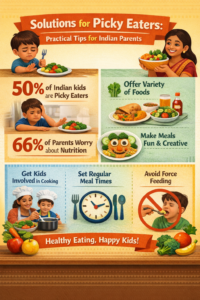
Solutions for Picky Eaters: Practical Tips for Indian Parents

Edited by: MomSaathi Editorial Team Reviewed by: Based on child nutrition and feeding guidelines from  WHO & UNICEF
Momsaathi.com provides content for informational and educational purposes only. It is not intended to serve as a substitute for professional medical advice, diagnosis, or treatment. Always consult your pediatrician if your child is losing weight, avoiding entire food groups, or showing signs of nutritional deficiency.

Dealing with a picky eater can be one of the most stressful parts of parenting — especially for Indian moms. If your toddler refuses vegetables, avoids new foods, or insists on the same meal every day, you’re definitely not alone. Many parents struggle with fussy eating habits in toddlers and young children.

The good news? With patience and the right solutions for picky eaters, mealtimes can become less stressful and more enjoyable over time.

In this guide, we share practical, realistic, mom-approved solutions for picky eaters tailored for Indian families — no force-feeding, no guilt, just gentle strategies that work.

Why Children Become Picky Eaters – Understanding the Root Cause

Before applying picky eater solutions, it helps to know why it happens.

Common reasons:

  • Natural developmental phase (especially ages 1–3)
  • Food neophobia (fear of new foods)
  • Sensory sensitivities (texture, smell, color)
  • Desire for independence and control
  • Too many snacks or milk between meals

Understanding the cause allows you to respond calmly instead of feeling frustrated.

1. Never Force or Pressure Your Child to Eat

Pressuring children to eat usually backfires — it increases resistance and creates negative associations with food.

Instead of saying:

  • “Finish your plate.”
  • “No play until you eat.”

Try saying:

  • “You can try one bite if you want.”
  • “This is today’s dinner option.”

Keep mealtimes relaxed and positive — pressure often makes picky eating worse.

2. Serve Very Small Portions First

Large portions can overwhelm picky eaters and make them shut down.

Best practice:

  • Start with tiny amounts (1–2 spoonfuls)
  • Offer bite-sized pieces
  • Serve food items separately instead of mixing everything

Children feel more comfortable when food looks manageable.

3. Make Food Fun and Visually Appealing

Presentation matters a lot for toddlers.

Simple ideas:

  • Use colorful plates
  • Cut food into fun shapes (cookie cutters)
  • Make smiley faces with fruits and veggies
  • Use bento-style lunch boxes

When food looks exciting, kids are more willing to try it.

4. Stick to a Consistent Meal and Snack Routine

Constant snacking reduces appetite at mealtimes.

Follow a schedule:

  • 3 main meals
  • 2 healthy snacks
  • Avoid juice or milk right before meals

Routine builds healthy eating habits and prevents grazing.

5. Introduce New Foods Slowly & Pair with Favorites

It can take 8–15 exposures before a child accepts a new food.

Tips:

  • Pair new foods with favorites (e.g., broccoli with rice)
  • Don’t expect instant acceptance
  • Celebrate small wins (“You touched it — great job!”)

Consistency is key — don’t give up after one refusal.

6. Be a Role Model – Eat Together as a Family

Children copy what they see.

If parents:

  • Eat vegetables
  • Try new dishes
  • Enjoy healthy food

Kids are more likely to follow.

Family meals make a big difference — eat together whenever possible.

7. Involve Kids in Cooking & Food Prep

Children are far more likely to eat what they help prepare.

Let them:

  • Wash vegetables
  • Stir ingredients
  • Arrange food on plates

Cooking builds curiosity and ownership.

8. Avoid Labeling Your Child as “Picky.”

Labels can reinforce behavior.

Instead of saying:

“My child is a picky eater”

Say:

“We’re still exploring new foods together.”

Positive language matters.

Healthy Snack Ideas for Picky Eaters (Indian-Friendly)

  • Banana peanut butter rolls
  • Vegetable paratha with yogurt
  • Fruit yogurt smoothies
  • Cheese cubes with whole-grain crackers
  • Boiled corn with butter

Keep snacks nutritious but simple.

When to Seek Professional Help

Consult a pediatrician or feeding specialist if:

  • Your child is losing weight
  • Avoids entire food groups for months
  • Gags or vomits frequently
  • Shows extreme sensory issues or oral aversion

Sometimes, picky eating needs medical guidance.

Frequently Asked Questions

What causes picky eating in toddlers?

Picky eating is often a normal developmental phase influenced by independence, sensory preferences, and exposure to foods.

How can I encourage my child to try new foods?

Introduce foods slowly, pair them with favorites, and avoid pressure.

Should I force my child to eat vegetables?

No, forcing can create negative associations. Encourage gently instead.

How long does picky eating last?

Most children outgrow picky eating with consistent exposure and positive mealtime habits.

Final Thoughts for Indian Moms

Picky eating is often a temporary phase, not a permanent problem. Stay patient, stay consistent, and avoid power struggles.

Remember: Your job is to provide healthy options. Your child’s job is to decide how much to eat.

With the right solutions for picky eaters, mealtimes can become less stressful and more enjoyable for the whole family.

Which picky eater solution are you trying first? Share your experience in the comments — let’s support each other.

Related Articles on Momsaathi

Trusted External Resources

Tip: Exploring both internal guides and trusted external resources helps parents make informed decisions and supports better child nutrition.