
Edited by: MomSaathi Editorial Team
Reviewed by: Medical Experts (Gynaecologists & Paediatricians)
Pregnancy is a beautiful journey filled with joy, excitement, and… a lot of questions about food. As an expecting mom, you suddenly hear advice from every direction: family, friends, WhatsApp forwards, and even strangers. “Don’t eat this, don’t touch that!” It can feel overwhelming and confusing.
That’s why we created this practical guide on foods to avoid during pregnancy. Our aim is simple: help you eat confidently, protect your baby, and enjoy this special time without constant worry or guilt. Because pregnancy nutrition isn’t about being perfect — it’s about making smart, balanced choices.
Quick Summary: Foods to Avoid During Pregnancy
Strictly Avoid • Raw or undercooked meat, eggs & fish • Unpasteurised milk & dairy products • High-mercury fish (shark, swordfish, king mackerel) • Alcohol (no safe amount) • Excessive caffeine (more than 200mg/day)
Limit • Processed meats, street food, junk food, excess sugar & salt
Now, let’s understand everything in detail so you can make informed decisions.
Why Food Safety Matters During Pregnancy
During pregnancy, your immune system changes to protect your growing baby. This makes you more vulnerable to foodborne illnesses like Salmonella, Listeria, and toxoplasmosis. What might cause mild stomach upset in normal times can lead to serious complications for you and your baby.
Eating safely helps prevent infections, supports healthy baby development, reduces risks of miscarriage or preterm labour, and keeps your energy stable. The good news? With a few mindful choices, you can still enjoy delicious meals.
Foods to Avoid During Pregnancy
Raw or Undercooked Eggs
Raw eggs can carry salmonella, which causes severe food poisoning.
Avoid:
- Homemade mayonnaise, tiramisu, or cookie dough with raw eggs
- Soft-boiled or runny eggs
- Eggnog made with uncooked eggs
Safer Choice: Fully cooked eggs where both yolk and white are firm.
Raw or Undercooked Meat
Undercooked meat may contain harmful bacteria and parasites like Toxoplasma.
Avoid:
- Rare or medium-rare chicken, mutton, or fish
- Raw mince or kebabs
- Street-side tandoori items that may not be fully cooked
Tip: Cook meat until juices run clear and the internal temperature is well done.
High-Mercury Fish
Mercury can seriously affect your baby’s developing nervous system.
Avoid or Limit:
- Shark (shark fin soup)
- Swordfish
- King mackerel
- Tilefish
Safe Fish: Salmon, sardines, anchovies, and rohu (2–3 servings per week).
Unpasteurised Milk & Dairy Products
Unpasteurised (raw) milk can contain Listeria, which is dangerous for pregnant women.
Avoid:
- Raw milk (“desi doodh”)
- Unpasteurised cheese, paneer, or yoghurt from unknown sources
Safe Choice: Always choose pasteurised milk, curd, and cheese.
Processed & Deli Meats
These can harbour Listeria even when refrigerated.
Avoid:
- Cold cuts, salami, ham, and ready-to-eat sausages (unless heated thoroughly)
Safer Alternative: Freshly cooked chicken, mutton, or eggs.
Excess Caffeine
High caffeine intake may increase the risk of low birth weight or miscarriage.
Safe Limit: Up to 200mg per day (about 1–2 small cups of coffee).
Watch your intake of tea, coffee, chocolate, and energy drinks.
Alcohol
No amount of alcohol is safe during pregnancy. It can cause fetal alcohol spectrum disorders.
The best and safest choice is complete abstinence.
Junk Food & Highly Processed Foods
Too much junk food can lead to excessive weight gain, gestational diabetes, and nutrient gaps.
Limit: Packaged snacks, sugary drinks, instant noodles, and too many sweets.
Papaya & Pineapple – Myth vs Reality
- Unripe papaya: Contains latex that may trigger contractions. Avoid, especially in the first trimester.
- Ripe papaya: Safe and nutritious in moderation.
- Pineapple: Normal amounts are safe. One or two slices of ripe pineapple won’t cause any harm.
Street Food & Unhygienic Foods
Street food is tempting but carries a high risk of contamination in Indian conditions.
Be cautious with: Pani puri, bhel, golgappa, roadside chaat, and cut fruits.
Safer approach: Choose hygienic stalls or recreate favourite dishes at home.
Foods to Limit (Instead of Completely Avoid)
- Sugar & sweets (risk of gestational diabetes)
- Excess salt (can raise blood pressure)
- Fried foods (high in unhealthy fats)
- Artificial sweeteners (use sparingly)
Safe & Healthy Alternatives During Pregnancy
Focus on these nutrient-rich foods:
- Protein: Dal, eggs, paneer, sprouts, chicken, low-mercury fish
- Iron: Spinach, beetroot, pomegranate, dates, raisins
- Calcium: Milk, curd, ragi, sesame seeds
- Healthy Snacks: Roasted makhana, almonds, fruits, homemade khichdi, vegetable upma
Hydration Tip: Drink plenty of water, coconut water, and fresh buttermilk.
Foods to Avoid During the First Trimester
The first trimester is critical for the baby’s organ development. Be extra careful with raw/undercooked foods, unpasteurised dairy, and excessive caffeine. Morning sickness can make eating difficult — stick to small, frequent, bland meals.
Common Pregnancy Food Myths in India
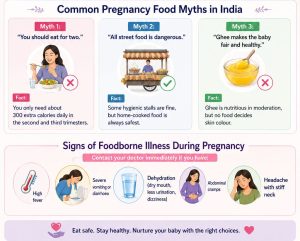
Myth 1: “You should eat for two.” Fact: You only need about 300 extra calories daily in the second and third trimesters.
Myth 2: “All street food is dangerous.” Fact: Some hygienic stalls are fine, but home-cooked food is always safest.
Myth 3: “Ghee makes the baby fair and healthy.” Fact: Ghee is nutritious in moderation, but no food decides skin colour.
Signs of Foodborne Illness During Pregnancy
Contact your doctor immediately if you have:
- High fever
- Severe vomiting or diarrhoea
- Dehydration
- Abdominal cramps
- Headache with stiff neck
When to Consult a Doctor
Always reach out to your gynaecologist if:
- You accidentally ate something unsafe
- You have persistent symptoms
- You have existing health conditions like diabetes or thyroid issues
Tips for Safe Eating During Pregnancy
- Wash fruits and vegetables thoroughly
- Cook meat and eggs properly
- Refrigerate leftovers and consume within 24 hours
- Read labels for pasteurisation and expiry dates
- Prefer home-cooked meals as much as possible
Key Takeaways
- Prioritise food safety over fear
- Avoid raw/undercooked items and unpasteurised products
- Limit caffeine and avoid alcohol completely
- Choose fresh, home-cooked, balanced meals
- Listen to your body and consult your doctor for personalised advice
You’re doing an amazing job nourishing your baby. Small, consistent choices matter more than perfection.
📚 More Helpful Resources
- • Mayo Clinic – Pregnancy Nutrition
- • CDC – Food Safety During Pregnancy
- • Healthline – Foods to Avoid
- • ACOG – Official Nutrition Guidelines
- • FSSAI India – Food Safety
💡 These are trusted external resources for more information.
Frequently Asked Questions (FAQs)
Can pregnant women eat pineapple?
Yes, ripe pineapple is safe and nutritious when eaten in moderation. It is rich in vitamins and helps with digestion. Avoid unripe (green) pineapple, especially in the first trimester.
Is coffee safe during pregnancy?
Yes, in limited amounts. You can safely have up to 200mg of caffeine per day — roughly 1–2 small cups of filter coffee. Too much caffeine may affect the baby’s growth.
Which fish should be avoided during pregnancy?
Avoid high-mercury fish such as shark, swordfish, king mackerel, and tilefish. Safer options include rohu, sardines, anchovies, and salmon (2–3 servings per week).
Can I eat spicy food while pregnant?
Moderate spicy food is usually fine if it doesn’t cause heartburn or discomfort. Listen to your body — if it doesn’t suit you, reduce the spice level.
Is papaya safe for pregnant women?
Ripe papaya is safe and provides good nutrition. Avoid large amounts of unripe (green) papaya, especially in the first trimester.
What foods can cause miscarriage?
Certain foods increase risk if consumed in large quantities or unsafe form — raw/undercooked meat, unpasteurised dairy, high alcohol, and excessive unripe papaya.