Jaundice in Newborns – Home Remedies vs When to Rush to Hospital (Indian Moms Guide 2026)

Newborn jaundice spikes every summer and monsoon in India due to heat, dehydration risks, and infections. Many moms notice yellow skin/eyes in their baby and wonder: Can I manage with home remedies, or is it time for hospital?

Most cases are physiological (harmless) and resolve in 1–2 weeks, but high bilirubin can lead to serious issues like kernicterus if ignored. This guide explains symptoms, safe home care (focusing on breastfeeding), common myths (like direct sunlight), phototherapy truth, bilirubin levels chart, and clear signs to rush to hospital.

What Is Newborn Jaundice & Common Symptoms in Indian Babies

Jaundice happens when excess bilirubin (yellow pigment from red blood cell breakdown) builds up because the newborn liver is immature. It affects 60% of term and 80% of preterm babies in India.

Key Symptoms:

  • Yellow skin (starts on face, spreads to chest, belly, legs)
  • Yellow whites of eyes
  • Drowsiness or poor feeding
  • Dark urine (should be pale) or pale stools
  • In severe cases: lethargy, high-pitched cry, arching back (emergency!)

Physiological jaundice peaks at 3–5 days and fades by 2 weeks. Pathological (serious) starts early (<24 hours) or lasts longer.

(Alt text suggestion for image: “newborn jaundice symptoms yellow skin eyes Indian baby”)

Safe Home Care & Remedies for Mild Newborn Jaundice in India

For physiological jaundice (most cases), focus on supporting the baby’s natural elimination of bilirubin:

  1. Frequent Breastfeeding – The #1 “remedy” per IAP and pediatricians. Feed every 2–3 hours (8–12 times/day). Breast milk helps flush bilirubin via stools. Avoid stopping breastfeeding – it worsens jaundice.
  2. Ensure Good Hydration & Feeding – Watch for wet diapers (6+ daily) and stools. Poor intake causes “breastfeeding jaundice” from dehydration.
  3. Gentle Sun Exposure Myth Bust – Direct sunlight is NOT recommended! UV rays risk burns/dehydration; it’s a myth in India. Filtered/indirect morning light (near window, not direct) may help mildly but is NOT a substitute for treatment. AAP/IAP say no to sunbathing.
  4. Monitor & Comfort – Keep baby cool in summer/monsoon; avoid overheating.

Important: No turmeric, papaya leaves, or herbal mixes for newborns – they can be harmful. Always consult pediatrician before any remedy.

(Alt text suggestion: “frequent breastfeeding newborn jaundice home care India”)

Bilirubin Levels Chart: When It’s Normal vs Dangerous (India Guidelines)

Use age-specific total serum bilirubin (TSB) levels (from IAP/AAP-aligned Indian protocols for term babies ≥35 weeks):

Age (hours/days) Normal/Physiological Range (mg/dL) Phototherapy Threshold (approx.) High Risk/Exchange Transfusion
24 hours <8–10 >12–15 >19–20
48 hours <12–15 >15–18 >22
72 hours Peak <15–18 >18–20 >24
>1 week Declining <12–15 >20+ or persistent >25
  • Low risk: Term baby, no hemolysis.
  • Medium/High risk: Preterm, dehydration, hemolysis, G6PD (common in India).

Get TSB test if yellowing spreads fast or baby seems unwell. Home TcB devices help monitor but confirm with blood test.

(Alt text suggestion: “newborn jaundice bilirubin levels chart India 2026 guidelines”)

Phototherapy Truth: The Main Hospital Treatment

Phototherapy (blue light) breaks down bilirubin safely in skin – gold standard in India.

  • Baby placed under special lights (eyes masked, diaper only).
  • Intensive for high levels; home phototherapy possible in mild cases.
  • Duration: 1–2 days usually; monitor rebound. No proven risks like bronze baby in most cases.

Avoid myths – phototherapy is evidence-based, not “harsh”.

When to Rush to Hospital Immediately (Red Flags for Indian Moms)

Rush to pediatrician/NICU if:

  • Jaundice appears in first 24 hours
  • Yellowing spreads to arms/legs/palms/soles
  • Bilirubin rising fast (>5 mg/dL/day) or >15–18 mg/dL (check test)
  • Baby lethargic, refuses feeds, high-pitched cry, arching
  • Fever, poor weight gain, dark urine/pale stools
  • Family history of G6PD, Rh incompatibility

In summer/monsoon, dehydration worsens it – hospital for IV fluids/phototherapy if needed. Early checks prevent complications.

Final Thoughts for Indian Moms

Newborn jaundice is common and often harmless with good feeding and monitoring. Frequent breastfeeding is your best “home remedy” – myths like direct sunlight can harm more than help. Watch bilirubin levels and rush for tests/treatment if red flags appear. Most babies recover fully with timely care.

Momsaathi.com provides content for informational and educational purposes only. It is not intended to serve as a substitute for professional medical advice, diagnosis, or treatment. If your newborn shows jaundice signs (yellow skin/eyes, poor feeding, lethargy), consult a pediatrician immediately for bilirubin test and guidance.

Frequently Asked Questions (FAQs)

Is sunlight safe for newborn jaundice in India?

No – direct sunlight risks burns/dehydration; it’s a myth. Filtered window light may help mildly, but phototherapy is the proven treatment.

Only frequent breastfeeding/hydration. Avoid herbs/turmeric – consult doctor first.

If bilirubin >15–20 mg/dL (age-dependent), appears early, or baby unwell – phototherapy often needed.

Not usually – “breastfeeding jaundice” from poor intake; feed more often to help.

20–25 mg/dL risks kernicterus; monitor closely with tests.

No – direct sunlight risks burns/dehydration; it’s a myth. Filtered window light may help mildly, but phototherapy is the proven treatment.

Only frequent breastfeeding/hydration. Avoid herbs/turmeric – consult doctor first.

If bilirubin >15–20 mg/dL (age-dependent), appears early, or baby unwell – phototherapy often needed.

Not usually – “breastfeeding jaundice” from poor intake; feed more often to help.

20–25 mg/dL risks kernicterus; monitor closely with tests.

Related Articles on Momsaathi.com:

External Resources:

LKG/UKG Admission 2026–27 Karnataka: Dates, Fees, Process & Interview Tips

Karnataka moms, the season is here! If your child is turning 4–5 years old, LKG/UKG admissions for 2026–27 are in full swing, especially in cities like Bengaluru, Mysore, and Mangalore. With competition high in top CBSE/ICSE schools, many parents start panicking about dates, fees, age rules, and those nerve-wracking “interviews” (often parent-child interactions).

This guide covers everything Karnataka parents need: important dates, age criteria, average fees, RTE quota details, admission process, interview tips, and practical advice to make the process smoother.

Age Criteria for LKG/UKG Admission in Karnataka 2026–27

Karnataka follows NEP 2020 guidelines:

  • LKG: Child should be 4 years complete by June 1, 2026 (some schools allow up to 5 years).
  • UKG: 5 years complete by June 1, 2026 (up to 6 years).

Many schools calculate age as of March 31 or June 1, 2026. Always check the school’s official notice – flexibility varies (e.g., CBSE schools are stricter). Proof of age (birth certificate) is mandatory.

For RTE 25% free seats (economically weaker sections), age rules are similar, but priority for disadvantaged categories.

Key Admission Dates & Timeline (2026–27)

Admissions vary by school (private vs government-aided), but typical Karnataka timeline:

  • Application opens: October 2025 – January 2026 (many started in October, e.g., Bishop Cotton Boys’ School from Oct 16, 2025).
  • Online registrations peak: November 2025 – February 2026 (forms close when seats fill).
  • Interaction/Observation/Interviews: January – March 2026.
  • Lottery/Selection results: February – April 2026.
  • RTE applications: March – April 2026 (online via sdcedn.karnataka.gov.in; trial/mock in early March, last date ~April 15, 2026).
  • Final enrollment: May – June 2026.

Top schools like Kumarans, DPS Electronic City, or Bishop Cotton often close Pre-KG/LKG early due to demand. Apply ASAP!

Average Fees for LKG/UKG in Karnataka (2026–27 Estimates)

Fees vary widely by board (CBSE/ICSE/State) and location:

  • Bangalore premium schools (e.g., Bishop Cotton, Indus, Inventure): ₹80,000 – ₹2,00,000+ per year (including admission, tuition, activity fees).
  • Mid-range CBSE/ICSE (e.g., Edify, Presidency): ₹50,000 – ₹1,20,000 annually.
  • Affordable private/State-board: ₹30,000 – ₹70,000 per year.
  • RTE 25% quota: Free or minimal fees in participating private schools (lottery-based for eligible families).

Additional costs: Uniforms, transport, books (~₹10,000–30,000). Application fee: ₹500–₹1,000 (non-refundable).

Admission Process Step-by-Step

  1. Research & Shortlist: Visit school websites, check reviews on parent forums, focus on curriculum (CBSE/ICSE), facilities, safety, and distance.
  2. Online/Offline Application: Fill form on school portal (e.g., upload birth certificate, photos, address proof). Pay application fee.
  3. Document Submission: Birth certificate, Aadhaar, photos, vaccination record, address proof.
  4. Interaction/Interview: Parent-child meet (not formal test for LKG/UKG).
  5. Selection & Fee Payment: Lottery/results via email/SMS; pay admission fee within deadline.
  6. RTE Route: Apply online via Karnataka RTE portal for 25% free seats (eligibility: income <₹2.5 lakh/year, etc.).

Minority schools or those with only Pre-Primary may have different rules.

Interview Tips for LKG/UKG Admission (What Schools Really Look For)

LKG/UKG “interviews” are usually relaxed parent-child interactions (20–30 mins):

  • For Child: Basic identification (colors, shapes, body parts, family members), simple rhymes/songs, confidence in speaking. No pressure – they observe readiness & social skills.
  • For Parents: Be honest about child’s routine, strengths, any concerns. Show enthusiasm for school values. Dress neatly.
  • Preparation Tips:
    • Practice simple questions: “What is your name?”, “Show me red color”, “Sing a rhyme”.
    • Encourage independence (e.g., eating, toilet use).
    • Stay calm – schools assess family fit more than child’s “performance”.
    • Arrive early, bring required docs.
    • Avoid coaching pressure – focus on play-based learning.

Many schools now emphasize observation over testing.

Final Thoughts for Karnataka Moms

LKG/UKG admission 2026–27 is competitive, but with early planning, you can secure a good spot. Prioritize schools that match your child’s needs and your budget – and don’t forget RTE if eligible. Trust the process; your little one is ready for this big step!

Momsaathi.com provides content for informational and educational purposes only. It is not intended to serve as a substitute for professional advice. Check official school websites and Karnataka RTE portal for latest updates, as dates/fees can change. Consult schools directly for personalized guidance.

Frequently Asked Questions (FAQs)

What is the age limit for LKG in Karnataka 2026?


Typically 4 years complete by June 1, 2026 (some schools use March 31 cutoff).

October 2025 – January 2026 for most private schools; RTE in March–April.

₹50,000–₹2,00,000 annually in Bangalore; lower in other cities or RTE seats.

Yes – usually parent-child interaction to assess readiness and family fit.


Online via sdcedn.karnataka.gov.in; eligibility based on income/category; lottery system.

Typically 4 years complete by June 1, 2026 (some schools use March 31 cutoff).

October 2025 – January 2026 for most private schools; RTE in March–April.

₹50,000–₹2,00,000 annually in Bangalore; lower in other cities or RTE seats.

Yes – usually parent-child interaction to assess readiness and family fit.


Online via sdcedn.karnataka.gov.in; eligibility based on income/category; lottery system.

Related Articles on Momsaathi.com:

External Resources:

My Toddler Speaks Only 5 Words at 2 Years – Is It Speech Delay or Bilingual Delay? (India 2026 Guide)

Many parents in bilingual households across Karnataka and India are concerned when their 2-year-old toddler speaks only a handful of words (like “mama”, “papa”, “ball”, “no”, “water”). In homes speaking Kannada + English or Hindi, it’s common to hear: “Is this speech delay or just because of two languages?”

The good news: Bilingualism itself does NOT cause speech delay. Research shows bilingual toddlers follow the same milestones as monolingual ones, but their vocabulary is spread across languages (total words count combined). However, if milestones are missed, it could indicate a true delay needing support.

This guide explains the difference, typical milestones at 2 years, signs to watch, home language stimulation tips (especially for bilingual families), and when to consult a speech therapist.

Typical Speech Milestones for 2-Year-Olds (IAP & Global Guidelines)

By age 2, most toddlers (bilingual or monolingual) should:

  • Say 50+ words total (across all languages combined)
  • Combine 2 words into simple phrases (e.g., “more milk”, “mama come”, “big ball”)
  • Follow simple instructions (e.g., “give me ball”)
  • Point to body parts or pictures when named
  • Use gestures + words to communicate needs

In bilingual homes (common in India with Kannada/English/Hindi), count total vocabulary – not per language. A child with 30 words in Kannada + 20 in English = 50 total (normal range). Bilingual kids may mix languages (“code-mix”) – this is typical and shows they’re processing both.

Speech Delay vs Bilingual “Quiet Phase” – How to Tell

Bilingual development is normal variation (not delay):

  • Slower in each language but strong total vocabulary
  • Understands both languages well (points, follows directions)
  • Communicates with gestures, sounds, or single words
  • Progresses steadily with exposure

True speech/language delay signs (worry & seek help):

  • Fewer than 50 words total by 24 months
  • No 2-word combinations by 2–2.5 years
  • Limited understanding (doesn’t respond to name, simple commands)
  • Little babbling/gestures or frustration when communicating
  • Regression (loses words previously used)
  • Other red flags: poor eye contact, no pointing, or family history of delays

In India, factors like hearing issues, ear infections (common in monsoon), or limited interaction can contribute – not bilingualism.

Home Tips to Boost Speech in Bilingual Toddlers (Kannada + English/Hindi)

Parents play the biggest role! Use these simple, daily activities:

  1. Talk constantly – Narrate routines (“Ayyo, ball podu! Put the ball here!”) in one consistent language per person (e.g., mom Kannada, dad English).
  2. Read aloud daily – Use picture books in both languages; point and name objects (“This is ಮೊಮ್ಮಗ, mango!”).
  3. Sing songs & rhymes – Nursery rhymes in Kannada/English build rhythm and vocabulary.
  4. Play interactive games – “Simon Says”, hide-and-seek with toys, or pretend play (“Let’s feed baby doll”).
  5. Respond & expand – If child says “ball”, reply “Yes, red ball! Want big ball?”
  6. Limit screens – More face-to-face talk than TV/phone.
  7. One-person-one-language (OPOL) – If possible, each caregiver sticks to one language for clear input.

Consistency and fun interaction matter more than perfect separation.

When to See a Speech Therapist in India

Don’t wait if red flags appear – early intervention works wonders. Consult if:

  • By 2 years: <50 total words or no phrases
  • Limited understanding or social interaction
  • Frustration or behavior issues from communication struggles

In Karnataka/India:

  • Start with pediatrician for hearing check
  • Refer to speech-language pathologist (SLP) via hospitals like NIMHANS (Bengaluru), Cloudnine, or private clinics
  • Government programs or early intervention centers offer free/low-cost support

Early therapy (even bilingual) helps most children catch up quickly.

Final Words for Indian Parents

If your toddler speaks only 5 words at 2 years in a bilingual home, it’s often normal variation – count total words across languages and focus on rich exposure. But trust your instincts: if understanding or communication seems limited, seek professional advice early. Bilingualism is a gift that boosts brain development long-term.

Momsaathi.com provides content for informational and educational purposes only. It is not intended to serve as a substitute for professional medical advice, diagnosis, or treatment. If your toddler shows signs of speech delay (fewer than 50 words total by 24 months, no word combinations, poor understanding), consult a pediatrician or speech-language pathologist immediately.

Related Articles on Momsaathi.com:

External Resources:

Ragi vs Cerelac vs Oats – Which First Food Is Best for Indian Babies 2026?

Ragi vs Cerelac vs Oats – Which First Food Is Best for Indian Babies 2026?

In every Indian mom WhatsApp group, the debate is endless: Is ragi the unbeatable first food for babies, or should you choose convenient Cerelac? What about oats for gentle digestion? In 2026, with anemia still a major concern for Indian infants, pediatricians and IAP guidelines stress iron-rich, homemade complementary foods starting at 6 months (after exclusive breastfeeding).

This complete guide compares ragi vs Cerelac vs oats nutritionally, shares why ragi often tops the list for Indian babies, includes a simple homemade ragi porridge recipe, and covers anemia prevention tips.

When to Start First Foods: 2026 Guidelines for Indian Babies

According to the Indian Academy of Pediatrics (IAP) and WHO, introduce complementary feeding around 6 months while continuing breastfeeding. First foods must be:

  • Iron-rich to fight anemia
  • Easy to digest and single-ingredient at first
  • Homemade or minimally processed
  • Offered in small amounts (1–2 tsp initially)

Avoid solids before 6 months to prevent allergies or infections.

https://www.youtube.com/watch?v=aYvPAsMlX1g

Nutrition Comparison: Ragi vs Cerelac vs Oats (Per 100g Prepared – Approximate)

Nutrient Ragi (Homemade Porridge) Cerelac (Ragi/Standard) Oats (Plain Cooked)
Calories 320–330 kcal 400–420 kcal 375–380 kcal
Carbohydrates 65–70g 70–75g 66–68g
Dietary Fibre 10–12g 3–5g 10–11g
Protein 7–8g 10–12g (fortified) 13–17g
Iron 4–5mg (natural high) 8–12mg (fortified) 4–5mg
Calcium 330–360mg (excellent) 200–300mg (fortified) 45–55mg
Added Sugar/Preservatives None Often present None (plain)
Best For Indian Babies Anemia prevention, bones Convenience Digestion, variety

Ragi excels in natural iron and calcium – crucial for Indian babies prone to anemia. Cerelac provides fortified nutrients but may contain added sugars. Oats are gentle but lower in key minerals. 

Why Ragi Is Often the Best First Food for Indian Babies in 2026

Pediatricians frequently recommend ragi as the top choice because:

  • High natural iron – Helps prevent anemia, a widespread issue in India.
  • Rich calcium – Supports strong bones and teeth.
  • No additives – Homemade ragi is free from preservatives and excess sugar.
  • High fibre – Promotes steady energy and satiety without spikes.
  • Cultural & affordable – Easily available in Karnataka and South India.

Cerelac is convenient and fortified (useful for busy parents), but experts prefer homemade for gut health. Oats are great for variety and easy digestion but not as nutrient-dense for iron/calcium needs.

Start with one grain at a time to monitor allergies.

Easy Homemade Ragi Porridge Recipe for 6+ Month Babies

A basic, no-added-sugar version – safe and pediatrician-approved.

Ingredients (1–2 small feeds):

  • 1–2 tbsp ragi flour (sprouted for better absorption)
  • ¾–1 cup water (or breast milk/formula)
  • Optional (after 8 months): Pinch jaggery or mashed fruit for taste

Steps:

  1. Mix ragi flour with cold water to form a lump-free paste.
  2. Boil remaining water in a pan.
  3. Stir in ragi paste on low heat, cook 5–7 minutes until thick.
  4. Cool to lukewarm; thin with milk if needed.
  5. Start with 1–2 tsp; serve fresh.

Tip: Use sprouted ragi flour for easier digestion – store in airtight jar.

Anemia Prevention Tips for Indian Infants 2026

  • Choose iron-rich foods like ragi, dal, or fortified options early.
  • Pair with vitamin C (mashed tomato/fruit) for better absorption.
  • Continue breastfeeding for natural iron.
  • Get regular hemoglobin checks if family history of anemia.
  • Avoid tea/coffee near meals (reduces iron uptake).

Final Thoughts

For most Indian babies in 2026, ragi stands out as the best first food due to its natural nutrients, anemia-fighting benefits, and homemade purity. Cerelac and oats work well as backups for convenience and variety. Always introduce slowly, watch reactions, and consult your pediatrician.

Momsaathi.com provides content for informational and educational purposes only. It is not intended to serve as a substitute for professional medical advice, diagnosis, or treatment. Consult your pediatrician before starting complementary feeding or if your baby shows signs of allergy, poor weight gain, or anemia.

Related Articles on Momsaathi.com:

External Resources:

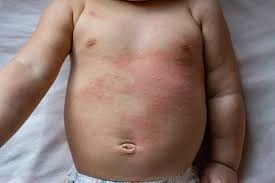
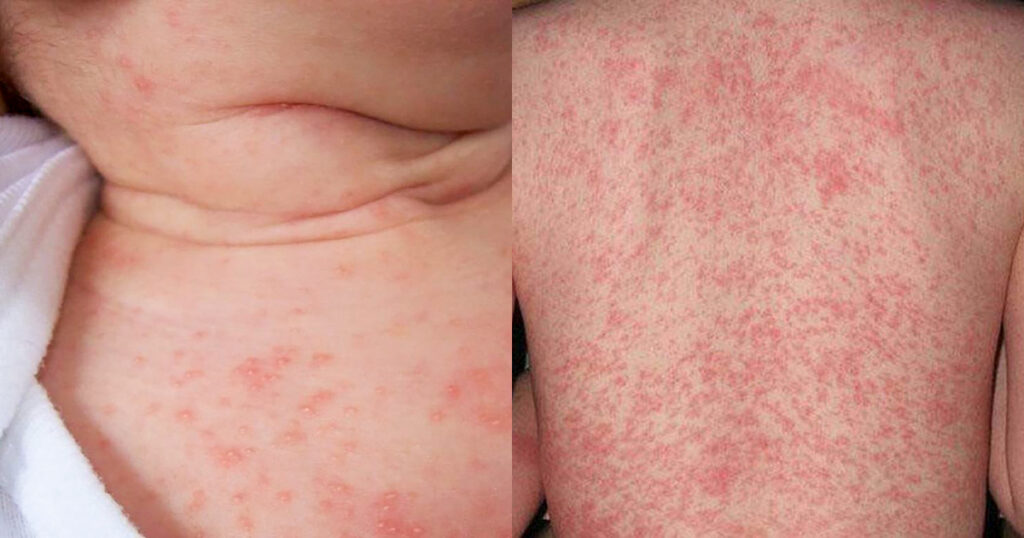
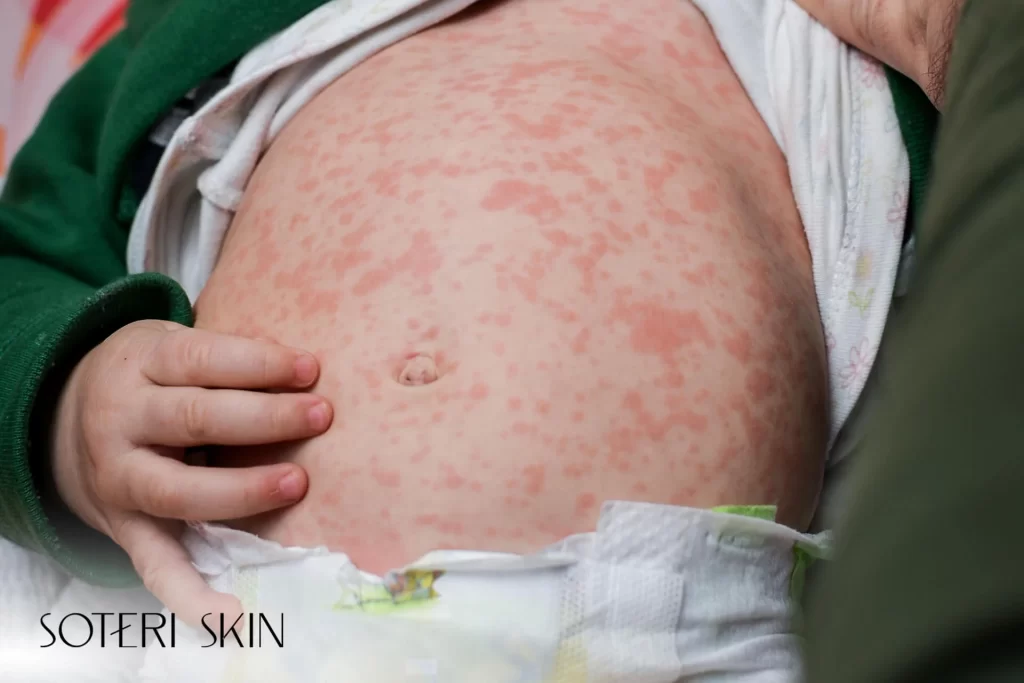
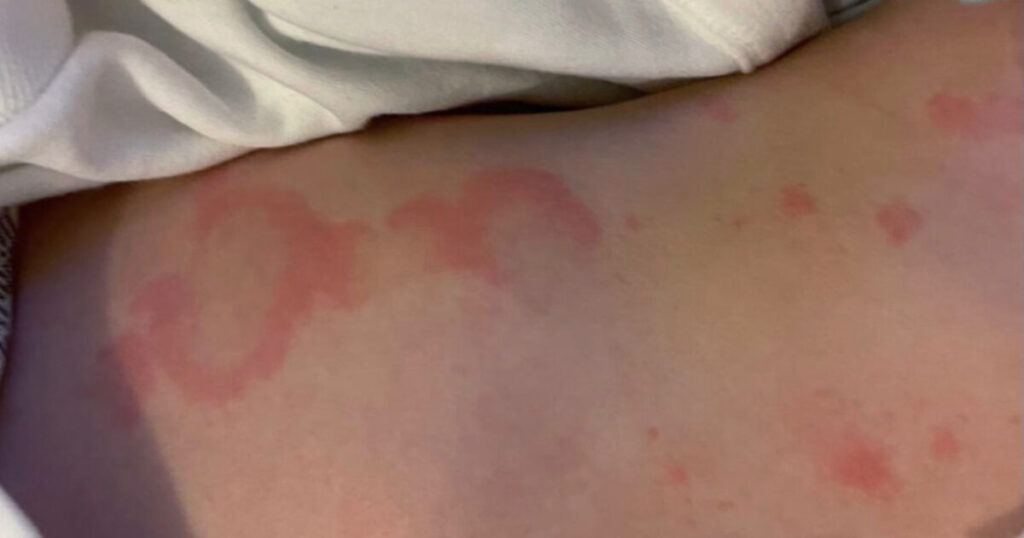
Newborn Heat Rash vs Allergy Rash: How to Tell the Difference & Treat at Home This Summer 2026 (India Guide)

With the March–April heat wave kicking in across India (yes, Karnataka is already feeling it!), newborn rashes are popping up everywhere in mom groups. Is that red bumpy skin heat rash (prickly heat) from the humidity, or an allergic reaction (like hives or eczema flare-up)? Don’t worry—most are harmless and treatable at home, but knowing the difference can save you stress and keep your little one comfy.

In this guide, we’ll break it down: symptoms, how to spot the difference, pediatrician-approved home remedies (including coconut oil vs calamine lotion), when to worry, and prevention tips for scorching Indian summers.

What is Heat Rash (Prickly Heat or Miliaria) in Newborns?

Heat rash happens when your baby’s tiny sweat glands get blocked in hot, humid weather. Sweat gets trapped under the skin, causing irritation. Newborns are extra prone because their sweat glands aren’t fully developed yet.

Common signs of heat rash:

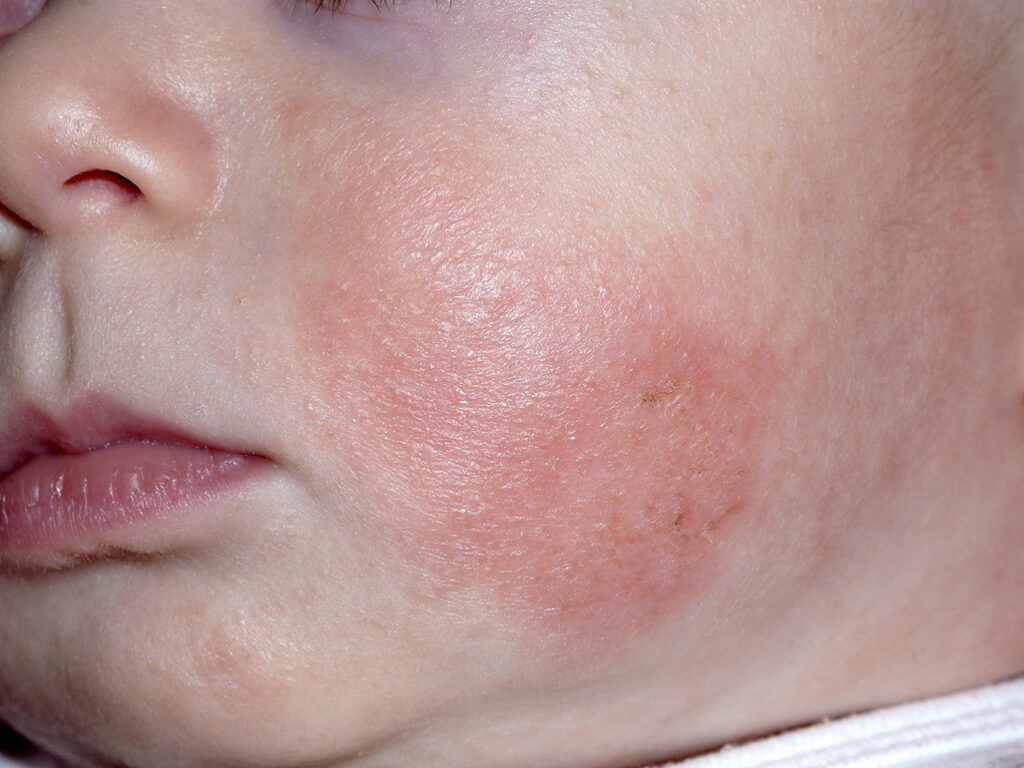
  • Tiny red bumps or clear blisters (like small pimples or beads of sweat)
  • Clusters in sweaty areas: neck folds, chest, back, armpits, groin, or diaper area
  • Prickly, itchy, or burning feeling (baby may seem fussy or restless)
  • Worsens with heat/sweat and improves when cooled down

It usually clears in a few days with simple cooling—no fever or other illness involved.

What is an Allergy Rash in Newborns? (Hives, Eczema, etc.)

Allergic rashes come from triggers like new foods (milk/dairy), soaps, detergents, fabrics, pollen, or even laundry products. Common types include:

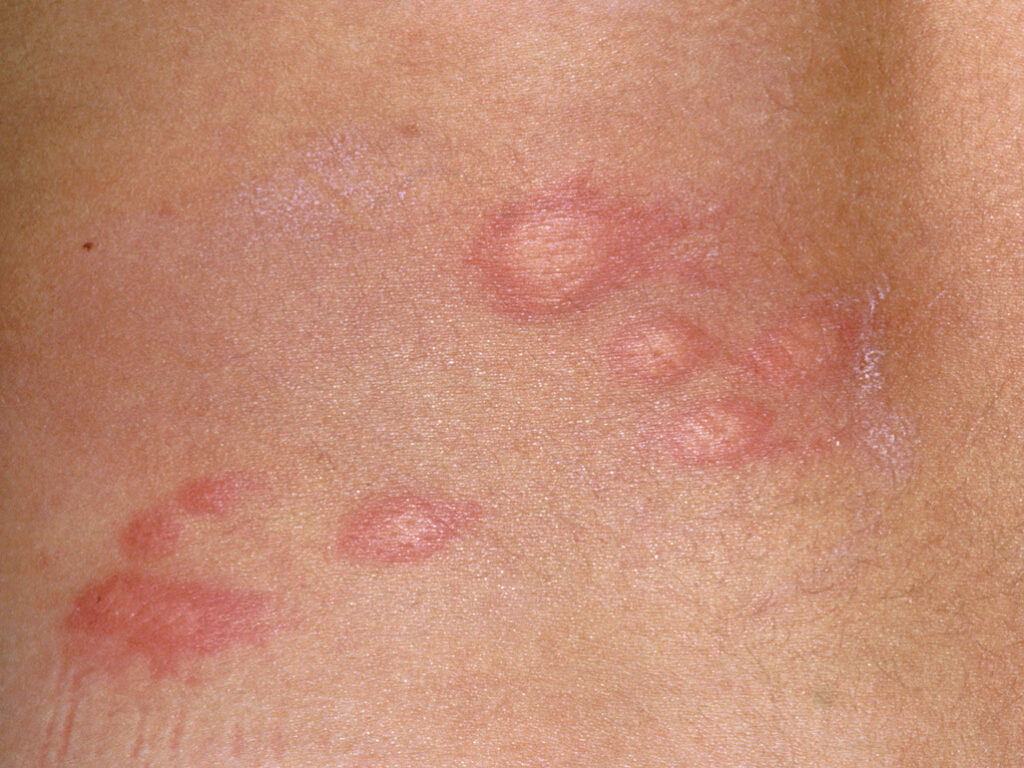
  • Hives (urticaria): Sudden raised, red welts that come and go quickly (often in 24 hours)
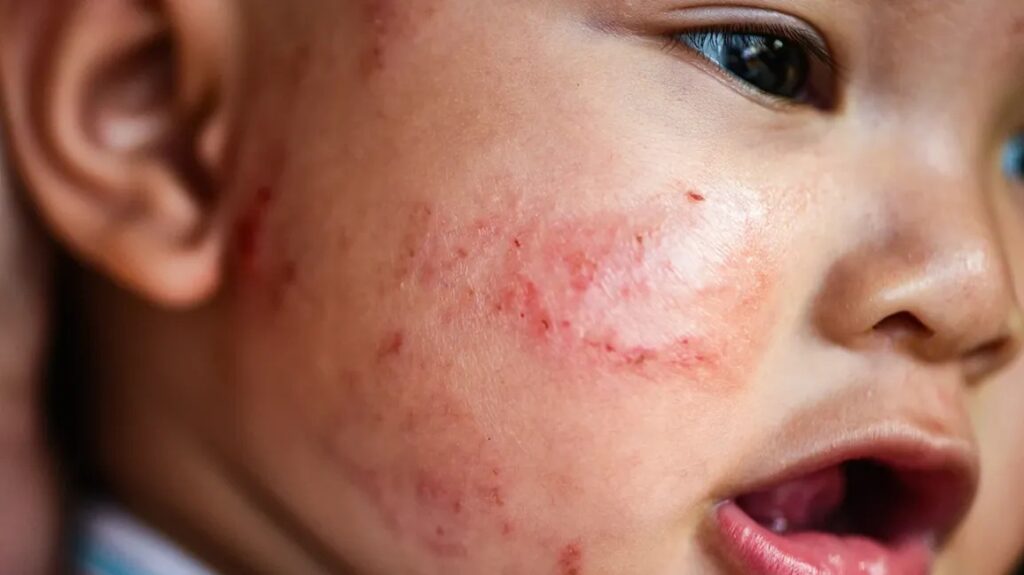
  • Eczema (atopic dermatitis): Dry, red, scaly patches that are very itchy and can crack

Common signs of allergy rash:

  • Raised welts/hives or dry, flaky patches
  • Intense itching (more severe than prickly heat)
  • Appears anywhere, often on face/cheeks, arms, or body
  • Sudden onset, may recur with the same trigger
  • Possible other signs: swelling, vomiting, or fussiness (severe cases need urgent care)

Unlike heat rash, it isn’t tied to temperature and doesn’t improve just by cooling.

Quick Comparison: Heat Rash vs Allergy Rash

Feature Heat Rash (Prickly Heat) Allergy Rash (Hives/Eczema)
Appearance Tiny pinpoint red bumps/blisters in clusters Raised welts (hives) or dry/scaly patches
Location Sweat-prone folds (neck, chest, back) Anywhere, often face/body
Itch Level Prickly/tingly Intense, burning itch
Trigger Heat, humidity, overdressing Allergens (food, soap, detergent)
Duration Clears in days with cooling May persist/recurr until trigger removed
Other Signs No fever Possible swelling, GI issues (severe)

Safe Home Treatments – Pediatrician-Approved for Indian Summers

For Heat Rash (Most Common in Summer):

  1. Cool the baby immediately – Move to a fan/AC room, give a lukewarm (not cold) bath without soap, pat dry gently.
  2. Dress lightly – Loose, breathable cotton clothes (avoid synthetics). Skip layers; let skin breathe (safe diaper-free time indoors).
  3. Soothe the skin:
    • Calamine lotion – Classic choice, cools and reduces itch (apply thinly).
    • Pure coconut oil – Natural Indian home remedy; moisturizes and calms mild cases (many moms prefer it over lotions for newborns).
    • Cool compress (clean cloth with cool water) for 10–15 mins.
  4. Keep hydrated – More breastfeeds or formula.

For Suspected Allergy Rash:

  • Identify/avoid trigger (switch to fragrance-free detergent, mild soap).
  • Gentle moisturizer (petroleum jelly or hypoallergenic cream).
  • Cool compress for hives.
  • If eczema suspected, use doctor-recommended barrier cream.

General tips: No scratching (trim nails), keep room cool (fan essential in Karnataka heat), change sweaty/damp clothes fast.

When to Worry & See a Pediatrician Right Away

Most rashes resolve at home, but rush to the doctor if:

  • Rash spreads rapidly, has pus/oozing blisters (possible infection)
  • Fever, swelling (face/lips/eyes), breathing trouble, vomiting (severe allergy/anaphylaxis emergency!)
  • Rash lasts >1 week, worsens, or baby is inconsolable/poor feeding
  • Signs of dehydration or extreme discomfort

In India, summer heat can turn minor issues worse—better safe with a quick pediatric visit.

Prevention Tips for Newborns During Indian Heat Waves

  • Dress in light cotton only (white/light colors best)
  • Avoid overdressing or tight swaddling
  • Use fan/AC; keep room 24–28°C
  • Daily cool baths, change diapers/clothes promptly
  • Mild, fragrance-free products
  • Shade outdoors; no direct sun for long

Final Thoughts

Summer 2026 is here, and heat rash is super common—but now you can spot it vs an allergy rash and treat safely at home. Coconut oil and calamine are mom-favorites in India, but always patch-test. Trust your instincts—if something feels off, chat with your pediatrician.

Have you dealt with newborn rashes this season? Share in the comments below—I read every one! Share this post with other moms in your WhatsApp groups.

Disclaimer: This is general info based on pediatric guidelines—not a substitute for medical advice. Consult a doctor for your baby’s specific condition.

Frequently Asked Questions (FAQs)

Is heat rash dangerous for newborns in India?


No, heat rash (prickly heat) is usually harmless and clears in a few days with cooling. It’s very common during Karnataka’s heat waves, but watch for infection signs like pus.

Heat rash shows tiny bumps in sweaty folds and improves with cooling. Allergy rash (hives/eczema) is more intense, sudden, and may involve face/swelling—often from food/soap triggers.

Yes, pure coconut oil is a safe, natural remedy many Indian moms use for mild cases—it moisturizes and soothes. Patch-test first and apply thinly.

Immediately if there’s fever, swelling, breathing issues, pus, or if the rash lasts over a week/worsens. Better to consult early in summer.

Yes—common trigger in hot Indian weather. Stick to light cotton layers and change sweaty clothes quickly.

No, heat rash (prickly heat) is usually harmless and clears in a few days with cooling. It’s very common during Karnataka’s heat waves, but watch for infection signs like pus.

Heat rash shows tiny bumps in sweaty folds and improves with cooling. Allergy rash (hives/eczema) is more intense, sudden, and may involve face/swelling—often from food/soap triggers.

Yes, pure coconut oil is a safe, natural remedy many Indian moms use for mild cases—it moisturizes and soothes. Patch-test first and apply thinly.

Immediately if there’s fever, swelling, breathing issues, pus, or if the rash lasts over a week/worsens. Better to consult early in summer.

Yes—common trigger in hot Indian weather. Stick to light cotton layers and change sweaty clothes quickly.

Related Articles on Momsaathi.com:

External Resources:

Early Puberty in Kids India 2026 – Why It’s Happening & Pediatrician Warning

Momsaathi.com provides content for informational and educational purposes only. It is not intended to serve as a substitute for professional medical advice, diagnosis, or treatment. If your child shows signs of early puberty (breast development before 8 in girls, testicular enlargement before 9 in boys, rapid height growth with body odor), contact a pediatric endocrinologist immediately.

Since February 2026, Indian mom WhatsApp groups, Instagram reels, and Google searches have been flooded with the same worry: “My 6–8 year old is showing puberty signs — is this normal?”

Early puberty in kids India is no longer rare. Pediatricians across Bengaluru, Mumbai, Delhi, and smaller cities are seeing more cases of precocious puberty — girls starting periods at 8–9 years, boys showing pubic hair or voice changes before 9.

This is not just “kids growing up faster”. It’s a real health signal. Here’s what leading pediatric endocrinologists in India are now warning parents about in 2026 — and what you can do at home.

What Is Early Puberty? (Simple Definition for Indian Moms)

Early puberty (precocious puberty) means puberty signs appear much earlier than normal:

  • Girls: Breast buds before age 8, pubic hair, rapid height spurt, periods before 9–10
  • Boys: Testicular enlargement before age 9, pubic/facial hair, voice deepening, sudden height increase

In India, the average age of puberty used to be 10–13 for girls and 11–14 for boys. Now many pediatricians report cases as young as 6–8 years.

Why Is Early Puberty Rising in Indian Children in 2026?

Pediatric endocrinologists point to 5 main modern triggers that have intensified in the last 5–7 years:

  1. Hormone-disrupting chemicals in packaged food
    • Phthalates, bisphenols (BPA), and parabens in plastic packaging, ready-to-eat snacks, instant noodles, and even some baby foods leach into food.
    • These mimic estrogen → trigger early breast development & periods in girls.
  2. Excessive screen time & blue light exposure
    • Screens disrupt melatonin → affect sleep → alter puberty hormones.
    • Kids aged 4–8 now average 3–5 hours/day on phones/tablets (2025 Indian studies).
  3. Childhood obesity & high-sugar/high-fat diet
    • Extra body fat produces more estrogen.
    • Indian kids consume more packaged snacks, sugary drinks, maida-based foods than 10 years ago.
  4. Stress & early exposure to adult content
    • Academic pressure, tuition from age 4–5, and social media exposure raise cortisol → can push puberty earlier.
  5. Environmental & genetic factors
    • Pollution (endocrine disruptors in air/water)
    • Family history (if mom or elder sister had early periods)

Early Puberty Signs Every Indian Mom Should Watch For (Ages 6–8)

Girls:

  • Breast buds (small hard lumps under nipples) before 8
  • Pubic or underarm hair
  • Rapid height growth + body odor
  • Acne or oily skin
  • Periods before age 9–10

Boys:

  • Testicular enlargement before 9
  • Pubic or facial hair
  • Voice deepening
  • Rapid height spurt + body odor
  • Acne

Red flags that need immediate doctor visit:

  • Puberty signs + very fast height gain
  • Sudden mood changes or aggression
  • Vaginal bleeding before age 8
  • Breast development in boys

What Should Indian Parents Do Right Now?

  1. Limit packaged & ultra-processed foods Replace chips/noodles with homemade snacks (roasted chana, puffed rice, fruit chaat).
  2. Cut screen time drastically WHO guideline: max 1 hour/day high-quality for 2–5 years. No screens 1 hour before bed.
  3. Focus on whole foods & healthy fats Include ragi, dal, jaggery, nuts, milk, seasonal fruits daily. Avoid excess sugar/maida.
  4. Encourage outdoor play & physical activity 60 min/day — park time, cycling, skipping — helps regulate hormones.
  5. Monitor & track growth Keep a height/weight diary. Sudden spurt + puberty signs = red flag.
  6. See a pediatric endocrinologist early Don’t wait for periods to start. Early treatment (if needed) can delay progression and protect final adult height.

Indian reality check: Many families delay seeing specialists due to fear or “it’s normal”. But early intervention can make a big difference.

Final Words for Indian Moms & Dads

Early puberty in kids India is rising — but it’s not inevitable. Small changes in diet, screen time, and lifestyle can protect your child’s natural development timeline.

If you’re seeing signs, don’t wait. Talk to your pediatrician or a pediatric endocrinologist soon.

Have you noticed early signs in any child around you? Share (anonymously if you prefer) in the comments — let’s support each other, Karnataka moms and parents.

Frequently Asked Questions

Is early puberty dangerous?

It can affect final adult height, emotional health, and increase risk of certain diseases later. Early treatment helps normalize growth.

No strong evidence in India. The bigger concern is hormone-disrupting chemicals in plastic packaging and ultra-processed food.

Yes — blue light disrupts sleep hormones, which can trigger early puberty. Limit screens & no devices in bedroom.

If puberty signs appear before 8 in girls or 9 in boys — don’t wait for periods or full development.

NIMHANS Bengaluru, government medical colleges, or private pediatric endocrinologists in Cloudnine, Manipal, Rainbow hospitals.

It can affect final adult height, emotional health, and increase risk of certain diseases later. Early treatment helps normalize growth.

No strong evidence in India. The bigger concern is hormone-disrupting chemicals in plastic packaging and ultra-processed food.

Yes — blue light disrupts sleep hormones, which can trigger early puberty. Limit screens & no devices in bedroom.

If puberty signs appear before 8 in girls or 9 in boys — don’t wait for periods or full development.

NIMHANS Bengaluru, government medical colleges, or private pediatric endocrinologists in Cloudnine, Manipal, Rainbow hospitals.

Related Articles on Momsaathi.com:

External Resources: