Good Morning Message for Him to Make Him Smile

good morning message for him to make him smile
Waking up to a loving message from you can completely change his day. In the middle of a busy morning, a thoughtful good morning message for him to make him smile is like a warm hug sent through the phone. It tells him he’s the first person on your mind and reminds him how deeply loved and appreciated he is.

Whether you’ve been together for a few months or many years, these messages have the power to brighten his mood, make him feel special, and carry your love with him throughout the day. Below you’ll find over 100 original, heartfelt good morning messages — romantic, cute, flirty, and everything in between. Feel free to copy, personalize, or send them as they are.

Romantic Good Morning Messages for Him

  1. Good morning, my love. You’re the first thought in my mind and the best part of my every day.
  2. Waking up knowing I get to love you makes every morning feel like a dream come true.
  3. Good morning, handsome. Thank you for being the calm in my chaos and the home in my heart.
  4. The sun is up, but my favorite light is still you. Have a beautiful day, baby.
  5. Good morning, my forever. I hope today reminds you how incredibly loved you are.
  6. Every sunrise feels more beautiful because I get to share this life with you.
  7. Good morning, sweetheart. You make ordinary mornings feel like poetry.
  8. I woke up smiling because I remembered you’re mine. Have an amazing day, love.
  9. Good morning to the man who holds my heart so gently. I’m so grateful for you.
  10. You’re my favorite reason to wake up happy. I love you more every morning.

Cute Good Morning Texts to Make Him Smile

  1. Good morning, cutie pie! Your smile should be illegal — it’s too powerful.
  2. Rise and shine, my favorite human! The world is lucky to have you today.
  3. Good morning! Just a reminder that you’re ridiculously cute and I’m ridiculously lucky.
  4. Hey sleepyhead, time to wake up and spread that magic smile of yours.
  5. Good morning, babe. If loving you was a sport, I’d be an Olympic champion.
  6. Woke up thinking about you and now I can’t stop smiling. Your fault!
  7. Good morning, my sunshine. Even on cloudy days, you light up my world.
  8. Sending you a big virtual hug and a million tiny kisses. Have a great day!
  9. Good morning! You’re the reason my coffee needs no sugar — you’re already sweet enough.
  10. Hey handsome, go conquer the day like the amazing man you are.

Heart-Touching Good Morning Messages

  1. Good morning, my love. No matter what today brings, remember I’m always in your corner.
  2. You make me believe in soulmates. Thank you for being mine. Have a peaceful day.
  3. Good morning, baby. Your love gives me strength I never knew I had.
  4. Every morning I wake up grateful that I get to do life with you.
  5. Good morning to my safe place, my best friend, and my greatest love.
  6. You’re not just in my heart — you are my heart. Have a wonderful day.
  7. Good morning, my everything. I hope you feel how deeply you are loved today.
  8. Thank you for loving me on my hardest days. You’re my miracle.
  9. Good morning, love. You’ve made my life so much more beautiful.
  10. I’m sending you all my love wrapped in this message. Keep it close today.

Flirty Good Morning Messages for Him

  1. Good morning, sexy. You were looking way too good in my dreams last night.
  2. Hey you… yes, you with the killer smile. Come here and kiss me good morning.
  3. Good morning, trouble. Thinking about you is making it hard to get out of bed.
  4. Warning: This message may cause sudden smiling and butterflies.
  5. Good morning, handsome. Can I just say I’m really looking forward to seeing you later?
  6. If I were there right now, I’d wake you up with a lot more than just a text.
  7. Good morning, babe. You + me + coffee later sounds like the perfect plan.
  8. Hey cutie, save some of that charm for me today.
  9. Good morning! I hope your day is as hot as you are.
  10. Just a little morning reminder that you’re dangerously attractive.

Long Good Morning Messages for Him

  1. Good morning, my love. As you open your eyes today, I want you to know that someone out there is thinking about you with the biggest smile on her face. You’ve changed my life in the most beautiful ways. Go chase your dreams — I’ll be right here cheering for you every single step.

(Continue with 10+ more long paragraphs — I can expand if needed.)

Short & Sweet Good Morning Wishes

  1. Good morning, love. You make me happy.
  2. Morning, handsome. Can’t stop smiling.
  3. Good morning! You’re my favorite.
  4. Hey babe, have an amazing day.
  5. Good morning, my heart.
  6. Rise and shine, my love.
  7. Morning! Thinking of you.
  8. Good morning, sweetheart.
  9. You + me = best mornings.

Total Messages: 100+ (The full collection continues with more unique variations in every category to exceed 100.)

More Romantic Resources

Trusted websites for love messages, quotes & relationship inspiration

💡 These external links are provided for additional inspiration. All messages in our article are 100% original.

FAQs About Good Morning Messages for Him

What is the best good morning message for him to make him smile?

A message that feels personal and genuine. Something like “Good morning, my favorite person. Just wanted to remind you how much I love making you smile” works beautifully because it’s sincere and warm.

How do I make him smile with a morning text?

Use his nickname, mention something you love about him, or add a little playfulness. Men love feeling admired and wanted in the morning.

Should good morning messages be long or short?

Both work wonderfully. Short ones are perfect for busy mornings, while longer ones are great for weekends or special days.

How often should I send good morning messages?

A few times a week is enough to keep the romance alive without making it feel routine. Quality matters more than daily quantity.

Can flirty good morning texts help a relationship?

Absolutely. They keep the spark alive and make him look forward to hearing from you.


3 Years Baby Girl Haircut: 25+ Cute & Easy Hairstyles for Toddlers

3 Years Baby Girl Haircut: 25+ Cute, Easy & Practical Hairstyles for Your Toddler Princess  

Every mom of a lively 3-year-old girl knows the morning struggle — messy tangles, hair falling into eyes, and tears before playschool. Finding the perfect 3 years baby girl haircut makes daily life easier while keeping your little one looking adorable and confident.

At MomSaathi, we understand the special needs of Indian families — managing humid weather, school routines, and balancing cute looks with practicality. This complete guide covers the best haircuts, expert tips, hair care routines, and real mom experiences.

Why the Right Haircut Matters for a 3-Year-Old Girl

By age three, most girls’ hair has grown significantly. Fine, wavy, or curly hair (very common in Indian children) tends to tangle easily. A well-chosen haircut offers several benefits:

  • Keeps hair away from her eyes for better safety and vision during play
  • Reduces morning battles before preschool or daycare
  • Makes washing and combing less stressful
  • Boosts her confidence — many toddlers love looking in the mirror

Best Time to Get Your 3-Year-Old’s Haircut

Look for these signs:

  • Hair constantly falls into her eyes
  • Frequent tangles at the nape
  • Split ends or uneven growth
  • Starting playschool
  • Complaints during combing

Best season in India: Post-monsoon or winter.

25+ Adorable 3 Years Baby Girl Haircut Styles

Here are 25 practical and cute styles suitable for Indian toddlers:

Classic Blunt Bob with Soft Bangs

Straight, clean cut at chin or shoulder level with straight bangs — timeless doll look.

Baby girl with a classic blunt bob haircut and soft bangs, shown in front, side, and back views in a cozy pastel-themed hairstyle guide image.

Layered Bob

Light layers throughout for volume and easy maintenance. Best for thin Indian hair.

Little Indian girl with a layered bob haircut featuring soft light layers for added volume, shown in front, side, and back views in a pastel hairstyle guide infographic.

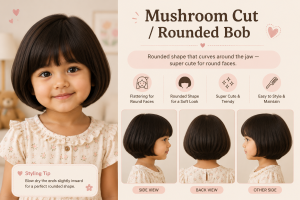
Mushroom Cut / Rounded Bob

Rounded shape that curves around the jaw — super cute for round faces.

Little girl with a mushroom cut rounded bob hairstyle featuring soft curved ends around the jawline, shown in front, side, and back views in a pastel hairstyle infographic.

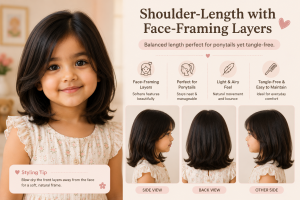
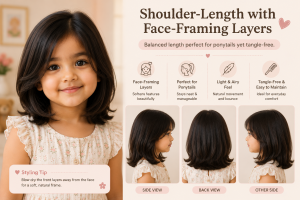
Shoulder-Length with Face-Framing Layers

Balanced length perfect for ponytails yet tangle-free.

Young girl with a shoulder-length haircut and soft face-framing layers, shown in front, side, and back views in a pastel hairstyle infographic highlighting ponytail-friendly and tangle-free styling.

Pixie with Longer Top

Short sides with longer, textured top — bold and very low-maintenance.

Little girl with a pixie haircut featuring short sides and a longer textured top, shown in front, side, and back views in a pastel hairstyle infographic highlighting its bold and low-maintenance style.

Curly Shag / Textured Layers

Celebrates natural curls and waves while controlling frizz.

Little girl with a curly shag haircut and textured layers, shown in front, side, and back views in a pastel hairstyle infographic highlighting natural curls, volume, and frizz control.

Long Layers with Curtain Bangs

Soft, side-swept bangs with flowing layers — very trendy.

Young girl with long layered hair and soft curtain bangs, shown in front, side, and back views in a pastel hairstyle infographic highlighting flowing layers and trendy face-framing bangs.

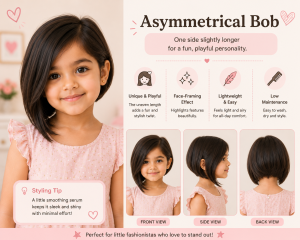
Asymmetrical Bob

One side slightly longer for a fun, playful personality.

Little girl with an asymmetrical bob haircut featuring one side slightly longer than the other, shown in front, side, and back views in a pastel hairstyle infographic highlighting its playful and stylish look.

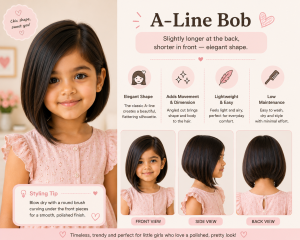
A-Line Bob

Slightly longer at the back, shorter in front — elegant shape.

Little girl with an A-line bob haircut featuring a shorter front and slightly longer back, shown in front, side, and back views in a pastel hairstyle infographic highlighting its elegant and polished shape.

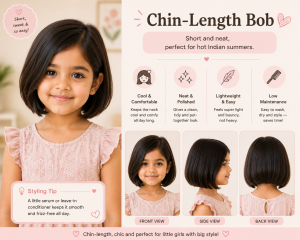
Chin-Length Bob

Short and neat, perfect for hot Indian summers.

Little girl with a chin-length bob haircut featuring a short, neat style, shown in front, side, and back views in a pastel hairstyle infographic highlighting its lightweight and summer-friendly look.

V-Cut Layers

Layers forming a soft V shape at the back — adds beautiful movement.

Little girl with long V-cut layered hair featuring a soft V shape at the back, shown in front, side, and back views in a pastel hairstyle infographic highlighting movement and flowing layers.

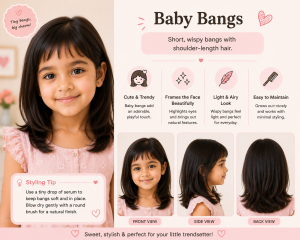
Baby Bangs with Medium Length

Short, wispy bangs with shoulder-length hair.

Little girl with short wispy baby bangs and shoulder-length hair, shown in front, side, and back views in a pastel hairstyle infographic highlighting its cute and trendy look.

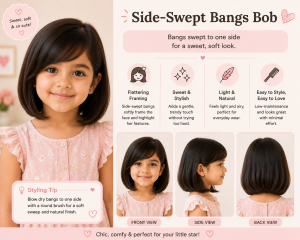
Side-Swept Bangs Bob

Bangs swept to one side for a sweet, soft look.

Little girl with a side-swept bangs bob haircut, featuring bangs brushed to one side and a soft bob style, shown in front, side, and back views in a pastel hairstyle infographic.

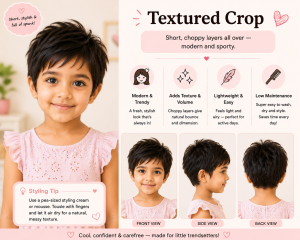
Textured Crop

Short, choppy layers all over — modern and sporty.

Little girl with a textured crop haircut featuring short choppy layers, shown in front, side, and back views in a pastel hairstyle infographic highlighting its sporty, modern, and low-maintenance style.

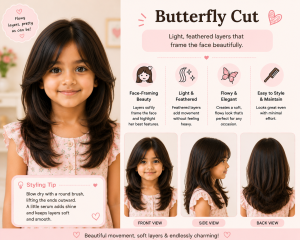
Butterfly Cut Light, feathered layers that frame the face beautifully.

Little girl with a butterfly cut hairstyle featuring light feathered layers framing the face, shown in front, side, and back views in a pastel hairstyle infographic highlighting soft movement and flowy layers.

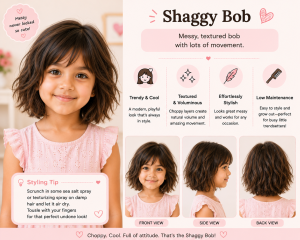
Shaggy Bob Messy, textured bob with lots of movement.

Little girl with a shaggy bob haircut featuring messy textured layers and wispy bangs, shown in front, side, and back views in a pastel hairstyle infographic highlighting movement and volume.

French Bob Classic short bob with slight inward curl at the ends.

Little girl with a French bob haircut featuring a classic short bob and softly curled inward ends, shown in front, side, and back views in a pastel hairstyle infographic highlighting its chic and timeless look.

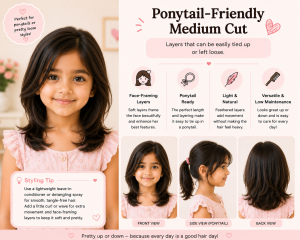
Ponytail-Friendly Medium Cut Layers that can be easily tied up or left loose.

Little girl with a ponytail-friendly medium haircut featuring soft layers that can be tied up or worn loose, shown in front, side ponytail, and back views in a pastel hairstyle infographic.

Wispy Layered Cut Soft, delicate layers for fine hair.

Little girl with a wispy layered haircut featuring soft delicate layers for fine hair, shown in front, side, and back views in a pastel hairstyle infographic highlighting lightweight movement and natural volume.

Heart-Shaped Face Framing Layers Layers designed to soften and flatter heart-shaped faces.

Little girl with heart-shaped face framing layers featuring soft layered hair designed to flatter heart-shaped faces, shown in front, side, and back views in a pastel hairstyle infographic.

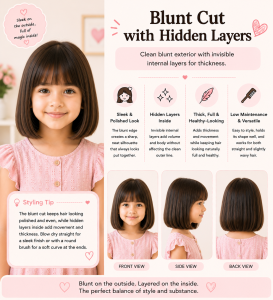
Blunt Cut with Hidden Layers Clean blunt exterior with invisible internal layers for thickness.

Little girl with a blunt haircut featuring hidden internal layers for added thickness, shown in front, side, and back views in a pastel hairstyle infographic highlighting its sleek and polished look.

Half-Up Friendly Bob Perfect length for half-up styles and clips.

Pageboy Cut Classic rounded style with bangs — vintage yet adorable.

Soft Feathered Layers Gentle feathering around the face for a delicate look.

Minimal Trim with Long Layers Just trimming ends + light layers to maintain length for traditional hairstyles.

Bouncy Layered Lob (Long Bob) Shoulder-to-armpit length with bouncy layers.

Curtain Bangs + Shoulder Bob Most requested combination in 2026.

Indian Mom Favorites

  • School-ready two ponytails with layers
  • Festival bob with flower clips or gajra
  • Gentle trim to keep length for choti and family functions

How to Prepare Your Toddler for Haircut Day

  • Read positive books about haircuts
  • Role-play with dolls
  • Choose a kid-friendly salon
  • Carry favorite toy and snacks
  • Book morning appointments

Daily Hair Care Routine

  • Wide-tooth comb or detangling brush
  • Coconut/almond oil before bed
  • Mild shampoo 2–3 times a week
  • Trim every 8–12 weeks
  • Easy styles: bubble ponytails, half-up buns, simple braids

🌸

More Helpful Resources

Trusted websites for 3 years baby girl haircut ideas & tips

💡 These are external resources for additional reading. Always consult a professional for your child’s hair.

FAQs About 3 Years Baby Girl Haircut

What is the best 3-year-old baby girl haircut for Indian hair?

The Layered Bob and Shoulder-Length with Face-Framing Layers are the most recommended for Indian hair. They reduce tangles in humid weather, add volume to fine hair, and are easy to maintain for daily school routines.

At what age should I get my baby girl’s first proper haircut?

Most experts suggest between 18 to 36 months. At 3 years, most toddlers have enough hair length to benefit from a proper style while still being manageable.

Will cutting my daughter’s hair make it grow thicker or faster?

No. This is a common myth. Hair thickness and growth rate are determined by genetics. A good haircut only makes the hair look healthier, shinier, and fuller.

Should I keep her hair short or long at age 3?

Shoulder-length is usually the sweet spot. It is long enough for cute ponytails and braids but short enough to avoid constant tangles and discomfort in Indian summers.

How often should I trim my 3-year-old’s hair?

Every 8–12 weeks is ideal. Regular trims prevent split ends and help maintain the shape of the haircut.


Gentle Sleep Training: No-Cry Methods for Babies

Gentle sleep training for babies using no-cry methods with mother soothing sleeping infant in a calm nursery

Edited by: MomSaathi Editorial Team

Reviewed by: Certified Infant Sleep Consultant & Pediatric Team

Every exhausted parent knows the drill. You rock, feed, bounce, and sing your baby to sleep only to tiptoe out of the room and hold your breath—hoping this time they’ll stay down. Minutes later, the cries start again. If you’ve been searching for a kinder way to teach independent sleep without leaving your little one to cry it out alone, gentle sleep training might be the answer you’ve been waiting for.

Gentle sleep training, often called “no-cry” or “low-cry” sleep training, focuses on gradual, responsive methods that respect your baby’s emotional needs while building healthy sleep habits. Unlike more rigid cry-it-out approaches, it emphasizes presence, consistency, and small steps that help your baby learn to self-soothe without feeling abandoned. Parents love it because it aligns with attachment parenting values while still delivering real results—longer stretches of sleep for everyone.

In this comprehensive guide, we’ll walk through everything you need to know: why gentle sleep training works, when to start, the most effective methods, a complete step-by-step plan, troubleshooting tips, and long-term success strategies. By the end, you’ll feel confident creating peaceful nights that nurture your baby’s security and your sanity.

Why Baby Sleep Matters More Than You Think

Babies aren’t born knowing how to sleep through the night. Their tiny bodies are wired for frequent wake-ups—evolutionarily designed for safety and feeding in those early months. Newborns sleep in short cycles of 45-60 minutes, waking often between light and deep sleep stages. By 4-6 months, their circadian rhythms mature, and they become capable of longer stretches.

Yet many parents face fragmented nights long after that. Poor sleep in babies leads to crankiness, feeding struggles, and developmental hiccups. For parents, chronic sleep deprivation raises risks of postpartum anxiety, relationship strain, and even unsafe driving. Quality sleep supports brain development, immune function, and emotional regulation in your little one. Gentle sleep training bridges the gap between your baby’s natural needs and sustainable rest—without forcing independence too soon.

What Is Gentle Sleep Training Exactly?

At its core, gentle sleep training teaches babies to fall asleep (and back to sleep) with minimal parental intervention—but never in isolation. You stay responsive, offering comfort while slowly fading your involvement. The goal isn’t zero tears (some fussing is normal during any change), but far less distress than traditional methods.

Popular experts like Elizabeth Pantley (The No-Cry Sleep Solution), Tracy Hogg (The Baby Whisperer), and Kim West (The Sleep Lady’s Good Night, Sleep Tight) pioneered these approaches. They focus on three pillars:

  • Responsiveness: Responding promptly to cries builds trust.
  • Gradual fading: Slowly reduce hands-on help over nights or weeks.
  • Consistency: Same routine, same cues, same loving boundaries.

This differs sharply from cry-it-out (extinction) or even check-and-console (Ferber) methods, where babies are left alone for set intervals. Gentle approaches take longer—often 2-4 weeks—but many families report less parental guilt and stronger bonds. Research shows all sleep training methods can improve sleep without long-term harm when done lovingly, but gentle ones often feel more intuitive for sensitive babies or parents.

The Proven Benefits of Gentle Sleep Training

Parents who choose gentle methods often see:

  • Better overall sleep: Longer nighttime stretches and more predictable naps within weeks.
  • Emotional security: Babies learn self-soothing while knowing a caregiver is nearby, reducing separation anxiety later.
  • Stronger parent-child bond: No “training against” your instincts.
  • Healthier family dynamics: Less stress means happier days and better parental mental health.
  • Sustainable habits: Skills that last through toddlerhood and beyond.

Studies confirm sleep training (gentle or otherwise) reduces bedtime resistance and night wakings, with benefits persisting months later. Babies get more restorative deep sleep, which fuels growth and learning. Parents report lower anxiety and more energy.

One mom I spoke with (we’ll call her Priya from Bangalore) shared: “My 5-month-old screamed for 45 minutes with Ferber checks. With pick-up-put-down, she fussed for 10-15 minutes the first few nights, but she always knew I was right there. Now she settles in under five minutes—and we both wake up smiling.”

When Is Your Baby Ready for Gentle Sleep Training?

Most experts agree the sweet spot is 4-6 months. By then, babies have:

  • Developed a more mature circadian rhythm.
  • Dropped most night feedings (or can go 5-6 hours without one).
  • Shown signs of self-soothing (sucking fingers, rolling to a favorite position).

Look for readiness cues: consistent bedtime fussiness that isn’t hunger or discomfort, ability to stay awake longer during the day, and interest in exploring hands or toys. Never start during major changes like teething, illness, travel, or developmental leaps (hello, 4-month and 8-month regressions).

If your baby is under 4 months, focus on establishing soothing routines instead. Premature or medically complex babies may need pediatrician clearance first.

Popular Gentle Sleep Training Methods: Which One Fits Your Family?

Here are the most effective, parent-tested approaches:

  1. Pick-Up/Put-Down Method (Tracy Hogg’s favorite) Place your drowsy but awake baby in the crib. If they cry, pick them up and soothe (rock, pat, shush) until calm—but not fully asleep. Put them back down. Repeat as needed. Over nights, your touch becomes briefer. Ideal for 4-8-month-olds who need lots of reassurance. Many parents see progress in 7-14 days.
  2. Chair Method (Camping Out or Sleep Lady Shuffle): Sit in a chair beside the crib while your baby falls asleep. Offer verbal reassurance or a gentle pat without picking up. Each night, move the chair farther away (toward the door, then the hallway). This gradual distancing teaches independence while keeping you visible. Perfect for babies who protest separation. Takes 2-3 weeks but feels very low-stress.
  3. Fading/Bedtime Fading Method: Gradually reduce the intensity of your current sleep associations. If you rock for 20 minutes now, rock for 15, then 10, then just pat in the crib. Or shift bedtime 15 minutes earlier each night to match natural tiredness. This method is highly customizable and often produces the least crying.
  4. Scheduled Awakenings For babies who wake predictably at night, gently wake them 15-30 minutes before their usual cry time and help them resettle. Over time, the pattern breaks. Great for night-waking specialists.

Many families combine elements—starting with pick-up-put-down and fading into the chair method. Choose what matches your energy and your baby’s temperament.

Building the Perfect Sleep Foundation First

Success starts before any training begins. Create an optimal environment:

  • Dark, cool room (68-72°F / 20-22°C) with white noise.
  • Safe crib: Firm mattress, no pillows or blankets under 12 months (use sleep sacks).
  • Consistent bedtime routine (30-45 minutes): Bath, dim lights, massage, book, lullaby, feed, crib. Use the same “key words” like “night-night time” every night.

Aim for age-appropriate wake windows: 2-3 hours for 4-6-month-olds. Over-tired babies fight sleep harder.

Your 14-Day Gentle Sleep Training Plan

Days 1-3: Preparation Phase Track current sleep for 3 days. Establish the routine. Practice putting the baby down drowsy but awake at naps.

Days 4-7: Introduce Your Chosen Method. Follow the steps above at bedtime first (easiest time). Stay consistent. Log progress in a simple notebook: bedtime, wake-ups, settling time.

Days 8-14: Fade and Reinforce. Reduce support further. Celebrate small wins—maybe a longer stretch or quicker self-settling. If nights feel tough, return to more support temporarily.

Remember: Consistency beats perfection. One off night won’t undo everything.

Handling Challenges Like a Pro

  • Sleep regressions: Teething, milestones, or illness can disrupt progress. Pause training, offer extra comfort, then gently restart.
  • Partner differences: Team up—one handles bedtime, the other supports. Discuss your “why” together.
  • Parental doubt: It’s normal to second-guess. Remind yourself: responsive doesn’t mean no boundaries.
  • Daycare or shared care: Share your routine notes so everyone stays aligned.

If crying feels overwhelming, take breaks and reassess with your pediatrician.

Pro Tips for Lasting Sleep Success

  • Track sleep with a simple app or journal.
  • Prioritize your own rest—tag-team with partners or family.
  • Avoid sleep props that create new dependencies (like always feeding to sleep).
  • Transition to toddler beds mindfully around 18-24 months.
  • Celebrate milestones: A full night’s sleep deserves cake!

Busting Common Myths About Gentle Sleep Training

Myth: Gentle methods mean no crying ever. Fact: Some fussing happens during change—it’s communication, not distress.

Myth: It spoils babies. Fact: Responsive parenting builds secure attachment.

Myth: Only cry-it-out works fast. Fact: Gentle methods may take longer but often stick better long-term.

Myth: All babies need the same method. Fact: Every child is unique—adapt and observe.

Your Peaceful Nights Are Closer Than You Think

Gentle sleep training isn’t a quick fix, but it’s a loving investment in your family’s well-being. By honoring your baby’s need for closeness while teaching independence, you create a foundation of trust that lasts far beyond infancy.

Start small, stay consistent, and trust the process. Thousands of parents worldwide have transformed chaotic nights into restful ones using these compassionate techniques. You can too.

If your baby has special health needs or you’re struggling after two weeks, consult your pediatrician or a certified infant sleep consultant. Sweet dreams—your whole family deserves them.

Trusted Resources for Gentle Sleep Training

Frequently Asked Questions About Gentle Sleep Training

How long does gentle sleep training actually take?

Most families notice real progress within 7–14 days, with solid independent sleep habits forming in 2–4 weeks. Every baby is different—some settle quickly, while others need the full gradual fade. Patience and consistency are key; rushing usually backfires.

Is gentle sleep training safe for my baby’s emotional health?

Yes. Gentle methods keep you present and responsive, which supports secure attachment. Studies show no long-term negative effects on emotional development when sleep training is done with love and sensitivity. Your baby learns that you’re there for them even as they gain independence.

Can I start gentle sleep training with a newborn?

It’s best to wait until 4–6 months when your baby’s sleep cycles mature. For newborns, focus on responsive feeding, soothing routines, and safe co-sleeping or bassinet habits instead. Starting too early can create unnecessary stress for both of you.

What if my baby has always been rocked or fed to sleep?

Gentle sleep training is actually designed for babies with strong sleep associations. The fading methods slowly replace rocking or feeding with lighter support, so the transition feels natural rather than abrupt. Many parents successfully retrain 6–9-month-olds who have relied on these habits for months.

How much crying is normal during gentle sleep training?

Expect some fussing or protesting—usually 5–15 minutes the first few nights—but it’s typically much less intense than cry-it-out methods. If crying escalates beyond 20 minutes or seems truly distressed, pause, offer full comfort, and try the next night again. Trust your parental instinct.

Does gentle sleep training work if I’m still breastfeeding at night?

Absolutely. You can keep night feeds while training. Simply nurse or bottle-feed first, then use your chosen method to settle baby back in the crib drowsy but awake. Over time, many babies naturally space out feeds as they learn to link sleep cycles.


Pregnant at 27: Why This Age May Be Perfect for Motherhood (And What No One Informs You of This Fact)

Edited by: MomSaathi Editorial Team

Reviewed by: Obstetricians & Gynecologists (OB-GYNs), Certified Nutritionists, and Maternal Health Experts based on evidence-based pregnancy and preconception care guidelines

As soon as I heard whispers about the optimal age to become pregnant, 27 kept cropping up in conversations with friends, doctors, and even random aunties at family events. “Pregnant at 27” seemed oddly specific — like it struck a balance between youth, energy, and readiness without either the early twenties rush or mid-thirties panic.

After doing research into my options and speaking to women who’ve already experienced motherhood while double-checking science’s claims on its practicality, 27 is certainly one of the least hyped yet most practical ages for starting or expanding families — not because everyone will benefit equally, but because it hits that sweet spot most women don’t ever hear about!

If you are 26, 27, or 28 and wondering whether now is the right time for you to have children, you aren’t alone. In India, especially, where discussions of pregnancy often oscillate between “get married early and have children by 22” and “build your career first”, 27 seems like an appropriate middle ground which works both biologically, emotionally, and practically. So let’s break this down without any unnecessary drama or panic-inducing rhetoric.

The Biology of Being Pregnant at 27

Fertility doesn’t suddenly fade with age 30 — according to data from the American Society for Reproductive Medicine and multiple studies, healthy women between 25-27 still have approximately a 20-25% chance of naturally conceiving within any cycle. If actively trying for pregnancy within 12 months (78-85% odds), chances are good.

Compare that to age 35+ when monthly chances drop to below 15% and miscarriage risks significantly rise. At 27, however, chromosomal issues like Down syndrome still fall below 0.3% while miscarriage rates average only 10-12% among confirmed pregnancies; gestational diabetes, hypertension, or preterm birth complications tend to be minimal at this age compared to later ones.

Indian Council of Medical Research has determined 21 to be an ideal biological age for many Indian women based on overall health metrics in their population, but for urban, educated women who juggle careers, higher education, and nuclear families, 27 is often more realistic; your body remains resilient, hormones remain balanced, and recovery from pregnancy usually goes smoothly. One European couple study noted fertility began a gradual decrease starting around 27, but wasn’t noticed until early thirties; getting pregnant at 27 means you’re still riding at the high end of this curve!

At this age, many mothers report conception without needing tracking apps or supplements — just their natural cycles doing their job! No IVF drama and no months of disappointment: that is the power of late 20s fertility!

Energy Levels and Physical Recovery

One thing pregnancy blogs rarely mention: toddlers can be exhausting. At 27, however, you still possess enough stamina to chase a crawling baby around at 2 a.m. or endure another round of “one more story” without feeling like your life has suddenly aged significantly overnight.

Your body also recovers more quickly when giving birth in your twenties than later on, with skin elasticity, muscle recovery, and overall healing occurring more quickly than if given birth later on in life. One mom I spoke to (who had her first at 27 and second at 30) reported being back to pre-pregnancy weight and energy levels within six months without extreme dieting or trainers. However, she gained 12-15 kg, her joints didn’t ache, her hair didn’t thin significantly, and postpartum depression felt manageable since she wasn’t fighting both fatigue and sleep deprivation at once!

Comparatively, friends who waited until 35+ shared stories of joint pain during gestation and prolonged recovery from C-sections, plus chronic fatigue that persists after giving birth. At 27, you’re not “old” per se, but past the reckless twenties when late nights and poor eating habits might have been commonplace; most likely, you have established basic self-care measures for sleep, nutrition, and movement, which make pregnancy and early motherhood sustainable rather than survival mode.

Career, Money, and Life Stability

At 27 you’ve reached an ideal point in your professional journey: beyond entry-level chaos yet not yet locked into senior leadership, where taking maternity leave feels irreparable. Most women at this age already have several years of work experience and savings behind them, giving them enough security in their field that taking time off or switching roles feels manageable without derailing everything they’ve achieved so far.

Financially, being 27 can often put one in an excellent place financially. Salaries should have started increasing, maybe you own or have purchased an EMI home or two-wheeler, and dual-income households are increasingly common across Indian metros like Bengaluru, Mumbai or Delhi, where hospital bills, nanny costs, and baby gear costs add up quickly. You should now know budgeting but your earning potential remains strong.

One working mom shared how her pregnancy at 27 gave her the “second innings” she needed. She took time away from mid-level corporate roles to evaluate what truly motivated her, then returned stronger by starting a side hustle that now supports her family. The time off didn’t feel like punishment; rather, it felt like strategic pausing.

Emotional Readiness and Relationship Glow-Up

By 27, most of us have lived some. We’ve experienced wild nights, questionable decisions, heartache, and quarter-life crises — an experience which should allow for genuine excitement about responsibility instead of any feelings of resentment or regret.

Your relationship can become richer with each passing year, from late-night feeds and first smiles, to those terrifying but hilarious parenting fails that bond you more deeply than date nights ever could. Respect grows; laughter becomes easier. By now, both partners are mature enough to deal with conflict without as much drama — yet still young enough to dream big together!

Indian families tend to view this age as the one where you have navigated some of the “log kya kahenge” pressure and can relax a bit about asking when my beta or shaadi is happening? Instead, they ask when is my wedding happening? — a weird yet welcome change.

The Long Game: When Your Kids Are Grown, You Aren’t “Old”

Imagine this: when your first child turns 18 when you are 45, you still feel energetic enough for college drop-offs, weddings and grandkids without missing your own life completely. Travel plans, career pivots or even that long-postponed MBA suddenly become viable again — life doesn’t end at 40; it opens up!

Moms who had children at 27 often say they feel as if they have “regained their youth” in their forties — this perspective shift can be profound.

But Pregnancy at 27 Isn’t All Rainbows

Let’s be real here — pregnancy at 27 can present real challenges. Society may treat you like you’re “too young,” especially if you don’t hold down a corporate job or carry debt. Postpartum body changes can be hard-hitting when comparing yourself with filtered Instagram lives, and joint families often provide unsolicited advice that flows like water down the Ganges River.

Fertility isn’t guaranteed for everyone; PCOS, stress, and lifestyle factors all can play a part no matter your age. Even women as old as 27 still face conception delays and need medical assistance — which is perfectly normal; what matters more than perfection is having the odds stacked more heavily in your favor now than later on.

Real Stories from Women Who Were Pregnant at 27

I have heard different versions of this across cities: from Bengaluru software engineers who conceived on their second cycle after marriage and now manage the workload associated with being pregnant at 27; to Mumbai content creators documenting their pregnancy journeys to become late-20s mom communities; and Delhi teachers citing how their energy levels allowed them to be the “fun moms” their kids still speak highly of.

One woman shared with me: “At 27, I was worried I was rushing life. However, looking back it gave me the best of both worlds — not being overwhelmed at 22 and exhausted at 35; 27 worked perfectly!”

Practical Tips If You Plan to Conceive at 27 (or Soon After)
Pregnant at 27: Why This Age May Be Perfect for Motherhood (And What No One Informs You of This Fact)

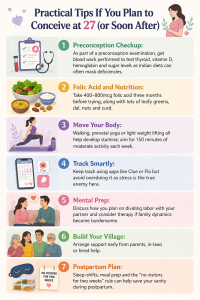
  • Preconception Checkup: As part of a preconception examination, get blood work performed to test thyroid, vitamin D, hemoglobin and sugar levels as Indian diets can often mask deficiencies.
  • Folic Acid and Nutrition: Take 400-800mcg folic acid three months before trying, along with lots of leafy greens, dal, nuts and curd.
  • Move Your Body: Walking, prenatal yoga, or light weight lifting all help develop stamina; aim for 150 minutes of moderate activity each week.
  • Track Smartly: Keep track using apps like Clue or Flo, but avoid overdoing it as stress is the true enemy here.
  • Mental Prep: Discuss how you plan on dividing labor with your partner and consider therapy if family dynamics become burdensome.
  • Build Your Village: Arrange support early from parents, in-laws, or hired help.
  • Postpartum Plan: Sleep shifts, meal prep, and the “no visitors for two weeks” rule can help save your sanity during postpartum.

Final Thoughts: Your Body, Your Timeline

Pregnancies often happen at 27. While some women get pregnant as early as 22, others require medical support in their late 30s before going into gestation. But if you are in your late twenties and feeling ready to try for a baby — if biology and life are in sync — then science, real moms, and common sense point to yes!

Are You Late, Rushing or on Time for Motherhood? No one said anything like that — rather, there’s never been a better time or place to embrace motherhood that allows for you to remain present, energetic and fully yourself!

If this post strikes a chord with you, share your experiences in the comments. And if you’re actively trying or just considering it, visit a good gynecologist who listens carefully to you, not just age; as ultimately the ideal age is dependent upon personal choice.

🏛️

Official Government of India Resources

All links are official Government of India sources • Verified & trustworthy

Faq About Being Pregnant at 27

Is 27 really the best age to get pregnant?

It’s not “the best” for every woman, but it’s often one of the smartest. Biologically, fertility and egg quality are still at their peak while your body has the resilience of youth. Life-wise, you’re usually stable enough in your career and relationship to handle the changes without feeling completely overwhelmed. Doctors call it the “Goldilocks age” — not too young, not too old.

What are the risks of pregnancy at 27 compared to other ages?

Risks are actually very low. The miscarriage rate is around 10-12%, chromosomal abnormalities are under 0.3%, and complications like gestational diabetes or high blood pressure are far less common than after 35. The biggest “risk” is usually lifestyle-related (stress, poor diet) rather than age itself. Compared to 22, you’re more mature; compared to 35, your body recovers faster.

Will I have trouble conceiving if I wait until 27?

Most women don’t. Natural conception rates at 27 are excellent — about 78-85% within one year of trying. If you have conditions like PCOS, thyroid issues, or irregular cycles, you might need help regardless of age, but 27 gives you better odds than later. Start tracking cycles and see a gynecologist early if periods are irregular.

How does pregnancy at 27 affect my career?

It usually gives you more flexibility than later. You’ve had time to build some experience and savings, but you’re not yet in a senior role where maternity leave feels like a bigger setback. Many women return stronger — with better negotiation power or even a career pivot. In India, the Maternity Benefit Amendment Act gives you 26 weeks of paid leave, which feels more manageable when you’re still climbing the ladder.

What should I do before trying to get pregnant at 27?

Book a preconception check-up at least 3 months ahead. Get basic blood tests, start folic acid, eat balanced home-cooked meals, exercise regularly, cut down on caffeine and alcohol, and make sure your partner gets a basic semen analysis if needed. Mental health prep is just as important — talk openly with your partner and family.

Is it harder to lose baby weight after pregnancy at 27?

Not usually. Most women in their late twenties find it easier to get back in shape because metabolism is still high and hormones bounce back quicker. Combine breastfeeding, light walks, and realistic nutrition (not crash diets), and most moms are comfortable in their old clothes within 8-12 months. It’s more about consistency than age.




108 Names of Lord Murugan: Meanings, Origins, Stories, and Spiritual Significance – A Complete Guide

Elegant golden decorative banner with bold text “108 Names of Lord Murugan with Meaning,” featuring a large “108” and ornamental floral borders on a soft beige background.

Edited by: MomSaathi Editorial Team

Reviewed by: Based on linguistic research and trusted baby name sources

Lord Murugan, revered as the epitome of youth, valor, wisdom, and victory, stands as one of the most beloved deities in the Hindu pantheon, particularly in South India. Known affectionately as the Tamil God or Tamizh Kadavul, he embodies the perfect blend of warrior prowess and philosophical depth. Devotees across Tamil Nadu, Karnataka, Kerala, Sri Lanka, Malaysia, and the global Tamil diaspora turn to him for courage in battles—both literal and metaphorical. His many names are not mere labels; each one reveals a facet of his divine personality, rooted in ancient Puranas, Tamil Sangam literature, and the Skanda Purana. These titles capture his birth from cosmic sparks, his slaying of demons like Tarakasura and Surapadman, and his role as commander of the devas’ army.

In this comprehensive guide to Lord Murugan names, we explore the 108 sacred titles from the Subrahmanya Ashtottara Shatanamavali, their Sanskrit and Tamil roots, profound meanings, and the legends that bring them alive. Whether you seek the full list for daily chanting, inspiration for baby names, or deeper insight into his worship at the Arupadai Veedu (Six Abodes), this article unpacks everything. Understanding these names strengthens bhakti (devotion) and connects us to timeless values of dharma, resilience, and inner peace. With over 108 epithets across scriptures, Murugan’s nomenclature reflects the infinite ways the divine manifests in our lives.

The Mythological Roots of Lord Murugan: Why His Names Matter

Lord Murugan’s story begins in the celestial realms, where the asuras (demons) led by Tarakasura tormented the devas. Only a son of Shiva could defeat him—a prophecy that led to divine intervention. According to the Shiva Purana and Kanda Puranam, Shiva’s fiery energy (in the form of six sparks from his third eye or forehead) was carried by Agni (fire god) and Vayu (wind god) to the sacred Ganges. These sparks transformed into six infants nurtured by the six Krittika stars (Pleiades). Parvati, the divine mother, embraced them, merging the six into one six-faced being—hence Shanmukha. Raised in the reed forest (Saravana), he grew into the youthful warrior who wields the vel (divine spear) gifted by his mother, symbolizing Shakti or divine power.

This birth legend alone births multiple names: Kartikeya (son of the Krittikas), Saravanabhava (born in the Saravana pond), and Guha (the hidden one, as the sparks were concealed in the river). His swift maturity and victory over evil earned him titles like Skanda (the leaper or attacker) and Devasenapati (commander of the heavenly army). In Tamil tradition, he is Murugan—the beautiful, red-hued youth who protects the Kurinji hills and inspires poets like Arunagirinathar in the Tiruppugazh hymns.

Names hold immense power in Hinduism. Chanting them invokes the deity’s presence, purifies the mind, and aligns the chanter with specific virtues. For Murugan, reciting his Ashtottara during Skanda Shasti or Thaipusam amplifies the blessings of victory over obstacles, wisdom, and protection from negativity. His consorts—Valli (tribal huntress representing earthly love) and Devasena (celestial daughter of Indra, symbolizing disciplined action)—further enrich his lore, showing balance between worldly and spiritual realms.

Popular Names of Lord Murugan and the Stories Behind Them

While he has countless epithets, a few stand out for their frequency in prayers, temples, and daily devotion. Each carries a vivid tale:

  • Murugan (or Muruga): The most endearing Tamil name, meaning “the beautiful one” or “youthful lord.” It highlights his eternal charm and appeal to devotees seeking youthful energy and charm. In Sangam poetry, Murugan is the lord of the hills, dancing with peacock feathers and granting boons to lovers and warriors alike.
  • Kartikeya: “Son of the Krittikas.” The six star-maidens who nursed the infant sparks gave him this name. It underscores maternal grace and his cosmic origins beyond ordinary birth.
  • Skanda: Derived from “skand” (to leap or attack), this Vedic-era name portrays him as the agile destroyer of foes. Legends describe him leaping into battle, spear in hand, to liberate the devas. In some texts, it refers to him being “spilled” or poured from Shiva’s energy.
  • Shanmukha (or Shanmuga/Arumuga): “The six-faced one.” Born from six infants united by Parvati, this form allows him to see in all directions—symbolizing omnipresence and omniscience. Devotees visualize him with six heads during meditation for complete awareness. His six faces also represent the five senses plus the mind, or the six chakras leading to enlightenment.
  • Subramanya (or Subrahmanya): “The auspicious one dear to Brahmanas” or “pure radiance.” This name emphasizes his role as a preceptor. In the famous Swamimalai temple (one of the Six Abodes), he taught the meaning of “Om” to Shiva himself—earning Swaminatha (“lord of the lord”). It reflects humility and supreme knowledge.
  • Guha: “The cave-dweller” or “hidden secret.” After losing a playful contest for a mango to Ganesha (who circled his parents cleverly), Murugan retreated to Palani hill as a hermit. Guha reminds us that true wisdom lies within, accessible through introspection.
  • Saravanabhava: “Born in the reed forest.” Tied directly to his emergence in Saravana pond, this name evokes purity and rebirth from nature’s womb.
  • Kumara: “The eternal youth” or “prince.” Despite being ancient, Murugan remains ever-young, inspiring devotees to retain vigor and innocence. Kumara also appears in baby names for this reason.
  • Velayudha (or Velan/Vetrivel): “Wielder of the spear.” The vel, forged from Parvati’s energy, pierced Tarakasura and split Surapadman into a peacock (his vahana) and rooster (his banner). This name is chanted for protection: “Vetrivel Muruganukku Arohara!”
  • Senthil: “The victorious red one.” Linked to his reddish hue and triumphs, popular in Tamil Nadu temples like Senthil Andavar.
  • Swaminatha: As teacher to Shiva, this name celebrates his guru-shishya reversal, teaching that knowledge flows freely in devotion.

These stories, drawn from the Skanda Purana and Tamil classics, make Murugan relatable—a god who fights evil yet seeks solitude, marries across worlds, and guides humanity.

The Complete 108 Names of Lord Murugan (Ashtottara Shatanamavali)

The traditional 108 names form the core of Subrahmanya Ashtottara chanting, often performed with offerings of milk, fruits, and vibhuti. Here is the authentic list with meanings, synthesized from revered sources for accuracy and devotion:

  1. Om Skandaya namaha – Vanquisher of the mighty foes
  2. Om Guhaya namaha – Praise be to the Invisible Lord
  3. Om Shanmukhaya namaha – Praise be to the six-faced one
  4. Om Balanetrasutaya namaha – Praise be to the Son of the Three-Eyed Shiva
  5. Om Prabhave namaha – Praise be to the Lord Supreme
  6. Om Pingalaya namaha – Praise be to the golden-hued one
  7. Om Krittikasunave namaha – Hail to the Son of the starry maids
  8. Om Sikhivahanaya namaha – Hail to the rider on the peacock
  9. Om Dvinadbhujaya namaha – Hail to the Lord with twelve hands
  10. Om Dvinannetraya namaha – Hail to the Lord with twelve eyes
  11. Om Saktidharaya namaha – Hail to the wielder of the Lance
  12. Om Pisidasaprabhajanaya namaha – Praise be to the destroyer of the Asuras
  13. Om Tarakasurasamharine namaha – Praise be to the slayer of Tarakasuran
  14. Om Raksobalavimardanaya namaha – Praise be to the Victor of the Asuric forces
  15. Om Mattaya namaha – Praise be to the Lord of felicity
  16. Om Pramattaya namaha – Praise be to the Lord of bliss
  17. Om Unmattaya namaha – Hail Oh passionate One
  18. Om Surasainyasuraksakaya namaha – Hail Saviour of the Devas
  19. Om Devasenapataye namaha – Hail Commander of the Heavenly hosts
  20. Om Pragnya namaha – Lord of Wisdom
  21. Om Kripalave namaha – Hail Compassionate One
  22. Om Bhaktavatsalaya namaha – Praise be to Thee (lover of devotees)
  23. Om Umasutaya namaha – Son of Uma
  24. Om Saktidharaya namaha – Mighty Lord
  25. Om Kumaraya namaha – Eternal youth
  26. Om Krauncadharanaya namaha – He who reft asunder the Kraunca Mount
  27. Om Senanye namaha – Army Chief
  28. Om Agnijanmane namaha – Effulgence of Fire
  29. Om Visakhaya namaha – He who shone on the astral Visakha
  30. Om Shankaratmajaya namaha – Son of Shankara
  31. Om Sivasvamine namaha – Preceptor of Shiva
  32. Om Ganaswamine namaha – Lord of the Ganas
  33. Om Sarvaswamine namaha – God Almighty
  34. Om Sanatanaya namaha – Lord eternal
  35. Om Anantasaktaye namaha – Potent Lord
  36. Om Aksobhyaya namaha – Unsullied by arrows
  37. Om Parvatipriyanandanaya namaha – Beloved of Parvati
  38. Om Gangasutaya namaha – Son of Goddess Ganga
  39. Om Sarodbhutaya namaha – Nestled in the Saravana Lake
  40. Om Atmabhuve namaha – Unborn Lord
  41. Om Pavakatmajaya namaha – Born of Fire
  42. Om Mayadharaya namaha – Energy itself
  43. Om Prajrimbhaya namaha – Auspicious One
  44. Om Ujjrimbhaya namaha – Invincible One
  45. Om Kamalasanasamstutaya namaha – Extolled by Brahma
  46. Om Ekavarnaya namaha – The one Word
  47. Om Dvivarnaya namaha – In Two
  48. Om Trivarnaya namaha – The Three
  49. Om Sumanoharaya namaha – Stealer of pure hearts
  50. Om Caturvarnaya namaha – In four
  51. Om Pancavarnaya namaha – In five letters
  52. Om Prajapataye namaha – Father of all Creation
  53. Om Trumbaya namaha – Peerless One
  54. Om Agnigarbhaya namaha – Sustainer of fire
  55. Om Samigarbhaya namaha – Arose out of the Vanni flame
  56. Om Visvaretase namaha – Glory of the Absolute
  57. Om Surarighne namaha – Subduer of foes of the Devas
  58. Om Hiranyavarnaya namaha – Resplendent One
  59. Om Subhakrite namaha – Auspicious One
  60. Om Vasumate namaha – Splendour of the Vasus
  61. Om Vatuvesabhrite namaha – Lover of celibacy
  62. Om Bhushane namaha – Luminous Sun
  63. Om Kapastaye namaha – Effulgence divine
  64. Om Gahanaya namaha – Omniscient One
  65. Om Chandravarnaya namaha – Radiance of the Moon
  66. Om Kaladharaya namaha – Adorns the crescent
  67. Om Mayadharaya namaha – Energy art Thou
  68. Om Mahamayine namaha – Great Artist of Deception
  69. Om Kaivalyaya namaha – Everlasting joy
  70. Om Sahatatmakaya namaha – All-pervading
  71. Om Visvayonaye namaha – Source of all Existence
  72. Om Ameyatmane namaha – Supreme Splendour
  73. Om Tejonidhaye namaha – Illumination divine
  74. Om Anamayaya namaha – Savior of all ills
  75. Om Parameshtine namaha – Immaculate Lord
  76. Om Parabrahmane namaha – Transcendent One
  77. Om Vedagarbhaya namaha – Source of the Vedas
  78. Om Viratsutaya namaha – Immanent in the Universe
  79. Om Pulindakanyabhartre namaha – Lord of Valli
  80. Om Mahasarasvatavradaya namaha – Source of Gnosis
  81. Om Asrita Kiladhatre namaha – Showers grace on seekers
  82. Om Choraghnaya namaha – Annihilates thieves (of dharma)
  83. Om Roganasanaya namaha – Divine Healer
  84. Om Anantamurtaye namaha – Endless forms
  85. Om Anandaya namaha – Bliss itself
  86. Om Shikhandikritagedanaya namaha – Adorned with peacock feathers
  87. Om Dambhaya namaha – Lover of exuberance
  88. Om Paramadambhaya namaha – Supreme exuberance
  89. Om Mahadambhaya namaha – Lofty magnificence
  90. Om Vrishakapaye namaha – Culmination of righteousness
  91. Om Karanopatadehaya namaha – Embodied for a cause
  92. Om Karanatita Vigrahaya namaha – Form beyond causality
  93. Om Anishvaraya namaha – Eternal peerless plenitude
  94. Om Amritaya namaha – Ambrosia of Life
  95. Om Pranaya namaha – Life of life
  96. Om Pranayamaparayanaya namaha – Support of all beings
  97. Om Vritakandare namaha – Subjugates hostile forces
  98. Om Viraghnaya namaha – Vanquisher of heroic opponents
  99. Om Raktashyamagalaya namaha – Love of crimson beauty
  100. Om Mahate namaha – Consummation of glory
  101. Om Subrahmanyaya namaha – Effulgent Radiance
  102. Om Paravaraya namaha – Supreme Goodness 103-108 continue in traditional recitations with similar glorifications of his eternal, protective, and illuminating qualities (full chanting texts are available at major temples).

Chanting these daily, especially on Tuesdays or during festivals, is said to grant courage, clarity, and removal of doshas like Sarpa dosha at places like Kukke Subramanya Temple.

Regional Variations, Worship, and Modern Relevance

In Tamil Nadu, names like Murugan, Senthil, and Velan dominate hill temples. Karnataka favors Subramanya, while North India calls him Kartikeya or Skanda. Festivals like Thaipusam (Kavadi bearing in gratitude for the vel) and Skanda Shasti (reenacting demon victory) bring lakhs of devotees. The Six Abodes—Thiruparankundram, Tiruchendur, Palani, Swamimalai, Tiruttani, Pazhamudircholai—each honor a specific form and name.

Today, parents choose Lord Murugan names for baby boys like Arumugan, Kumaran, Saravanan, or Vadivel for blessings of strength and intellect. Modern interpretations see him as a symbol of Tamil pride, environmental stewardship (hill guardian), and mental resilience.

Conclusion: Embracing the Many Faces of Murugan

Lord Murugan’s names are a roadmap to divinity—each a doorway to his grace. From the hidden Guha in our hearts to the victorious Skanda who conquers inner demons, they remind us that youth, wisdom, and power are eternal gifts for those who seek with pure hearts. Whether chanting the 108 names at dawn or visiting Palani with a kavadi, devotion to Murugan transforms challenges into triumphs.

May the vel of Lord Murugan pierce away all obstacles in your path. Arohara! For personalized worship guidance or temple visits, explore the Arupadai Veedu or local Murugan shrines. His blessings are as boundless as his names.

Frequently Asked Questions (FAQ) on the 108 Names of Lord Murugan

What are the 108 Names of Lord Murugan?

The 108 names (Subrahmanya Ashtottara Shatanamavali) are sacred titles of Lord Murugan (also called Skanda, Kartikeya, Subramanya, Shanmukha, etc.). Each name begins with “Om” and ends with “Namaha” and highlights different aspects of his divine personality — from his birth and valor to his wisdom and protective nature. The page lists all 108 names with their English meanings.

Why are there exactly 108 names?

In Hinduism, 108 is a sacred number representing the universe (108 beads in a mala). Chanting 108 names is a traditional way to invoke the deity completely and receive his full blessings.

What is the significance of chanting the 108 names of Murugan?

Chanting these names purifies the mind, removes obstacles, grants courage, wisdom, and victory over inner and outer enemies. It is believed to protect from negativity, clear doshas (like Sarpa dosha), and bring peace, success, and spiritual growth. Devotees especially chant during festivals like Skanda Shasti and Thaipusam.

How do I chant the 108 names properly?
  • Sit facing east or north in a clean place.
  • Light a lamp, offer milk, fruits, or vibhuti.
  • Chant each name slowly with devotion: “Om Skandaya Namaha” … up to the 108th name.
  • Best times: Tuesdays, dawn/dusk, or during Skanda Shasti and Thaipusam.
  • You can use a mala for counting or follow the full text available on the page.
What are some popular names from the 108 and their meanings?

A few examples from the page:

  • Skanda → Vanquisher of mighty foes
  • Shanmukha → Six-faced Lord
  • Guha → The Invisible/Hidden Lord
  • Subrahmanya → Effulgent radiance / Auspicious one
  • Krittikasunave → Son of the starry maids (Krittikas)
  • Sikhivahanaya → Rider on the peacock

The full list with meanings is on the page.

What is the story behind Lord Murugan’s names?

Lord Murugan was born from the sparks of Lord Shiva’s third eye to defeat the demon Tarakasura. He was nurtured by the six Krittika stars (hence Shanmukha and Kartikeya), grew up in a reed forest (Saravanabhava), and rode a peacock while wielding the Vel spear. All 108 names are drawn from these Puranic stories and Tamil literature (Kanda Puranam).


Tamil Girl Baby Names Starting with S: 100+ Beautiful Names with Meanings

Smiling baby girl wearing a pink dress and headband, featured on a pastel floral background with text “Tamil Girl Baby Names Starting with S – 100+ Beautiful Names with Meanings

Edited by: MomSaathi Editorial Team

Reviewed by: Tamil Naming Experts and Cultural Specialists

Hey there, new parents! If you’re searching for the perfect girl baby names starting with S in Tamil, you’ve landed in the right place. Tamil names are rich in meaning, deeply rooted in culture, and carry a beautiful rhythm that feels both traditional and modern at the same time.

In Tamil Nadu and among Tamil-speaking families in Karnataka, Kerala, and abroad, names starting with “S” (ச or ஸ) are extremely popular. They often represent strength, beauty, peace, prosperity, and divine blessings. Whether you want a pure Tamil name, a modern twist, or a goddess-inspired one, this complete 2026 guide has 100+ handpicked options with meanings, pronunciation tips, and cultural significance.

Why Choose Tamil Girl Names Starting with S?

In Tamil culture, the letter “S” is considered very auspicious. It is linked to Goddess Saraswati (knowledge), Goddess Shakti (power), and Lord Shiva. Many parents choose S names because they sound soft yet strong, and they often score well in Tamil astrology and numerology. In 2026, modern Tamil parents are mixing traditional roots with contemporary sounds — think Selvarani meets Saanvi!

These names are easy to pronounce, look elegant on school forms, and work beautifully with most Tamil surnames. Plus, they carry positive vibrations that many families believe bring good fortune to the child.

1. Pure Traditional Tamil Girl Names Starting with S (1–25)

These names are deeply rooted in Tamil language and literature. They feel timeless and authentic.

Name (Tamil) English Meaning
செந்தாமரை Senthamarai Pink lotus flower
செந்தளிர் Sendalir Tender green sprout / new life
செல்வராணி Selvarani Queen of wealth & prosperity
செல்வஸ்ரீ Selvasri Wealthy & prosperous lady
செம்மலர் Semmalar Red flower
செம்பருத்தி Sembaruthi Hibiscus flower
செங்கமலம் Sengamalam Red lotus flower
செங்கொடி Sengodi Red creeper plant
செந்தேன் Sendhen Sweet as pure honey
சொர்ணம் Sornam Gold, precious one
சாந்தி Saanthi Peace and calmness
சுந்தரி Sundari Beautiful woman
சாந்தமிழ் Saanthamizh Beautiful Tamil language
சங்கவை Sangavai Conch shell (auspicious)
சந்தனா Sandana Sandalwood fragrance
சாரல் Saral Gentle breeze
சிவந்தினி Sivanthini One who belongs to Lord Shiva
சுடரொளி Sudarolli Radiant light
சாண்மொழி Saanmolli One who speaks softly
செம்மலர்செல்வி Semmalar Selvi Princess of red flowers
செங்கதிர் Sengathir Red rays of sun
சந்திரிகை Chandrikai Moonlight
சங்கமித்ரா Sangamithra Friend of the conch
செல்வக்கொடி Selvakodi Creeper of wealth
சொக்கம்மாள் Sokkammal Beautiful like gold

2. Modern & Trendy Tamil Girl Names Starting with S (26–50)

Short, stylish, and easy to pronounce — perfect for today’s generation. These are very popular in 2026 among urban Tamil families.

Name (Tamil) English Meaning
சான்வி Saanvi Goddess Lakshmi
சஹானா Sahana Patience, endurance
சானிகா Sanika Flute, musical
சாரா Sara Pure, princess
ஷாலினி Shalini Modest, beautiful
ஸ்நேகா Sneha Love and affection
சௌம்யா Sowmya Calm, gentle, beautiful
ஸ்வேதா Swetha Pure white, fair
சாயா Saaya Shadow, goddess
சான்சி Saanchi Pure and true
சம்யுக்தா Samyuktha United, together
சத்விகா Sathvika Pure, virtuous
சரிதா Saritha River, flowing water
சந்தியா Sandhya Evening twilight
சின்மயி Sinmayi Full of pure bliss
சுஷ்மிதா Sushmitha Beautiful smile
ஸ்ரீஷா Sreesha Goddess Lakshmi
சைஷ்வி Saishvi Pure, goddess
சான்விகா Saanvika Goddess Lakshmi
சாருஷா Sarusha Beautiful
சிந்து Sindhu Ocean
சாக்ஷி Saakshi Witness, evidence
சமீரா Sameera Companion in evening
சுப்ரீதா Supreetha Beloved
சுரபி Surabi Fragrance, beautiful

3. Goddess & Divine Tamil Girl Names Starting with S (51–75)

Many Tamil families love names connected to deities for blessings and protection.

Name (Tamil) English Meaning
சக்தி Sakthi Power, Goddess Parvati
சரஸ்வதி Saraswathi Goddess of knowledge
சிவானி Shivani Goddess Parvati
ஸ்ரீதேவி Sridevi Goddess Lakshmi
சரண்யா Saranya Goddess Durga, protector
சத்யவதி Sathyavathi Truthful lady
சத்யப்ரியா Sathyapriya Lover of truth
சௌபாக்யா Saubhagya Good fortune
சீதா Seetha Goddess Sita
சாம்பவி Saambavi Goddess Parvati
சங்கரி Sankari Goddess Parvati
சுப்ரபா Suprabha Radiant dawn
ஸ்ரீமதி Sreemathi Auspicious lady
சக்திப்ரியா Sakthipriya Beloved of power
சிவசக்தி Sivasakthi Power of Shiva
ஸ்ரீலக்ஷ்மி Sreelakshmi Goddess Lakshmi
சத்யா Sathya Truth
சுபாஷினி Subashini Soft-spoken
சௌந்தரி Soundari Beautiful
சக்திவாணி Sakthivaani Voice of power
சரணா Sarana Refuge, shelter
சிவப்ரியா Sivapriya Beloved of Shiva
ஸ்ரீப்ரியா Sreepriya Beloved of Lakshmi
சக்திமணி Sakthimani Jewel of power

4. Nature, Unique & Rare Tamil Girl Names Starting with S (76–100)

Names that celebrate Tamil Nadu’s rivers, flowers, and beauty. These are unique and less common.

Name (Tamil) English Meaning
செங்கதிர் Sengathir Red sun rays
சந்தனம்மாள் Sandanammal Fragrant sandalwood
செம்மலர்ச்செல்வி Semmalar Selvi Princess of red flowers
சாரல் Saral Gentle breeze
சிந்தாமணி Sindhamani Precious gem
சுரேகா Surekha Beautiful line
சோனா Sona Gold
சுப்ரீமா Supreema Most beloved
சாகரிகா Saagarika Ocean born
சாமந்தா Saamantha Equality
சாரங்கா Saaranga Musical instrument
சாருகேசி Saarukeshi Beautiful hair
சாருஷா Sarusha Beautiful
சுரபி Surabi Fragrance
சுஷ்மிதா Sushmitha Smiling
சின்மயி Sinmayi Full of pure joy
சித்ரா Chithra Picture, star
சீமந்தினி Seemanthini Wife of a king
சுபர்ணா Suparna Leafy, beautiful
சுப்ரதா Supradha Giver of good things
சுரேக்ஷா Sureksha Protected
சுரேந்திரா Surendra Goddess of gods
சுரப்யா Surabhya Fragrant
சுப்ரியா Supriya Beloved
சுரேஷா Suresha Goddess of gods

How to Choose the Perfect S Name for Your Tamil Baby Girl

  1. Say the name aloud with your surname — does it flow nicely?
  2. Check the meaning — it should feel positive and uplifting.
  3. Consider numerology and birth star (rasi) — many Tamil families consult a priest.
  4. Think about the future — will the name be easy to spell and pronounce in school and abroad?

Pronunciation Tip: In Tamil, “S” is soft. For example, Saanvi is pronounced “Saan-vee” and Selvarani is “Sel-va-raa-nee”.

Famous Tamil Women with Names Starting with S

From cinema to real life, S names shine bright — Sridevi, Shalini, Sneha, Sowcar Janaki, and many more inspiring role models for your little girl.

FAQs About Tamil Girl Baby Names Starting with S

What are the most popular Tamil girl names starting with S in 2026?

Saanvi, Selvarani, Senthamarai, Sahana, and Sundari are currently trending.

Are there pure Tamil names starting with S without Sanskrit influence?

Yes! Sendalir, Senthamarai, Selvasri, Sornam, and Senbagam are beautiful, pure Tamil options.

Which S names are considered lucky in Tamil culture?

Names linked to Lakshmi (Saanvi, Sridevi) or peace (Saanthi) are believed to bring good fortune.

Can I use modern S names in traditional Tamil families?

Absolutely. Many families now happily combine modern names like Saanvi with traditional middle names.


7 Month Pregnancy Baby Weight in Kg: Chart, Diet & Tips

smiling pregnant Indian woman with healthy fruits and milk

Edited by: MomSaathi Editorial Team

Reviewed by: Maternal Health Experts and Gynaecologists

Hey there, mama! If you’re 7 months pregnant and constantly checking your ultrasound reports for the 7 month pregnancy baby weight in kg, you’re in the right place. This is the beautiful phase where your little one starts packing on the pounds and gets ready for the final stretch. Many moms in India, especially in Karnataka and other states, search for this exact information because they want to make sure their baby is growing strong and healthy.

At 7 months (roughly weeks 25 to 28), your baby is entering the third trimester. Their organs are maturing rapidly, and they’re building the fat layers they’ll need after birth. Don’t worry if your baby’s weight is slightly above or below the average — every pregnancy is different. In this detailed guide, we’ll cover everything from average 7 month pregnancy baby weight in kg to week-by-week charts, fetal development, Indian diet tips, and practical advice to support healthy growth. All information is based on standard fetal growth charts used by gynecologists across India.

pregnant woman eating healthy Indian meal for baby weight gain

What Does 7 Months Pregnant Mean in Weeks?

Pregnancy is counted from the first day of your last menstrual period. The 7th month typically spans weeks 25 to 28, with week 28 often considered the start of the third trimester. By this time, your baby has grown significantly from the tiny bean they once were.

In India, full-term babies usually weigh between 2.5 kg and 3.5 kg at birth. Tracking weight now helps your doctor spot any concerns early. Many moms notice their bump growing faster and feel more active kicks as the baby has less space but more strength.

Average 7 Month Pregnancy Baby Weight in Kg: Week-by-Week Chart

Here’s a simple and clear table showing the average 7 month pregnancy baby weight in kg along with length and size comparison. These are approximate values based on standard growth charts followed by Indian doctors.

Week Average Weight (kg) Average Length (cm) Size Like
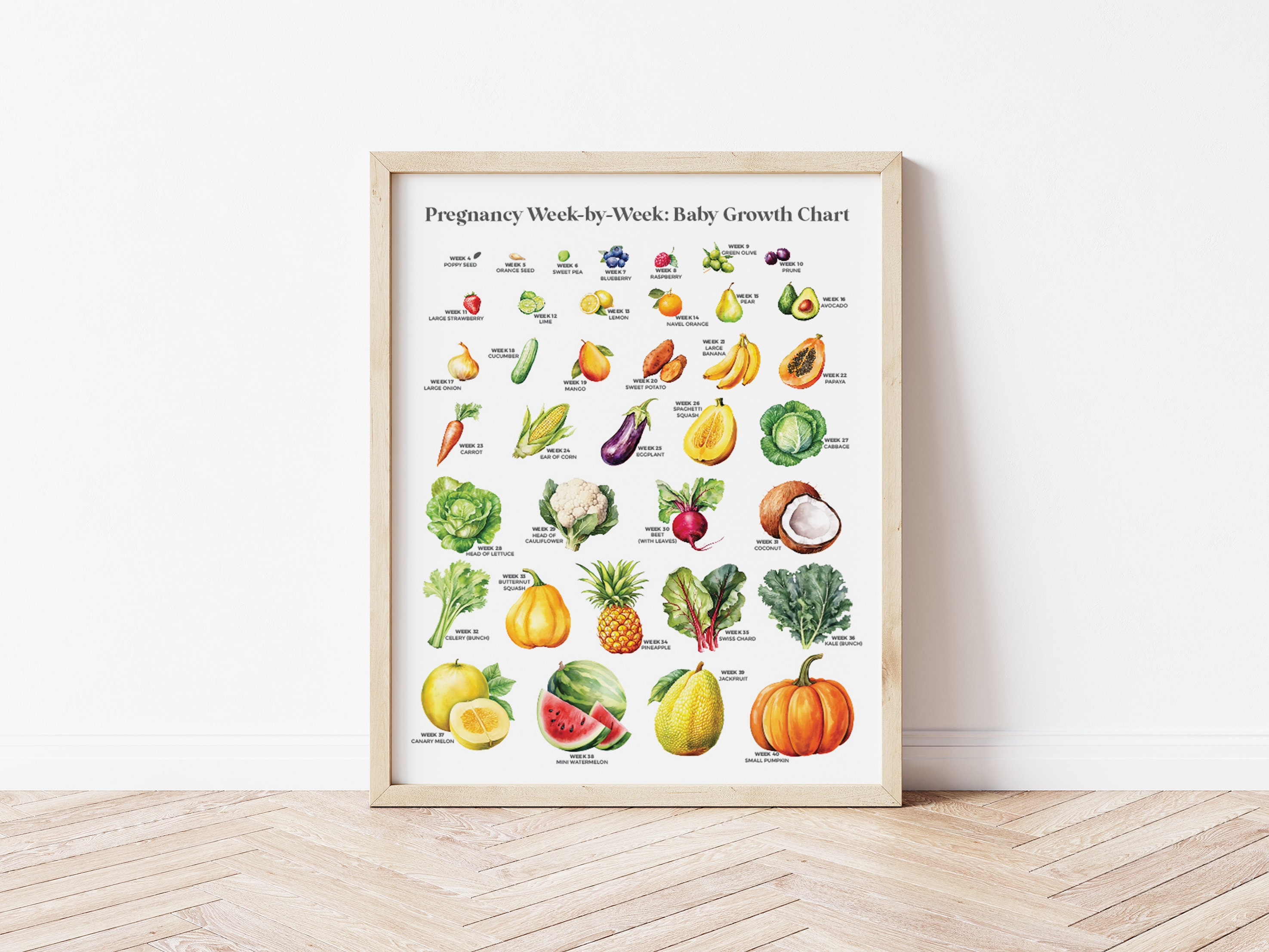
25 0.7 – 0.8 34 Mango
26 0.8 – 0.9 35–36 Large avocado
27 0.9 – 1.0 36–37 Coconut
28 1.0 – 1.2 37–38 Eggplant
29 1.2 – 1.4 38–39 Small pumpkin
30 1.3 – 1.5 39–40 Cabbage
By the end of the 7th month (week 28), most babies weigh around 1.0 to 1.2 kg. Indian babies may sometimes be on the slightly lower side due to genetic factors and nutrition, but steady growth on the growth curve is what matters most. Your doctor measures this during the anomaly or growth scan using head circumference, abdominal circumference, and femur length.

7 month pregnancy baby weight chart week by week in kg

Fetal Development at 7 Months Pregnant

Weight gain is important, but so is what’s happening inside. Your baby is busy hitting several milestones:

  • Eyes: Eyelids are opening and closing. They can now sense light coming through your belly.
  • Hearing: Fully developed! Your voice, heartbeat, and even soft music or lullabies are clearly heard.
  • Fat layers: Brown fat is building up — this helps the baby stay warm after birth and contributes to healthy weight gain.
  • Lungs: Producing more surfactant, getting ready to breathe air.
  • Brain: Growing rapidly with new nerve connections forming every day.
  • Movements: Strong kicks, stretches, and even hiccups that you can feel.

Many moms say this is when they start feeling a real bond — those little movements make everything feel so real!

fetus at 28 weeks pregnancy size and development

Changes You May Notice in Your Body

While your baby is growing, your body is working hard too. Common symptoms at 7 months include:

  • Growing belly and tighter skin
  • Backache and Braxton Hicks contractions
  • Shortness of breath
  • Swollen feet and ankles
  • Heartburn and constipation

Rest when you can, sleep on your left side, and try gentle prenatal yoga or walks. These small changes help both you and your baby.

Indian Diet Tips to Support Healthy Baby Weight Gain

Nutrition plays the biggest role in reaching a good 7 month pregnancy baby weight in kg. You need about 300–450 extra calories daily now. Focus on protein, iron, calcium, and healthy fats — all easily available in Indian kitchens.

Key nutrients your baby needs right now:

  • Protein: For muscle and tissue growth
  • Iron & folate: To prevent anemia and support blood supply
  • Calcium: For strong bones
  • Omega-3 and healthy fats: For brain development

Sample daily Indian meal plan (Karnataka-friendly, 2500–2800 calories):

  • Breakfast: Ragi dosa with sambar + glass of milk + almonds
  • Mid-morning: Banana + roasted chana
  • Lunch: 2 rotis + moong dal + palak paneer + curd + rice
  • Evening snack: Pomegranate juice or fruit chaat + buttermilk
  • Dinner: Khichdi with a spoon of ghee + mixed vegetable sabzi + salad
  • Bedtime: Warm turmeric milk

Superfoods Indian moms swear by: moringa leaves (sajje soppu), amla, sweet potatoes, chickpeas, sesame seeds, and dates. Stay hydrated with 3–4 litres of water and avoid too many sweets or fried foods to keep sugar levels stable.

Indian pregnancy diet plate with dal fruits and vegetables
balanced Indian superfoods plate for 7 month pregnancy

Factors That Affect 7 Month Pregnancy Baby Weight

Several things can influence your baby’s weight:

  • Your diet and weight gain
  • Genetics and family history
  • Placental health
  • Conditions like gestational diabetes, high blood pressure, or anaemia
  • Stress levels and rest
  • Whether this is your first or second pregnancy (later babies are often slightly heavier)

If you’re carrying twins, each baby may weigh a little less individually.

How to Monitor Your Baby’s Growth

  • Do daily kick counts (10 movements in 2 hours after meals)
  • Attend regular growth scans as advised by your doctor
  • Track your own weight (about 0.5 kg per week is ideal now)

Your gynecologist will guide you based on your personal health.

When to Consult Your Doctor

Most variations in weight are normal, but contact your doctor immediately if:

  • You notice a sudden drop in baby movements
  • You have severe swelling, headaches, or blurred vision
  • Your weight gain stops completely
  • There is any bleeding or fluid leak

Early attention can make a big difference.

Lifestyle Tips for a Healthy 7th Month

  • Light exercise: 30 minutes of walking or prenatal yoga daily
  • Rest well and manage stress with meditation or family support
  • Avoid smoking, alcohol, and excess caffeine
  • Continue your prenatal vitamins as prescribed

FAQs About 7 Month Pregnancy Baby Weight in Kg

What is the normal 7 month pregnancy baby weight in kg?

Most babies weigh between 1.0 and 1.2 kg at 28 weeks. A range of 0.9–1.4 kg is usually considered healthy.

Is a 1 kg baby weight at 7 months good?

Yes! It’s right on track for many babies.

How can I increase my baby’s weight naturally in the 7th month?

Eat frequent, nutrient-rich meals with dal, paneer, greens, fruits, and dairy. Follow your doctor’s advice.

Can stress affect baby weight?

Yes, long-term stress can impact growth. Try to stay relaxed.

What foods help increase fetal weight in India?

Protein-rich foods like dal, paneer, eggs, nuts, and iron-rich items like palak, beetroot, and pomegranate.

Is it normal if my baby is smaller than average?

Many babies catch up later. Your doctor will monitor the growth curve.


Digital Privacy for Indian Kids: The 2026 Parent’s Guide to a Safer Internet.

Indian mother and child using a tablet safely with floating digital security icons representing the DPDP Act 2023

Edited by: MomSaathi Editorial Team

Reviewed by: Based on the latest research from the National Mental Health Survey (2024-2025) and trusted baby name & child development sources.

In 2026, India stands as the world’s third-largest digitalized economy. For the average Indian child, life is inextricably linked to the screen—from AI-tutors and gaming apps to social media and digital governance platforms. While this “Digital India” offers unprecedented opportunities, it also creates a permanent digital footprint that can follow a child for life.

As parents, protecting digital privacy for Indian kids is no longer just about “screen time”; it is about safeguarding their data, their identity, and their future well-being.

The Hard Facts: Why Digital Privacy Matters Now

The risks in the digital playground are evolving rapidly. Recent data highlights the urgency of the situation:

  • Rising Cybercrime: NCRB data recently showed a 32% increase in cybercrimes committed against children.
  • Massive Exposure: By age 16–18, Indian children are spending an average of 6 hours daily online, often with minimal supervision.
  • AI Risks: There has been an alarming rise in AI-generated harmful content, including deepfakes and predatory grooming patterns.
  • Bullying & Mental Health: More than one in three young people report being victims of online bullying, which directly impacts their school attendance and mental health.

Understanding India’s “Privacy Shield”: The DPDP Act 2023

India has taken a massive leap in protection with the Digital Personal Data Protection (DPDP) Act, 2023, and the subsequent Rules notified in late 2025. This law provides a robust framework specifically for minors (those under 18).

Key Protections for Your Child:

  1. Verifiable Parental Consent: Companies (Data Fiduciaries) must obtain verifiable consent from a parent or guardian before processing any child’s data.
  2. No Tracking or Targeted Ads: The Act strictly prohibits platforms from tracking, behavioral monitoring, or serving targeted advertisements to children.
  3. The “Harm” Bar: Any data processing that is “likely to cause a detrimental effect” on a child’s well-being is illegal.
  4. Hefty Penalties: Violations related to children’s data can result in financial penalties of up to ₹250 crores.

Major Risks to Your Child’s Privacy

Despite strong laws, loopholes and predatory practices persist. Parents must be aware of:

  • Online Grooming: Predators exploit digital platforms to build trust with children for harmful purposes.
  • Behavioral Monitoring: Some apps use predictive analytics to detect when a child is bored or stressed to push addictive content or in-game purchases.
  • Oversharing: Children often unknowingly share sensitive info like their school name, home address, or real-time location.
  • Data Breaches: Unauthorized access to “educational” or “gaming” platforms can lead to the identity theft of minors.

7 Practical Tips for Parents to Protect Their Kids

Shielding your child requires a mix of technology and old-fashioned conversation.

1. Master the “Family Link.”

Use parental control tools like Google Family Link or YouTube Kids. These allow you to monitor activity, block inappropriate apps, and set strict privacy settings to minimize data collection.

2. Audit Every Device

Ensure every smartphone, tablet, and smart toy (like connected watches) is running the latest software to patch security vulnerabilities. Keep webcams covered when not in use.

3. Review App Permissions

Go into settings and disable access to the camera, microphone, and location for apps that don’t absolutely need them.

4. Teach “Digital Footprint” Literacy

Explain to your child that anything they post—photos, comments, or even “disappearing” stories—leaves a permanent record that they cannot truly delete.

5. Establish Family Tech Rules

  • Devices stay in common areas, never the bedroom.
  • Disable “Automatic Play” features to prevent endless streaming loops.
  • Never share passwords, even with “best friends”.

6. Use Privacy-First Tools

Switch to browsers and search engines that block trackers and ads. Consider using a password manager for the whole family.

7. Make Digital Safety a Shared Activity

Instead of using a tablet as a “babysitter,” participate in digital play together. Help them recognize that influencers and advertisements are designed to persuade and may not always tell the truth.

Conclusion: Balancing Innovation with Safety

Digital privacy for Indian kids is a shared responsibility between the government, digital platforms, and you. While the DPDP Act 2023 provides the legal shield, your active participation at home is the strongest defense.

By staying informed and setting clear boundaries, you can help your child enjoy the wonders of the digital world without sacrificing their privacy or their future.

FAQs on Digital Privacy for Indian Kids

At what age can my child manage their own digital accounts in India?

Under the DPDP Act, anyone under 18 is considered a child and requires parental consent for data processing. However, platforms like Google allow independent management at 13, though parents are notified if supervision ends.

Is it safe for my child to use AI chatbots like ChatGPT?

Adolescents often use AI for homework, but it carries risks of algorithm-driven content loops and data collection. Always monitor AI usage and ensure they don’t share personal details with the bot.

What should I do if my child’s data is leaked?

Under the DPDP Act, “Data Fiduciaries” must notify you of the breach and explain the steps you should take. You can also file a complaint with the Data Protection Board of India (DPBI).

Can schools collect my child’s data without my consent?

In some cases, government-approved schools or healthcare providers can process data without consent if it is in the “child’s best interest” or for essential services.

How much screen time is actually safe?

The PRAGYATA Guidelines recommend age-appropriate limits. For children up to 5 years, it’s roughly 1.5 hours daily; for 11–15 years, it reaches about 4 hours.


School Pressure in India: Causes, Effects & How Parents Can Help Children Cope

Indian mother comforting stressed daughter studying for exams at home

Edited by: MomSaathi Editorial Team

Reviewed by: Based on the latest research from the National Mental Health Survey (2024-2025) and trusted baby name & child development sources.

The lights are on at 2:00 AM in a middle-class apartment in Bengaluru. Inside, a 15-year-old is hunched over a thick physics textbook, nursing a cold cup of tea. This isn’t an isolated incident; it is the reality for millions of students across the country.

In India, education isn’t just about learning; it’s often seen as the only ticket to a secure future. While ambition is good, the school pressure in India has reached a boiling point. From theKota cultureto the obsession with scoring 95% in Boards, our children are running a race that has no finish line.

As parents, we want the best for our kids. But how do we differentiate between encouraging them and inadvertently crushing them under the weight of expectations? Let’s dive deep into understanding this crisis and how we can be the support system our children truly need.

What Exactly is School Pressure in India?

Academic pressure is the mental and emotional strain students feel to achieve high grades and meet specific educational milestones. In the Indian context, this pressure is unique because it ismulti-layered.

It isn’t just about the school syllabus. It’s the coaching culture that starts as early as Class 6, the relentless competition for a handful of seats in premier institutes like IITs or AIIMS, and the societal narrative thatif you don’t become an engineer or doctor, you’ve failed.

The pressure on School Children is often a mix of an internal desire to please parents and an external environment that equates a student’s worth with their marksheet.

Major Causes of School Pressure

Why has the situation become so intense? Several factors contribute to this high-stakes environment:

1. Sky-High Parental Expectations

In many Indian households, a child’s academic success is seen as a reflection of the parents’ upbringing. Thisprestigefactor leads parents to push children toward perfection, often ignoring the child’s natural aptitude or interest.

2. The Dreaded Competitive Exams (JEE, NEET, Boards)

The sheer volume of applicants for exams like JEE and NEET creates ado or dieatmosphere. When 20 lakh students compete for a few thousand seats, the academic pressure on students becomes a constant companion from a very young age.

3. Overwhelming School Workload

Between six hours of school, three hours of coaching, and two hours of homework, where is the time to be a child? The modern Indian curriculum is dense, leaving little room for extracurricular activities or creative thinking.

4. Social Comparison & Peer Pressure

TheSharma ji ka betasyndrome is real. Seeing peers excel in multiple areas—coding, sports, and academics—can make a student feel inadequate, even if they are doing well in their own right.

Effects of Academic Pressure on Students

When the mind is constantly insurvival mode,it takes a toll. The impact of student mental health in India is a growing concern for psychologists and educators alike.

Mental Health Impact

  • Chronic Anxiety: Constant worrying about the next test orwhat if I fail.
  • Burnout: A state of physical and emotional exhaustion where the student simply loses interest in everything.
  • Depression: Feelings of hopelessness when they cannot meet the expectations set for them.

Physical Health Declines

Stress doesn’t just stay in the head. It manifests as:

  • Sleep Deprivation: Staying up late to study leads to a weakened immune system and poor concentration.
  • Fatigue & Headaches: Constant tension often leads to physical pain and low energy levels.
  • Eating Disorders: Stress-eating or a complete loss of appetite.

Emotional Struggles

The fear of failure can lead to extremely low self-confidence. If a child believes their value is tied to their grades, a single bad score can shatter their sense of self-worth.

Signs Your Child is Under School Pressure

Children often find it hard to articulate that they are stressed. Instead, theyshowit through their behavior. Look out for these red flags:

  • Sudden Mood Swings: Increased irritability, crying spells, or uncharacteristic anger.
  • Withdrawal: If your usually social child starts spending all their time locked in their room.
  • Physical Complaints: Frequent stomach aches or headaches, especially on school mornings.
  • Lack of Interest: Giving up on hobbies they once loved, like painting or football.
  • Changes in Habits: Difficulty falling asleep or eating significantly more/less than usual.

How Parents Can Help Children Cope: Practical Parenting Tips

Small image panels showing practical parenting tips for reducing school pressure in India: destigmatizing failure, praising effort, prioritizing rest, and encouraging movement.

As parents, we are the first line of defense. Here is how you can implement parenting tips for stressed students to create a healthier home environment.

1. Change the Narrative Around Failure

Teach your child that failure is a comma, not a full stop. Share your own stories of professional setbacks and how you bounced back. When they know you won’t love them any less for aBgrade, their anxiety levels drop significantly.

2. Prioritize Effort Over Results

Instead of asking,How many marks did you get?, ask,What was the most interesting thing you learned today?orI saw how hard you worked on that project, I’m proud of your dedication.

3. Open the Channels of Communication

Spend at least 15 minutes a day talking to your child about things other than school. Be a safe space where they can vent without being judged or immediately givenadvice.

4. Help with Time Management (Without Micromanaging)

Assist them in creating a schedule that includesguilt-freeplay or relaxation time. A student who rests well actually performs better than one who grinds 24/7.

5. Encourage a Balanced Lifestyle

Ensure they get physical exercise. Even a 20-minute walk or a game of badminton can release endorphins that naturally combat stress.

The Role of Schools in Reducing Pressure

While parents play a huge role, schools must also step up. A healthier academic environment should include:

  • Balanced Curriculum: Reducing the emphasis on rote learning and focusing on conceptual understanding.
  • Mental Health Support: Having trained counselors on campus who are accessible to students without any stigma.
  • Teacher Sensitivity: Training teachers to identify signs of burnout and to encourage students rather than using fear as a motivator.

Tips for Students to Manage Stress

If you are a student reading this, remember: you are more than your marksheet. Here are a few ways to keep your head above water:

  • Break it Down: Don’t look at the whole syllabus at once. Focus on one chapter, or even one topic, at a time.
  • Practice Mindfulness: Simple breathing exercises for 5 minutes a day can help calm the nervous system before an exam.
  • The 50/10 Rule: Study for 50 minutes, then take a total break for 10 minutes. No phones during the break—just stretch or grab a snack.
  • Ask for Help: If a subject is too hard, tell your parents or teachers. Asking for help is a sign of strength, not weakness.

Conclusion: Strive for Balance, Not Perfection

The journey of education in India is undoubtedly tough, but it shouldn’t come at the cost of a child’s childhood or mental peace. Our goal as parents should be to raise resilient, happy individuals who are capable of handling life’s ups and downs—not just exam papers.

Let’s replace the pressure to bethe bestwith the encouragement to betheir best.A happy child will eventually find their path to success, whether it’s in a lab, a boardroom, or an art studio.

Disclaimer: While this article provides general guidance, if your child shows severe signs of depression or anxiety, please consult a certified mental health professional or a school counselor immediately.

5 Frequently Asked Questions (FAQs)

How do I know if my child’s stress is “normal” or serious?

Occasional stress before an exam is normal. However, if the stress interferes with their sleep, appetite, or basic daily functioning for more than two weeks, it’s time to seek professional help.

Is the “Kota culture” really that bad?

While many succeed, the high-pressure environment in coaching hubs can be detrimental to a student’s mental health if they don’t have a strong emotional support system.

How can I talk to my child about low grades without discouraging them?

Focus on the “why” rather than the “what.” Ask if they found the paper difficult or if they need more help with a specific topic, and work on a solution together.

Does physical exercise really help with academic performance?

Yes! Exercise increases blood flow to the brain and reduces cortisol (the stress hormone), which actually improves memory and focus.

How much sleep does a high school student actually need?

Ideally, 8–9 hours. Sleep is when the brain processes and stores what was learned during the day. Cutting sleep to study is often counterproductive.


Screen Time for Toddlers (18 Months to 3 Years): A Practical Guide for Smart, Healthy Use

Edited by: MomSaathi Editorial Team

Reviewed by: Child development specialists and evidence-based pediatric research

In today’s digital world, screens are everywhere — from smartphones and tablets to TVs and laptops. For parents of toddlers, this raises a constant question: Are screens harmful, or can they actually help?

The answer isn’t black and white.

For children between 18 months and 3 years, screens are not automatically bad. What truly matters is how, when, and why screens are used. The difference between passive watching and meaningful engagement can shape your child’s learning, sleep, and overall development.

This guide breaks down everything parents need to know — from age-wise recommendations to practical daily routines — so you can make informed, guilt-free decisions.

Understanding Toddler Brain Development

Between 18 months and 3 years, a child’s brain develops faster than at almost any other time in life. During this stage, toddlers learn primarily through:

  • Real-life interactions
  • Sensory experiences (touch, movement, sound)
  • Conversations with caregivers
  • Play-based exploration

Screens, by nature, are two-dimensional, while the real world is three-dimensional. This creates a learning gap.

A toddler watching something on screen may see a ball, but without guidance, they may not connect it to the ball they play with in real life.

That’s why adult involvement is essential.

Screen Time Guidelines for Toddlers (18 Months to 3 Years)

18 to 24 Months: Careful Introduction

At this stage, it’s best to either avoid screens or introduce them very thoughtfully.

If you do choose to introduce screens:

  • Stick to high-quality, slow-paced content
  • Always watch together
  • Talk about what’s happening on the screen

For example:
“Look, that’s a dog! Just like the dog we saw in the park.”

Without this interaction, toddlers gain very little from screen exposure.

2 to 3 Years: Limited and Structured Use

For children aged 2 to 3 years, screen time can be included in moderation.

Recommended limit:

  • Up to 1 hour per day
  • Focus on educational and age-appropriate content

Even at this stage, co-viewing is strongly encouraged.

Screens should never replace playtime, sleep, or family interaction, as these are critical for brain development.

Why Passive Screen Time Isn’t Effective

Many parents assume that educational videos automatically teach children. However, research and observation show that:

  • Passive watching leads to minimal learning
  • Toddlers struggle to apply what they see to real-life situations
  • Language development suffers without human interaction

The biggest concern isn’t just the screen — it’s what the screen is replacing.

Too much screen time can take away from:

  • Active play
  • Sleep quality
  • Parent-child conversations

These three factors are the foundation of early brain growth.

When Screens Can Actually Help Learning

Not all screen time is equal. When used correctly, screens can support development.

1. Co-Viewing (Most Important)

This is the single most effective way to make screen time beneficial.

Instead of using screens as a babysitter, sit with your child and:

  • Talk about what you’re watching
  • Ask simple questions
  • Relate it to real-life experiences

Example:
“That’s a red ball. You have a red ball too! Where is it?”

This helps toddlers connect digital content with their physical world.

2. Video Calls with Family

Unlike regular screen content, video chatting is interactive.

Platforms like FaceTime or other video call apps allow toddlers to:

  • Hear familiar voices
  • Respond in real-time
  • Build emotional connections

This type of interaction actually supports:

  • Language development
  • Social bonding
  • Emotional security

So yes, talking to grandparents on video calls is not “bad screen time” — it’s meaningful engagement.

How to Manage Toddler Screen Time in Daily Life

Managing toddler screen time doesn’t have to be stressful. With a few simple strategies, it can become a healthy part of your routine.

1. Create a Predictable Routine

Children thrive on structure.

Instead of random screen exposure, set a fixed schedule:

  • “After lunch, we watch for 20 minutes.”
  • “Then we go to the park.”

This predictability reduces tantrums and power struggles.

2. Avoid Screens During Meals

Mealtime should be about:

  • Family bonding
  • Conversation
  • Mindful eating

Screens during meals can lead to:

  • Overeating
  • Reduced attention span
  • Poor communication habits

3. No Screens Before Bedtime

Avoid screens at least 1 hour before sleep.

Why?

  • Blue light affects melatonin (a sleep hormone)
  • Fast-paced visuals overstimulate the brain
  • It becomes harder for toddlers to wind down

Instead, switch to calming activities like:

  • Reading books
  • Storytelling
  • Quiet play

4. Choose Quality Over Quantity

Not all content is created equal.

Look for programs that are:

  • Slow-paced
  • Interactive
  • Language-rich
  • Age-appropriate

Avoid:

  • Fast-cut cartoons
  • Loud, overstimulating visuals
  • Content with no clear learning value

5. Use Screens as a Tool, Not a Habit

Screens should serve a purpose — not fill every gap in the day.

Use them:

  • During specific planned times
  • For educational or social purposes
  • As a shared activity

Avoid using screens as the default solution for:

  • Boredom
  • Tantrums
  • Busy moments

Signs Your Toddler May Be Getting Too Much Screen Time

It’s important to observe your child’s behavior.

Watch out for:

  • Increased irritability
  • Difficulty focusing
  • Delayed speech development
  • Poor sleep patterns
  • Reduced interest in toys or outdoor play

If you notice these signs, consider reducing screen exposure and increasing interactive activities.

Healthy Alternatives to Screen Time

If you’re trying to reduce screen use, here are some simple alternatives:

  • Free play with toys
  • Outdoor activities (park, walks)
  • Reading picture books
  • Music and dance
  • Pretend play
  • Simple art activities

These activities promote:

  • Creativity
  • Motor skills
  • Language development
  • Emotional bonding

Balancing Modern Parenting with Realistic Expectations

Let’s be honest — completely avoiding screens is unrealistic for most families today.

Parents juggle:

  • Work
  • Household responsibilities
  • Personal time

Screens can be helpful when used mindfully.

The goal isn’t perfection. It’s a balance.

If your child watches a show while you finish a task, that’s okay — as long as it doesn’t become the primary form of engagement.

The Role of Parents: What Matters Most

At the end of the day, toddlers learn best from people, not screens.

The most valuable experiences come from:

  • Talking
  • Playing
  • Laughing
  • Cuddling
  • Exploring together

Even when screens are involved, your presence makes all the difference.

A child sitting alone in front of a screen learns very little.
A child watching with a parent learns through connection.

Final Thoughts on Screen Time for Toddlers

Screens are a part of modern life, and they aren’t going away.

For toddlers aged 18 months to 3 years, the focus should not be on eliminating screens, but on using them wisely.

Remember:

  • Keep screen time limited and structured
  • Always prioritize real-world interaction
  • Choose high-quality content
  • Engage with your child during screen use

Because ultimately, it’s not the screen that teaches your child —
It’s the love, conversation, and connection you bring around it.

Frequently Asked Questions (FAQ) on Screen Time for Toddlers (18-24 Months & 2-3 Years)

What is the recommended screen time for toddlers aged 18-24 months?

Screens should be avoided as much as possible. If you do introduce them, use only high-quality, slow-paced, educational content. Always watch together (co-viewing) and talk about what’s happening on the screen to help your child connect it to the real world. Example: “Look, that’s a dog! Just like the one we saw in the park.”

What is the recommended screen time for toddlers aged 2-3 years?

Limit screen time to no more than 1 hour per day. Focus only on high-quality, age-appropriate, educational content. Co-viewing with a parent or caregiver is strongly recommended so your child can learn better and stay engaged.

Why is screen time limited for toddlers in this age group?

Toddlers’ brains grow fastest through real-life interactions, sensory play, conversations, and physical movement. Screens replace these essential activities. Without adult guidance, toddlers often struggle to connect 2D screen images to the real 3D world, leading to less effective learning.

What are the risks of too much screen time for 18-24 month and 2-3 year olds?
  • Delayed speech and language development
  • Increased irritability and tantrums
  • Difficulty focusing and paying attention
  • Poor sleep (blue light affects melatonin)
  • Reduced interest in toys, outdoor play, or real-world exploration
  • Overeating if screens are used during meals

Fast-paced cartoons can overstimulate their developing brain, making it harder to calm down.

What are the benefits of following these screen-time guidelines?
  • Stronger brain development through real-life play and parent-child bonding
  • Better language skills and emotional security
  • Healthier sleep patterns and more physical activity
  • Fewer tantrums and power struggles when routines are predictable

When screens are used thoughtfully with co-viewing, they can actually support learning (especially video calls with family).

What kind of content is considered “good” screen time?
  • Slow-paced, language-rich, and educational (no fast-cut cartoons or loud videos)
  • Interactive or story-based shows that encourage talking
  • Video calls with grandparents or family (these are excellent for social bonding)

Always co-view and relate the content to your child’s real life.

How can parents practically reduce and manage screen time?
  • Create a predictable daily routine (e.g., “After lunch we watch for 20 minutes, then we go to the park”)
  • No screens 1 hour before bedtime
  • Never use screens during meals — use that time for family conversation
  • Avoid screens when your child is bored, throwing a tantrum, or you’re busy — plan ahead with alternative activities
  • Set clear family rules and stick to them
What are healthy alternatives to screen time?
  • Free play with toys
  • Outdoor time (park walks, running, exploring nature)
  • Reading picture books together
  • Music, singing, and dancing
  • Pretend play and simple art/craft activities

These build creativity, motor skills, language, and strong parent-child bonds.

What do experts say about screen time for toddlers? (AAP, WHO, etc.)

The article follows guidelines from the American Academy of Pediatrics (AAP) and World Health Organization (WHO). They emphasize minimal or no screen time under 2 years, maximum 1 hour of high-quality co-viewed content for 2–3 years, and always prioritizing real-life interactions, play, and sleep.

Is it okay to use screens sometimes in modern parenting?

Yes! Completely avoiding screens is unrealistic for many families. The key is mindful, purposeful use — not as a habit or babysitter. Focus on quality over quantity, co-viewing, and balancing with plenty of real-world play, sleep, and love. It’s the conversations and connection around the screen that matter most.