Parenting Advice India 2026: Child Health Tips Every Parent Should Know

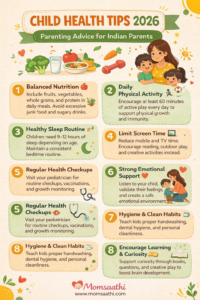
child health tips 2026 india parenting advice infographic

Child Health Tips 2026 are essential for Indian parents who want to build strong foundations for their child’s growth and development. Healthy nutrition, proper sleep, hygiene, and active routines play a crucial role in long-term well-being.

As we progress through February 2026, parents in Karnataka and across India are looking for realistic ways to support their children’s long-term health. With busy schedules, school pressures, urban pollution, and endless family advice, it’s easy to feel overwhelmed. The good news? You don’t need fancy diets, expensive supplements, or perfect routines.

The key to child health tips 2026 lies in building strong foundations through simple, everyday habits that fit real Indian family life — whether you’re a working mom in Bengaluru handling WFH and school drops, or managing a joint family in a smaller town.

Experts highlight four core areas: nutrition and routines, emotional well-being, smart screen management, and natural immunity building. These align with modern parenting goals 2026 India — focusing on consistency, empathy, and balance rather than perfection.

Let’s dive into practical, India-specific child health tips 2026 that busy parents can start today.
Why Child Health Tips 2026 Matter for Indian Families

1. Nail Everyday Habits – Nutrition, Sleep, and Movement for Lifelong Health

Everyday habits form the strongest base for strong foundations child health. These basics support physical growth, brain development, and immunity without extra effort.

Nutrition: Embrace Desi Superfoods in Daily Meals Indian home cooking is already powerful. Prioritize balanced thalis with:

  • Proteins: Dal, paneer, eggs, or chicken/fish (2–3 times/week).
  • Whole grains: Ragi, jowar, bajra rotis, or brown rice — great for Karnataka winters.
  • Veggies & fruits: Seasonal picks like palak, methi, carrots, bananas, guava, or papaya.
  • Dairy: Curd, buttermilk, or warm milk with turmeric for gut health.

Age-specific ideas:

  • Toddlers (1–3 years): Finger-friendly options like soft idli-sambar, mashed ragi porridge, or fruit purees. Let them self-feed to build independence.
  • School-age (4–10+ years): Involve kids in simple prep — rolling chapatis or chopping veggies — to spark interest and reduce picky eating.

Common challenge: Junk cravings from ads or peer influence. Solution: Make “rainbow plates” fun (red tomatoes, green spinach, yellow dal), limit packaged snacks to once/week, and swap sweets with jaggery-based treats or fresh fruit chaat.

Hydration tip: 4–8 glasses of water daily (plus nimbu paani or tender coconut water in summer heat).

Following Child Health Tips 2026 helps improve immunity and overall development.

[fc-bmi-cal]

Sleep Routines: The Hidden Booster Quality sleep regulates hormones, boosts immunity, and sharpens focus. Aim for:

  • Toddlers: 11–14 hours (including naps).
  • School kids: 9–11 hours.

Wind-down ritual: Turmeric milk, family storytelling (Panchatantra or local folktales), dim lights, no screens 60 minutes before bed. In joint families, create quiet zones with earplugs if needed.

Daily Movement: Play Is Medicine 60+ minutes of active play daily fights obesity (rising in urban India). Options:

  • Outdoor: Park runs, cycling, lagori, or kho-kho.
  • Indoor: Bollywood dance-offs, simple yoga (child-friendly Surya Namaskar), or household games.

These healthy child habits Indian parents use create natural wellness — no gym required.

2. Strengthen Child Emotional Well-Being India – Key to Resilient Kids

Physical health gets checked at doctor visits, but child emotional well-being India often gets overlooked amid marks and milestones. In 2026, with rising school stress and social media, emotional foundations matter more than ever.

Doctors recommend structured routines as part of Child Health Tips 2026.

Validate Feelings and Build Connection Replace “Don’t cry” with “I see you’re upset — it’s okay, tell me more.” This teaches regulation and reduces tantrums.

Daily habit: 5-minute check-ins at dinner — “What made you happy/sad today?” It counters old “children should be seen, not heard” norms.

Model Calm Behavior Kids copy us. During traffic or work frustration, take deep breaths and say, “I’m feeling annoyed — let’s pause.” Use stories or emotion cards for younger kids.

Safe Spaces for Expression Encourage hobbies (drawing, music) over constant achievements. Family device-free meals foster open talk.

Challenge: Over-advice from relatives. Solution: Appreciate love while gently setting boundaries (“Thanks, aunty — we’ll discuss with the doctor”).

Emotionally secure kids handle challenges better — a top parenting goals 2026 India trend.

3. Implement Smart Screen Time Limits Kids India – Protect Growing Minds

Screens are part of education and fun, but excess links to poor sleep, posture issues, and attention problems.

2026 Guidelines:

  • Under 2: Minimal (video calls only).
  • 2–5 years: Max 1 hour/day, always co-viewed.
  • 6+: 1–2 hours recreational.

Practical Rules:

  • Device-free zones: Meals, bedrooms, study time.
  • Co-view & discuss: “What did that show teach you?”
  • Alternatives: Board games (Ludo, Carrom), outdoor play, or reading Amar Chitra Katha comics.

Challenge: “All friends have tablets.” Solution: Explain benefits — “More play builds stronger bodies and sharper minds.” Track family progress together.

Intentional screen time limits kids India safeguard eyes, creativity, and mental health.

4. Boost Immunity & Resilience – Natural Strategies for Indian Climates

Pollution, changing seasons, and infections demand proactive steps.

According to the World Health Organization (WHO), early childhood care significantly impacts long-term health outcomes.

Daily Boosters:

  • Warm turmeric/ginger milk, amla (seasonal), handful of nuts/seeds.
  • Hygiene: Handwashing, twice-daily brushing.
  • Vaccines: Stay current — discuss flu/COVID boosters with your pediatrician.

Nature Exposure:

  • Morning sunlight for vitamin D; early walks despite city pollution.
  • Probiotics: Homemade curd, idli/dosa batter for gut health (70% of immunity starts there).

You can also explore our Pregnancy Tips India 2026 guide for prenatal preparation.

For newborn care advice, read our Essential Newborn Care Guide.

Resilience Building:

  • Allow safe failures (losing a game) to teach coping.
  • Praise effort: “You tried so hard — that’s awesome!”

Combine these for robust strong foundations child health.

Overcoming Real Indian Parenting Challenges in 2026

  • Joint families: Use grandparents for stories/outdoor play; set polite boundaries on advice.
  • Working parents: Weekend quality time; use reminders/apps for routines.
  • Budget-friendly: Stick to home foods over supplements.

Your 2026 Parenting Action Plan

Start small: Pick one habit this week (family meals, bedtime routine, or park time). Track wins as a family.

These child health tips 2026 empower you to raise healthier, happier kids rooted in love and consistency.

What’s one tip you’re trying first? Share in the comments — let’s support each other, Karnataka moms and beyond!

Momsaathi.com provides content for informational and educational purposes only. It is not intended to serve as a substitute for professional medical advice, diagnosis, or treatment. Always consult your pediatrician or healthcare provider for personalized guidance, especially regarding vaccinations, nutrition plans, or any health concerns.

Frequently Asked Questions (FAQs)

Why are everyday habits so important for a child’s long-term health?

Everyday habits shape a child’s growth, immunity, behaviour, and emotional stability. Simple routines like eating nutritious meals, sleeping on time, staying active, and maintaining hygiene create a strong foundation that supports both physical and mental development. Small daily actions build lifelong health patterns.

Start small and stay consistent. Introduce one habit at a time — such as fixed bedtime or daily outdoor play — and make it enjoyable. Children respond better when routines feel natural rather than forced. Consistency, encouragement, and positive reinforcement make habits stick.

Balanced meals rich in proteins, seasonal fruits, vegetables, whole grains, and healthy fats provide essential vitamins and minerals. Proper nutrition supports brain development, boosts immunity, and improves energy levels. Regular meal timings also help regulate digestion and overall wellbeing.

Sleep needs vary by age, but most children require 9–12 hours of quality sleep daily. Adequate rest supports memory, learning, emotional regulation, and physical growth. Creating a calming bedtime routine and limiting screens before sleep can significantly improve sleep quality.

Everyday habits shape a child’s growth, immunity, behaviour, and emotional stability. Simple routines like eating nutritious meals, sleeping on time, staying active, and maintaining hygiene create a strong foundation that supports both physical and mental development. Small daily actions build lifelong health patterns.

Start small and stay consistent. Introduce one habit at a time — such as fixed bedtime or daily outdoor play — and make it enjoyable. Children respond better when routines feel natural rather than forced. Consistency, encouragement, and positive reinforcement make habits stick.

Balanced meals rich in proteins, seasonal fruits, vegetables, whole grains, and healthy fats provide essential vitamins and minerals. Proper nutrition supports brain development, boosts immunity, and improves energy levels. Regular meal timings also help regulate digestion and overall wellbeing.

Sleep needs vary by age, but most children require 9–12 hours of quality sleep daily. Adequate rest supports memory, learning, emotional regulation, and physical growth. Creating a calming bedtime routine and limiting screens before sleep can significantly improve sleep quality.

Screen Time Guidelines for Toddlers — What Experts Say

Toddler Screen Time Guide for healthy digital habits

Toddler Screen Time Guide: Healthy Limits & Practical Tips (2026)

Toddler Screen Time Guide helps parents understand safe digital exposure limits for young children. Managing screen habits early is essential for healthy brain development, better sleep, and balanced behaviour in toddlers.

In today’s digital world, screens are everywhere — from smartphones and tablets to TVs and laptops. For parents of toddlers, one common question is: How much screen time is actually safe?

Understanding expert-recommended screen time guidelines for toddlers (0–3 years) can help you make confident, informed decisions for your child’s healthy development.

Why a Toddler Screen Time Guide Is Important for Modern Parents

The first three years of life are critical for brain development. During this period, toddlers learn best through:

  • Face-to-face interaction

  • Physical play

  • Talking and storytelling

  • Sensory exploration

Excessive screen exposure may reduce opportunities for active play, sleep, and real-world interaction — all of which are essential for cognitive, emotional, and language development.

Expert Screen Time Recommendations by Age

Following a Toddler Screen Time Guide can prevent excessive digital exposure and behavioural concerns.

According to the American Academy of Pediatrics (AAP) and the World Health Organization (WHO), here are the current guidelines:

0–18 Months

  • Avoid screen time except for video chatting with family.

  • Babies learn best from real human interaction.

18–24 Months

  • Introduce high-quality, educational content only.

  • Always watch together (co-viewing) to help your child understand what they see.

2–3 Years

  • Limit screen time to no more than 1 hour per day.

  • Choose interactive and age-appropriate programs.

  • Avoid screens at least 1 hour before bedtime.

Consistency is key. Occasional flexibility is fine, but daily habits matter most.

Effects of Too Much Screen Time on Toddlers

Experts suggest using a structured Toddler Screen Time Guide to maintain bedtime routines.

While screens can be useful in moderation, excessive use may lead to:

  • Delayed speech development

  • Sleep disturbances

  • Reduced attention span

  • Increased irritability

  • Less physical activity

Blue light exposure before bedtime can also disrupt melatonin production, making it harder for toddlers to fall asleep.

How to Make Screen Time Healthier

If you choose to allow screen time, follow these practical tips:

1. Co-View and Talk About It

Sit with your toddler and explain what’s happening on screen. Ask simple questions to build language skills.

2. Choose Quality Over Quantity

Look for slow-paced, educational content rather than fast-moving cartoons.

3. Create Screen-Free Zones

Keep bedrooms, dining tables, and play areas free from screens.

4. Model Healthy Habits

Children copy adults. Limiting your own screen use encourages balanced behavior.

5. Prioritize Sleep and Play

Ensure your toddler gets:

  • 10–14 hours of sleep (depending on age)

  • Daily outdoor play

  • Interactive family time

By using this Toddler Screen Time Guide, parents can build healthier digital habits for their children.

Best Alternatives to Screen Time for Toddlers

Instead of handing over a device, try:

  • Storytelling and picture books

  • Sensory bins

  • Building blocks

  • Music and dance time

  • Simple pretend play

These activities stimulate creativity and strengthen parent-child bonding.

According to the WHO, toddlers should have limited sedentary screen time.

Final Thoughts

Screen time for toddlers doesn’t have to be completely eliminated — but it should be limited, intentional, and age-appropriate. Following expert recommendations from trusted health organizations can help you balance technology with healthy development.

As a parent, your goal isn’t perfection — it’s creating a healthy routine that supports your child’s growth while adapting to modern life.

Try these 15 screen-free activities for toddlers to reduce screen dependence.

Frequently Asked Questions (FAQs)

How much screen time is safe for toddlers?

Experts like the American Academy of Pediatrics recommend:

  • Under 18 months: Avoid screen time (except video calls).

  • 18–24 months: Limited, high-quality content with parental supervision.

  • 2–3 years: No more than 1 hour per day of educational programming.

Quality and parental involvement matter more than just time limits.

Excessive screen time, especially without interaction, may contribute to speech delays. Toddlers learn language best through real conversations, storytelling, and face-to-face communication rather than passive watching.

Yes, but it should be:

  • Age-appropriate

  • Slow-paced

  • Free from violent or fast-changing visuals

  • Watched together with a parent (co-viewing)

Discussing what’s happening on screen improves understanding and learning.

Yes. Screen exposure — especially before bedtime — can interfere with melatonin production and make it harder for toddlers to fall asleep. Experts suggest avoiding screens at least 1 hour before bed.

Instead of screens, try:

  • Reading picture books

  • Outdoor play

  • Building blocks

  • Singing and dancing

  • Pretend play activities

These activities promote cognitive, emotional, and physical development.

Experts like the American Academy of Pediatrics recommend:

  • Under 18 months: Avoid screen time (except video calls).

  • 18–24 months: Limited, high-quality content with parental supervision.

  • 2–3 years: No more than 1 hour per day of educational programming.

Quality and parental involvement matter more than just time limits.

Excessive screen time, especially without interaction, may contribute to speech delays. Toddlers learn language best through real conversations, storytelling, and face-to-face communication rather than passive watching.

Yes, but it should be:

  • Age-appropriate

  • Slow-paced

  • Free from violent or fast-changing visuals

  • Watched together with a parent (co-viewing)

Discussing what’s happening on screen improves understanding and learning.

Yes. Screen exposure — especially before bedtime — can interfere with melatonin production and make it harder for toddlers to fall asleep. Experts suggest avoiding screens at least 1 hour before bed.

Instead of screens, try:

  • Reading picture books

  • Outdoor play

  • Building blocks

  • Singing and dancing

  • Pretend play activities

These activities promote cognitive, emotional, and physical development.

Daily Routine for Toddlers (1-3 Years): Easy Indian Schedule with Meal Timings

Daily Routine for Toddlers 1–3 Years – Easy Indian Schedule with Meal Timings

Momsaathi.com provides content for informational and educational purposes only. It is not intended to serve as a substitute for professional medical advice, diagnosis, or treatment. Always consult your pediatrician before following any toddler routine, especially if your child has sleep issues, feeding difficulties, or developmental concerns.

A daily routine for toddlers 1–3 years brings calm, predictability, and healthy habits to your home — especially in busy Indian families. Many Karnataka moms (and parents across India) struggle with tantrums, poor sleep, picky eating, or constant screen demands. A simple, flexible Indian schedule with fixed meal timings, play, naps, and family time can reduce chaos and support brain development, immunity, and emotional security.

This 2026 guide gives you an easy, realistic daily routine for toddlers 1–3 years — tailored for Indian homes (joint families, working parents, desi foods).

Why a Daily Routine Matters for Toddlers in India

Toddlers crave structure — it helps them feel safe and learn self-regulation. In Indian homes, routines also:

  • Reduce tantrums (predictability lowers frustration)
  • Improve sleep (consistent timings = better melatonin rhythm)
  • Support healthy eating (fixed meal times prevent grazing/junk)
  • Balance screen time with real play
  • Give parents breathing room

Sample Daily Routine for Toddlers 1–3 Years (Indian Family)

This is a flexible template — adjust ±30–60 min based on your child’s natural rhythm and your work/family needs.

Wake-up & Morning Routine (6:30–8:00 AM)

  • Wake-up gently (soft music or sunlight)
  • Diaper change + face wash + quick oil massage (if tradition)
  • Breastfeed / formula / cow milk (if >1 year)
  • 15–20 min free play or cuddles

Tip: Start day with calm — avoid phone first thing.

Breakfast & Morning Activity (8:00–9:30 AM)

  • Breakfast time (fixed slot): Ragi porridge, idli-sambar, poha, upma, banana + milk
  • 30–45 min outdoor play or indoor sensory play (balls, blocks, water play)

Desi tip: Involve grandparents in morning stories/songs — builds bonding.

Mid-Morning Snack & Learning Time (9:30–11:00 AM)

  • Snack: Fruit (apple, papaya, banana) or khakra/murmura
  • 30–45 min focused activity: Colors, shapes, puzzles, simple rhymes, or reading books
  • 15 min music/dance (Bollywood rhymes or rhymes in Kannada/Tamil/Hindi)

Lunch & Nap Time (11:00 AM–2:30 PM)

  • Lunch (11:30–12:30): Rice + dal + sabzi + curd (small portions)
  • Post-lunch wind-down: Story or lullaby
  • Nap: 1–2 hours (most toddlers 1–3 years need this)

Tip: Dark, cool room + white noise (fan sound) helps.

Afternoon Play & Snack (2:30–5:00 PM)

  • Wake-up milk + snack: Sprouts chaat, paneer cubes, fruit, or biscuit with milk
  • 60–90 min active play: Park, cycling, ball games, or messy play (rice/flour sensory)
  • Limit screen to 0–15 min (educational rhymes only)

Evening Routine & Dinner (5:00–8:00 PM)

  • Evening snack: Poha, upma, or khichdi
  • Family time: 30 min with parents/grandparents (story, songs, light play)
  • Dinner (7:00–7:30 PM): Light — roti + sabzi + dal or khichdi
  • Bath + oil massage (if tradition) + pajamas

Bedtime Routine (8:00–9:00 PM)

  • Wind-down: Dim lights, no screens 60 min before
  • Story or lullaby (Panchatantra, Ramayana tales)
  • Bedtime milk + cuddles
  • Lights out: 8:30–9:00 PM (most toddlers need 11–13 hours sleep)

Note: Adjust dinner/bedtime if your toddler wakes early — consistency matters more than exact hour.

Tips to Make This Daily Routine for Toddlers 1–3 Years Work in Indian Homes

  • Involve family: Grandparents can handle stories/outdoor play — reduces mom load
  • Be flexible ±30 min — strict routines cause stress
  • Use visual timetable (pictures on fridge) — toddlers love predictability
  • Meal timings: Keep gaps 2.5–3 hours — prevents crankiness
  • Screen rule: Max 30–60 min/day (educational only) — follow WHO/AAP guidelines

When to Adjust or Seek Help

Consult your pediatrician if:

  • Toddler refuses meals consistently or shows poor weight gain
  • Sleep is <10 hours/night or frequent night waking
  • Extreme tantrums or developmental delays
  • Signs of anemia (pale skin, fatigue, poor appetite)

In India, free checks are available at Anganwadi, government hospitals, or well-baby clinics.

Final Words for Indian Moms

A simple daily routine for toddlers 1–3 years creates calm, healthy habits — and gives you sanity in busy Indian homes. Start with 2–3 fixed points (meals + bedtime) — the rest will fall into place.

What’s your toddler’s favorite part of the day? Share your routine tweaks in the comments — let’s help each other, Karnataka moms!

Related Articles on Momsaathi.com:

External Resources:

How to Potty Train Your Toddler in 7 Days – Indian Mom Approved Method

The 7-Day Potty Training Method – Indian Mom Approved (Realistic, Gentle, and Desi-Adapted)

Potty training a toddler (usually 18–30 months) can feel overwhelming in Indian homes—joint family opinions, small bathrooms (often Indian-style squat toilets), hot weather making naked time doable, and the cultural mix of early starts vs. modern “wait till ready” advice. Many Indian moms (from podcasts like Modern Indian Parent, YouTube vlogs, Instagram reels, and blogs in 2025–2026) adapt popular quick methods like Oh Crap Potty Training (by Jamie Glowacki) or 3-day/7-day intensive approaches. They report real success in 7–10 days of focused effort, not magic overnight, with patience for accidents.

Important reality check first (from Indian mom experiences):

  • Not every child is ready at the same age. Signs of readiness: stays dry 2+ hours, tells you before/after peeing/pooping, shows interest in potty/toilet, can pull pants up/down, follows simple instructions.
  • Aim for 20–30 months ideally (earlier with Elimination Communication/common in desi families, but that’s different).
  • 7 days means intensive focus—dedicate a week (holidays/vacation), clear schedule, stay home mostly. Expect accidents (lots in first 3–4 days)—no punishment, just calm redirection.
  • Many Indian moms combine this with traditional elements: using the Indian toilet (squat position helps natural pooping), family involvement (dadi helping), and simple rewards like claps/praise instead of big bribes.
  • If your toddler resists strongly or regresses (e.g., new sibling, travel), pause and try later—no rush.

Preparation (1–2 Days Before Starting)

  1. Get supplies:
    • Sturdy potty chair (floor-level for Indian homes) + potty seat reducer for adult toilet.
    • Lots of cheap cotton underwear (or padded training ones like SuperBottoms for less mess).
    • Waterproof mats/sheets for floors (old bedsheets work).
    • Books like “Everyone Poops” or desi potty stories.
    • Plenty of fluids (water, chaas, coconut water) to create practice opportunities.
  2. Talk it up: Show the potty, let them sit clothed, read books, say “Pee/poop goes in potty” casually. Dump a dirty diaper into the potty in front of them to connect the dots.
  3. Choose your week: Pick low-stress time—no travel, guests, or illnesses.

The 7-Day Plan (Adapted for Indian Moms)

Core principle (from Oh Crap + Indian adaptations): Go diaper-free from Day 1 (bottomless at home) so baby feels the sensation and learns body signals fast. Stay close, watch for cues (squirming, holding crotch, silent pause), and guide to potty immediately. Praise successes hugely; clean accidents calmly (“Oops, next time in potty!”).

Related Articles on MomSaathi

Days 1–3: Naked/Bottomless Intensive (The Messy Phase)

  • Day 1: Bottomless at home. Give lots of liquids. Take to potty every 15–20 min or at signs. Stay in one room (living area with mats). Catch them mid-pee/poop and rush to potty (say “Pee coming? Let’s go potty!”). Celebrate big (clap, “Yay big boy/girl!”).
  • Day 2: Continue bottomless or loose shorts. Extend intervals as they start signaling. Many Indian moms note pooping is easier in squat position—use Indian toilet if available (hold hands for balance if needed).
  • Day 3: Add loose underwear. Keep prompting. Accidents drop; they start telling you or going themselves. Outdoor play? Use portable potty or quick trips home.

Days 4–5: Underwear + Routine Building

  • Switch to underwear full-time at home. Set timers for potty sits (every 30–60 min + after meals/naps/drinks).
  • Practice pulling pants up/down.
  • Introduce outings short (park with potty in car). Use public restrooms—carry seat reducer or squat if Indian style.
  • Nighttime: Many keep diapers/pull-ups at night till dry mornings (can take months longer—normal).

Days 6–7: Independence & Reinforcement

  • Toddler leads more—ask “Do you need potty?” instead of always prompting.
  • Handle outings longer (mall, family visits).
  • Night training optional—watch for dry diapers.
  • If poop resistance (common), encourage squatting position (many desi toddlers prefer it naturally).

Indian-Specific Tips That Actually Work (From Moms in Karnataka & Across India)

  • Squat advantage: Indian-style toilets help with pooping (better angle). If Western toilet, use footstool for knees-up position.
  • Family help: Involve elders—many grandmas have experience with early training. But set boundaries: no forcing or shaming.
  • Mess management: Do in bathroom/tiled area first. Use old newspapers/mats. Hot Karnataka weather? Naked time is cooling + easy cleanup.
  • Cultural tweaks: Skip harsh traditional methods (no fear tactics). Use positive words: “Potty jaana hai?” Praise in mother tongue.
  • Common boosters: Songs/rhymes while sitting (“Potty potty karo beta”), sticker chart for big kids, or small treat (piece of fruit/chocolate after success).
  • For stubborn poopers: Let them play near potty, read books while sitting—no pressure.

What to Expect & Red Flags

  • Accidents: 10–20+ in first days—normal learning.
  • Regression: Travel, illness, or stress can cause it—go back to basics.
  • When to pause: If meltdowns, fear of potty, or constipation—wait 1–2 months.
  • Success markers: Dry periods lengthening, self-initiating, fewer accidents by week 2.

This isn’t foolproof—some kids take 2–4 weeks—but many Indian moms (Rinie from Modern Indian Parent, YouTube Indian Mom on Duty, Instagram desi moms) say dedicating 7 focused days + consistency gets 80–90% success quickly. Stay calm, hydrated, and kind to yourself too.

15 Screen-Free Activities for Toddlers That Actually Work (Tested by Indian Moms)

Screen free toddler activities India – fun play with household items

Screen Free Toddler Activities – 15 Fun No-Screen Ideas for Indian Kids

Momsaathi.com provides content for informational and educational purposes only. It is not intended to serve as a substitute for professional medical advice, diagnosis, or treatment. Always consult your pediatrician if your toddler shows developmental concerns or needs activity adaptations.

Screen free toddler activities are becoming essential for Indian parents in 2026. Many moms in Karnataka and across the country want simple, fun, low-cost play ideas that fit joint family life, small homes, and busy schedules — without relying on tablets or TV.

This list of 15 screen free toddler activities is perfect for 1–3 year olds. All are safe, educational, use everyday household items, and promote creativity, motor skills, and family bonding.

Why Screen Free Play Matters for Toddlers in India

The World Health Organization and Indian Academy of Pediatrics recommend zero recreational screen time under 2 years, and max 60 min/day (high-quality only) for 2–5 years. In 2026, more Indian families are choosing screen free toddler activities because they help build imagination, language skills, physical movement, and emotional regulation.

Additionally, these activities reduce overstimulation, tantrums, and sleep issues common in screen-heavy homes.

15 Best Screen Free Toddler Activities for Indian Homes

1. Kitchen Sensory Play (Messy but Magical)

Give safe items: plastic bowls, spoons, dry dal, rice, water. Let toddler pour, scoop, mix. Benefits: Fine motor skills, sensory exploration. Tip: Do this on a floor mat — easy cleanup.

2. Ragi or Flour Painting

Mix ragi flour + water → finger paint on paper or tray. Benefits: Creativity, texture play, iron boost if they taste (supervised). Desi twist: Use edible colors (turmeric, beetroot juice).

3. Cardboard Box Fort or Tunnel

Large boxes → cut windows/doors or connect as tunnel. Benefits: Gross motor, imagination, hide-and-seek fun.

4. Bubble Wrap Stomp & Pop

Tape bubble wrap to floor — let toddler jump/walk on it. Benefits: Sensory, physical activity, giggles guaranteed.

5. Water Play in Large Tub

Fill tub with water + cups, spoons, floating toys. Benefits: Sensory, pouring practice, cooling in summer.

6. Homemade Playdough (Ragi or Wheat Flour)

Mix flour + salt + oil + water → knead. Add turmeric for color. Benefits: Fine motor, creativity, non-toxic.

7. Laundry Basket Ball Toss

Basket + soft balls (or rolled socks) → throw from distance. Benefits: Hand-eye coordination, gross motor.

8. Nature Treasure Hunt (Balcony/Park)

Collect leaves, stones, flowers (supervised). Benefits: Outdoor time, curiosity, vocabulary.

9. Shadow Play with Torch

Dark room + torch → make hand shadows on wall. Benefits: Imagination, light concepts.

10. Musical Pots & Spoons

Give safe utensils → bang rhythms. Benefits: Rhythm, cause-effect, noise fun.

11. Simple Puzzles (DIY)

Cut cardboard into big shapes → match. Benefits: Problem-solving, focus.

12. Fabric Scrap Sensory Bin

Old saree pieces, ribbons, soft cloth → explore textures. Benefits: Tactile learning, calm play.

13. Animal Sounds & Actions

Mom/grandparent says animal → toddler imitates. Benefits: Language, movement, laughter.

14. Stack & Knock Down (Blocks or Cups)

Build tower → knock down (repeat forever). Benefits: Balance, cause-effect.

15. Family Dance Party (No Screen)

Play music on speaker → dance together. Benefits: Bonding, gross motor, joy.

Tips to Make Screen Free Toddler Activities Work in Indian Homes

  • Rotate 3–4 activities daily — prevents boredom
  • Involve grandparents — they love storytelling & singing
  • Use low-cost items (dal, boxes, old clothes)
  • Keep sessions 15–30 min — toddlers have short attention
  • Praise effort: “Wow, you poured so nicely!”
  • Limit screen to educational rhymes (max 30 min/day)

When to Consult a Pediatrician

If your toddler:

  • Avoids all play/activities
  • Shows no interest in toys/people
  • Has delayed milestones (speech, walking, social smile)
  • Seems overstimulated or extremely fussy after play

Free checks are available at Anganwadi, government hospitals, or well-baby clinics in India.

Final Words for Indian Moms

Screen free toddler activities are simple, joyful, and powerful for development. You don’t need fancy toys — everyday items + your love create the best playtime.

Which activity does your toddler love most? Share in the comments — let’s inspire each other, Karnataka moms!

Related Articles on Momsaathi.com:

External Resources:

Child Development Milestones & Growth Tips for Kids

At some point, every parent thinks, “Is my child growing up the right way?” Every stage, from a baby’s first smile to their first day of school, feels important and sometimes too much.

It’s not enough to just keep track of your child’s milestones; you also need to help them grow in the best way possible in terms of their body, mind, and feelings.

This journey is different for Indian parents because of the mix of traditions, expectations, and modern influences. This guide will explain everything you need to know about how children grow and change in a clear and useful way.

What is child development?

Child development is the growth that happens from birth to adolescence in the areas of physical, mental, emotional, and social health.

It talks about how kids:

  • Think and learn
  • Get up and move
  • Talk to each other
  • Make connections

Every child grows at their own pace, but there are some general milestones that can help you keep track of their progress.

Stages of Child Development

1. Infancy (0–2 Years)

This is the stage of fastest growth.

Important Changes:

  • Recognising parents
  • Crawling and walking
  • First words
  • Emotional bond

👉 Parents are very important because they bond with and care for their children.

2. Early Childhood (2 to 6 Years)

This is the first step in learning and behaviour.

Important Changes:

  • Language growth
  • Questions and curiosity
  • Basic social skills
  • Play and imagination

👉 Kids learn best when they play and talk to each other.

3. Middle Childhood (6 to 12 Years)

School years help you learn new things and build your confidence.

Important Changes:

  • Thinking logically
  • Skills for school
  • Friendships and self-esteem

👉 Here, support and encouragement are very important.

4. Teen years (12–18)

A time of big changes in both your body and your mind.

Important Changes:

  • Making an identity
  • Being emotionally independent
  • Influence from peers
  • Skills for making decisions

👉 Communication is very important.

Key Areas of Child Development

1. Growth and Development

  • Getting taller and heavier
  • Motor skills (like running and writing)

2. Development of the Mind

  • Figuring things out and thinking
  • Learning and remembering

3. Growth in Emotions

  • Comprehending emotions
  • Getting more confident

4. Growth in social skills

  • Making friends
  • Learning to work together

🇮🇳 Child Development in India

Child development in India is affected by:

Cultural Elements:

  • Respect for older people
  • Family participation (extended families)
  • Focus on schoolwork

Modern Influences:

  • Digital exposure
  • Different ways to parent
  • Competitive education system

👉 Indian parents often try to find a balance between old and new ways of parenting.

Things that affect a child’s growth

Many things affect how a child grows:

  • Food—A healthy diet helps you grow.
  • Environment: Safe and helpful places to be
  • Parenting style: how it affects emotional and behavioural growth
  • Schooling—opportunities to learn
  • Health—both physical and mental well-being

Tips for Parents

Here are some easy ways to help your child grow:

  • ✔ Spend quality time together every day
  • ✔ Encourage questions and curiosity
  • ✔ Give them a balanced diet
  • ✔ Limit their screen time
  • ✔ Appreciate their effort, not just their results
  • ✔ Make a routine

Things to Avoid

  • ❌ Comparing your child to others
  • ❌ Ignoring their emotional needs
  • ❌ Giving them too much homework
  • ❌ Not talking to them
  • ❌ Letting them watch too much TV

External Resources

 FAQs

1. What are the main stages of child development?

Infancy, early childhood, middle childhood, and adolescence.

2. How can parents support child development?

Through love, guidance, proper nutrition, and communication.

3. What affects child development the most?

Parenting style, environment, and education.

4. Is every child’s development the same?

No, each child develops at their own pace.

5. When should parents be concerned?

If there are major delays in speech, movement, or behaviour.

Key Takeaways

  • Child development includes physical, emotional, and cognitive growth
  • Every child develops differently
  • Parents play the most important role
  • Balance between academics and emotional well-being is key
  • Early support leads to better future outcomes

Conclusion

Child development is a journey, not a race. Every child grows in their own unique way, and as parents, your role is to guide, support, and nurture.

In the end, it’s not about raising a perfect child—it’s about raising a happy, confident, and kind human being.

Sibling Relationships: How to Build Strong Bonds Between Brothers and Sisters

Edited by: MomSaathi Editorial Team

Reviewed by: Based on relevant research and trusted global sources

Relationships with siblings are some of the longest-lasting connections in a person’s life. From childhood to adulthood, brothers and sisters play a crucial role in emotional development, social skills, and overall family dynamics.

Learning how to help siblings get along not only reduces conflicts but also builds strong bonds that can last a lifetime.

Why Sibling Relationships Are Important

Sibling relationships influence many aspects of a child’s growth. Positive interactions help children develop:

  • Kindness and empathy
  • Cooperation and teamwork
  • Problem-solving skills
  • Emotional resilience

Even conflicts between siblings can be valuable learning experiences. They teach children how to handle disagreements and develop coping skills.

Studies suggest that strong sibling relationships are linked to higher self-esteem and better mental health in adulthood.

Common Problems in Sibling Relationships

Conflicts between siblings are completely normal. However, understanding the causes can help parents manage them better.

Common reasons include:

  • Age differences
  • Personality clashes
  • Competition for attention
  • Unequal parental time or focus

Sibling rivalry may appear as teasing, arguments, or fights over toys and resources. While occasional disagreements are healthy, constant tension may need parental guidance.

How to Help Siblings Get Along

Parents and caregivers play a key role in building healthy sibling relationships. Here are some practical strategies:

1. Encourage Cooperation Over Competition

Promote activities where siblings work together instead of competing.

2. Spend Quality Time Together

Encourage shared activities like playing, reading, or hobbies.

3. Teach Respectful Communication

Guide children to express feelings calmly and listen to each other.

4. Celebrate Individuality

Appreciate each child’s unique strengths without comparison.

5. Teach Empathy

Help children understand and respect each other’s eThe Role of Parents in Sibling Relationships

Parents have a strong influence on how siblings interact.

  • Avoid favoritism
  • Listen to both sides during conflicts
  • Set clear and consistent rules
  • Provide emotional support

Creating a fair and supportive environment helps reduce rivalry and builds trust among siblings.

When to Be Concerned

While occasional fights are normal, parents should pay attention if:

  • Conflicts become frequent or aggressive
  • One child is consistently dominant or withdrawn
  • Emotional distress is visible

In such cases, guidance and support become essential.

[irp]

Frequently Asked Questions

Why are sibling relationships important?

They help children develop emotional skills, social behavior, and lifelong support systems.

Is sibling rivalry normal?

Yes, it is a natural part of growing up and helps children learn conflict resolution.

How can parents reduce sibling fights?

By encouraging cooperation, setting rules, and avoiding comparisons.

When should parents intervene in sibling conflicts?

When conflicts become frequent, intense, or emotionally harmful.

Final Thoughts

Sibling relationships play a vital role in shaping a child’s emotional and social development. While conflicts are a normal part of growing up, the right guidance can turn these moments into valuable life lessons.

By encouraging respect, empathy, and cooperation, parents can help siblings build strong, lifelong bonds.

🔗 Expert Insights & Resources

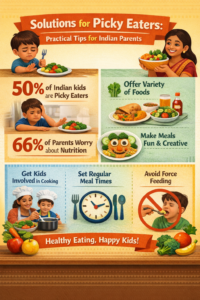
Solutions for Picky Eaters: Practical Tips for Indian Parents

Edited by: MomSaathi Editorial Team Reviewed by: Based on child nutrition and feeding guidelines from  WHO & UNICEF
Momsaathi.com provides content for informational and educational purposes only. It is not intended to serve as a substitute for professional medical advice, diagnosis, or treatment. Always consult your pediatrician if your child is losing weight, avoiding entire food groups, or showing signs of nutritional deficiency.

Dealing with a picky eater can be one of the most stressful parts of parenting — especially for Indian moms. If your toddler refuses vegetables, avoids new foods, or insists on the same meal every day, you’re definitely not alone. Many parents struggle with fussy eating habits in toddlers and young children.

The good news? With patience and the right solutions for picky eaters, mealtimes can become less stressful and more enjoyable over time.

In this guide, we share practical, realistic, mom-approved solutions for picky eaters tailored for Indian families — no force-feeding, no guilt, just gentle strategies that work.

Why Children Become Picky Eaters – Understanding the Root Cause

Before applying picky eater solutions, it helps to know why it happens.

Common reasons:

  • Natural developmental phase (especially ages 1–3)
  • Food neophobia (fear of new foods)
  • Sensory sensitivities (texture, smell, color)
  • Desire for independence and control
  • Too many snacks or milk between meals

Understanding the cause allows you to respond calmly instead of feeling frustrated.

1. Never Force or Pressure Your Child to Eat

Pressuring children to eat usually backfires — it increases resistance and creates negative associations with food.

Instead of saying:

  • “Finish your plate.”
  • “No play until you eat.”

Try saying:

  • “You can try one bite if you want.”
  • “This is today’s dinner option.”

Keep mealtimes relaxed and positive — pressure often makes picky eating worse.

2. Serve Very Small Portions First

Large portions can overwhelm picky eaters and make them shut down.

Best practice:

  • Start with tiny amounts (1–2 spoonfuls)
  • Offer bite-sized pieces
  • Serve food items separately instead of mixing everything

Children feel more comfortable when food looks manageable.

3. Make Food Fun and Visually Appealing

Presentation matters a lot for toddlers.

Simple ideas:

  • Use colorful plates
  • Cut food into fun shapes (cookie cutters)
  • Make smiley faces with fruits and veggies
  • Use bento-style lunch boxes

When food looks exciting, kids are more willing to try it.

4. Stick to a Consistent Meal and Snack Routine

Constant snacking reduces appetite at mealtimes.

Follow a schedule:

  • 3 main meals
  • 2 healthy snacks
  • Avoid juice or milk right before meals

Routine builds healthy eating habits and prevents grazing.

5. Introduce New Foods Slowly & Pair with Favorites

It can take 8–15 exposures before a child accepts a new food.

Tips:

  • Pair new foods with favorites (e.g., broccoli with rice)
  • Don’t expect instant acceptance
  • Celebrate small wins (“You touched it — great job!”)

Consistency is key — don’t give up after one refusal.

6. Be a Role Model – Eat Together as a Family

Children copy what they see.

If parents:

  • Eat vegetables
  • Try new dishes
  • Enjoy healthy food

Kids are more likely to follow.

Family meals make a big difference — eat together whenever possible.

7. Involve Kids in Cooking & Food Prep

Children are far more likely to eat what they help prepare.

Let them:

  • Wash vegetables
  • Stir ingredients
  • Arrange food on plates

Cooking builds curiosity and ownership.

8. Avoid Labeling Your Child as “Picky.”

Labels can reinforce behavior.

Instead of saying:

“My child is a picky eater”

Say:

“We’re still exploring new foods together.”

Positive language matters.

Healthy Snack Ideas for Picky Eaters (Indian-Friendly)

  • Banana peanut butter rolls
  • Vegetable paratha with yogurt
  • Fruit yogurt smoothies
  • Cheese cubes with whole-grain crackers
  • Boiled corn with butter

Keep snacks nutritious but simple.

When to Seek Professional Help

Consult a pediatrician or feeding specialist if:

  • Your child is losing weight
  • Avoids entire food groups for months
  • Gags or vomits frequently
  • Shows extreme sensory issues or oral aversion

Sometimes, picky eating needs medical guidance.

Frequently Asked Questions

What causes picky eating in toddlers?

Picky eating is often a normal developmental phase influenced by independence, sensory preferences, and exposure to foods.

How can I encourage my child to try new foods?

Introduce foods slowly, pair them with favorites, and avoid pressure.

Should I force my child to eat vegetables?

No, forcing can create negative associations. Encourage gently instead.

How long does picky eating last?

Most children outgrow picky eating with consistent exposure and positive mealtime habits.

Final Thoughts for Indian Moms

Picky eating is often a temporary phase, not a permanent problem. Stay patient, stay consistent, and avoid power struggles.

Remember: Your job is to provide healthy options. Your child’s job is to decide how much to eat.

With the right solutions for picky eaters, mealtimes can become less stressful and more enjoyable for the whole family.

Which picky eater solution are you trying first? Share your experience in the comments — let’s support each other.

Related Articles on Momsaathi

Trusted External Resources

Tip: Exploring both internal guides and trusted external resources helps parents make informed decisions and supports better child nutrition.