
Edited by: MomSaathi Editorial Team
Reviewed by: Obstetricians & Pediatric Nutritionists as per ICMR-NIN Pregnancy Nutrition Guidelines & Indian Academy of Pediatrics (IAP) Recommendations
Pregnancy brings so many new feelings — joy, nervousness, and sometimes worry. One of the most common concerns for expectant mothers is pregnancy cramps. That sudden pulling sensation or mild ache in your lower belly can make your heart skip a beat, especially if it’s your first pregnancy.
You’re not alone. Almost every pregnant woman experiences some form of cramping at different stages. The good news? In most cases, mild pregnancy cramps are completely normal and are just your body adjusting to the changes happening inside. In this guide, we’ll walk through everything you need to know — from what causes them to when you should reach out to your doctor — in a simple, reassuring way.
Quick Summary: Pregnancy Cramps at a Glance
Normal Pregnancy Cramps
- Mild, period-like pulling or tightening
- Comes and goes
- No bleeding or severe pain
When to Be Concerned
- Severe pain that doesn’t go away
- Cramping with bleeding
- Pain with fever, dizziness, or vomiting
Now, let’s understand this topic properly so you can feel more confident and less anxious.
Are Pregnancy Cramps Normal?
Yes, mild pregnancy cramps are very common and usually harmless. Your body is going through massive changes — your uterus is expanding, ligaments are stretching, hormones are shifting, and blood flow is increasing. All these changes can cause discomfort that feels like cramps.
Most women describe it as a dull ache, mild tightening, or a brief pulling sensation in the lower abdomen. As long as the pain is mild and comes and goes, it is often just your body working hard to support your growing baby.
What Do Pregnancy Cramps Feel Like?
Pregnancy cramps can feel different for every woman. Common descriptions include:
- A mild period-like ache
- Gentle pulling or stretching sensation
- Brief tightening in the lower belly
- Occasional sharp twinges on one side
These feelings are usually short-lived and often improve with rest, changing positions, or a warm bath.
Common Causes of Pregnancy Cramps
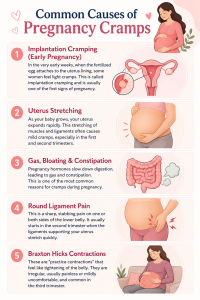
Implantation Cramping (Early Pregnancy)
In the very early weeks, when the fertilized egg attaches to the uterus lining, some women feel light cramps. This is called implantation cramping and is usually one of the first signs of pregnancy.
Uterus Stretching
As your baby grows, your uterus expands rapidly. This stretching of muscles and ligaments often causes mild cramps, especially in the first and second trimesters.
Gas, Bloating & Constipation
Pregnancy hormones slow down digestion, leading to gas and constipation. This is one of the most common reasons for cramps during pregnancy.
Round Ligament Pain
This is a sharp, stabbing pain on one or both sides of the lower belly. It usually starts in the second trimester when the ligaments supporting your uterus stretch quickly.
Braxton Hicks Contractions
These are “practice contractions” that feel like tightening of the belly. They are irregular, usually painless or mildly uncomfortable, and common in the third trimester.
Pregnancy Cramps by Trimester
First Trimester Cramps
Mild cramps are very common as your body adjusts. Implantation, uterus stretching, and hormonal changes are the main reasons. As long as there is no heavy bleeding or severe pain, it is usually normal.
Second Trimester Cramps
Round ligament pain becomes more noticeable. Your growing belly puts pressure on ligaments, causing sharp twinges when you change positions suddenly.
Third Trimester Cramps
Braxton Hicks contractions become more frequent. Your body is preparing for labor, but these are usually irregular and not painful.
Pregnancy Cramps Without Bleeding
This is one of the most searched questions by expectant mothers. Mild to moderate cramps without bleeding are usually normal. They are often caused by ligament stretching, gas, or Braxton Hicks. Rest, hydration, and changing positions help most of the time.
When Are Pregnancy Cramps Dangerous?
While most cramps are harmless, you should contact your doctor immediately if you experience:
- Severe or constant pain that doesn’t go away
- Cramping along with bleeding or spotting
- Pain with fever, chills, or vomiting
- Dizziness or fainting
- Pain during urination
- Shoulder pain along with abdominal cramps
Could Pregnancy Cramps Mean Miscarriage?
This is a big fear for many mothers. While cramping can sometimes be a symptom of miscarriage, mild cramps alone rarely mean something is wrong. Miscarriage is usually accompanied by heavier bleeding, severe pain, and other symptoms. Always reach out to your doctor if you’re worried — they would rather check and reassure you than have you anxious.
How to Relieve Pregnancy Cramps Naturally
Here are safe, simple ways that help most women:
- Rest and lie down on your left side
- Take a warm (not hot) bath or use a warm compress
- Stay well hydrated — drink plenty of water
- Do gentle stretching or prenatal yoga
- Take a slow walk to ease gas and bloating
- Practice good posture
- Wear supportive maternity bands
Foods & Drinks That May Help Reduce Cramps
- Magnesium-rich foods (bananas, almonds, spinach)
- Potassium-rich foods (coconut water, bananas, sweet potatoes)
- Warm milk with turmeric (haldi doodh)
- Plenty of water and fresh buttermilk
Myth vs Fact: Pregnancy Cramps
Myth: All cramps mean something is wrong. Fact: Most mild cramps are normal and part of a healthy pregnancy.
Myth: You should stay in bed if you have cramps. Fact: Gentle movement often helps more than complete bed rest.
When to Call a Doctor
Don’t hesitate to contact your gynecologist if:
- Pain becomes severe or constant
- You notice any bleeding
- Cramps come with other worrying symptoms
- You feel unsure or anxious
It’s always better to get checked and have peace of mind.
Emotional Stress & Anxiety During Pregnancy
Pregnancy cramps can trigger anxiety, especially for first-time mothers. Remember: worrying can sometimes make the discomfort feel worse. Talk to your partner, family, or doctor. Join supportive pregnancy groups. Taking care of your mental health is just as important as taking care of your physical health.
Key Takeaways
- Mild pregnancy cramps are very common and usually harmless
- Rest, hydration, and gentle movement help most cases
- Severe pain, bleeding, or other symptoms need medical attention
- Every pregnancy is different — trust your instincts and your doctor
You are doing an amazing job growing a new life. Mild cramps are often just a sign that your body is working hard. Stay calm, listen to your body, and don’t hesitate to seek help when needed.
More Trusted Resources
Reliable guides on pregnancy cramps and symptoms
- • Mayo Clinic – Pregnancy Cramps: When to Worry
- • ACOG – Understanding Early Pregnancy Symptoms
- • Healthline – Pregnancy Cramps: Causes & Relief
- • What to Expect – Cramps During Pregnancy
- • NHS UK – Stomach Pain in Pregnancy
💡 These external links are for additional reliable information. Always consult your doctor for personalized advice.
Frequently Asked Questions
Are pregnancy cramps normal?
Yes, mild pregnancy cramps are very common and usually harmless. They are often caused by the uterus stretching, gas, constipation, or round ligament pain. Most women experience them at some point, especially in the first and second trimesters.
What do pregnancy cramps feel like?
Pregnancy cramps usually feel like a mild period-like ache, gentle pulling, stretching, or tightening in the lower belly. They are often short-lived and improve with rest or changing positions.
What causes implantation cramping in early pregnancy?
Implantation cramping happens when the fertilized egg attaches to the uterine lining, usually in the very early weeks. It is typically light, brief, and one of the first signs of pregnancy.
What is round ligament pain during pregnancy?
Round ligament pain is a sharp, stabbing pain on one or both sides of the lower belly. It usually starts in the second trimester when the ligaments supporting the uterus stretch quickly as the baby grows.
Are Braxton Hicks contractions the same as pregnancy cramps?
Braxton Hicks are “practice contractions” that feel like tightening or mild cramping in the belly. They are irregular, usually painless or mildly uncomfortable, and become more common in the third trimester.
When should I worry about pregnancy cramps?
Contact your doctor immediately if cramps are severe, constant, come with bleeding or spotting, fever, vomiting, dizziness, pain during urination, or shoulder pain. Don’t wait if something feels wrong.
Is cramping without bleeding normal in pregnancy?
Yes, mild to moderate cramps without any bleeding are usually normal. They are often caused by ligament stretching, gas, or Braxton Hicks contractions.
How can I relieve pregnancy cramps naturally?
Rest on your left side, take a warm (not hot) bath, stay hydrated, do gentle prenatal yoga or stretching, walk slowly to ease gas, and eat magnesium-rich foods like bananas, almonds, and spinach.
Can pregnancy cramps mean miscarriage?
Most pregnancy cramps are harmless, but severe cramps along with heavy bleeding or spotting can sometimes be a sign of miscarriage. Always contact your doctor right away if you are worried.
What foods and drinks help reduce pregnancy cramps?
Magnesium-rich foods (bananas, almonds, spinach), potassium-rich drinks (coconut water), warm milk with turmeric, plenty of water, and fresh buttermilk can help ease cramps caused by gas and constipation.
