Perfect Kids. Messy Mom. Worth It. – The Beautiful Reality of Motherhood

Indian family enjoying screen-free play – parenting trends India 2026

Parenting Trends India 2026 – What’s In & What’s Out for Busy Moms

Momsaathi.com provides content for informational and educational purposes only. It is not intended to serve as a substitute for professional medical advice, diagnosis, or treatment. Always consult your pediatrician or child psychologist for personalized parenting guidance.

Parenting trends India 2026 are shifting fast. Many moms in Karnataka and across the country are moving away from packed schedules, perfection pressure, and screen-filled days. Instead, the focus is on calmer, more connected childhoods — with intentional parenting, presence over perfection, and analog living.

Whether you’re a working mom in Bengaluru or managing a joint family, these new parenting trends 2026 India prioritize emotional well-being, real play, and mindful boundaries. Here’s what’s trending — and what smart moms are happily leaving behind.

What’s OUT in Parenting Trends India 2026

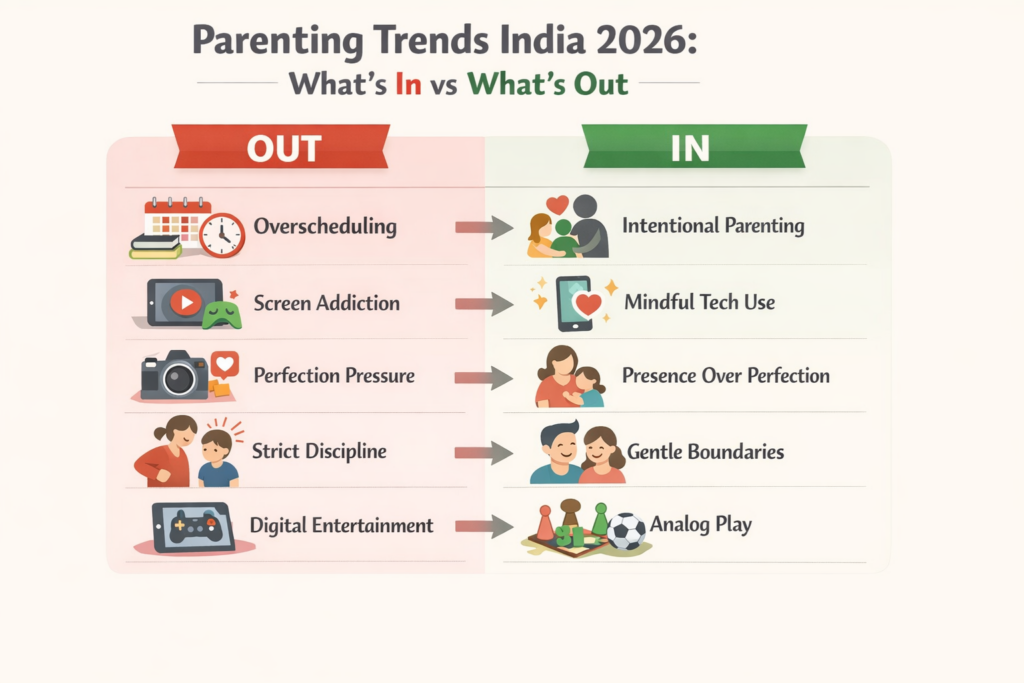
  • Overscheduling every hour with classes and activities Many parents now realize that constant tuition, sports, and hobby classes leave both kids and moms exhausted. The “more is better” myth is fading fast.
  • Perfection pressure and comparison culture Instagram-perfect parenting is being replaced by real, messy, joyful moments. Moms are done chasing flawless milestones.
  • Unlimited screen time as default entertainment Tablets and YouTube are no longer the go-to babysitter. The anti-screen movement is growing stronger in 2026.
  • “Children should be seen, not heard” mindset Old-school strictness is giving way to open emotional conversations and empathy.

What’s IN: Top Parenting Trends India 2026

Intentional Parenting India

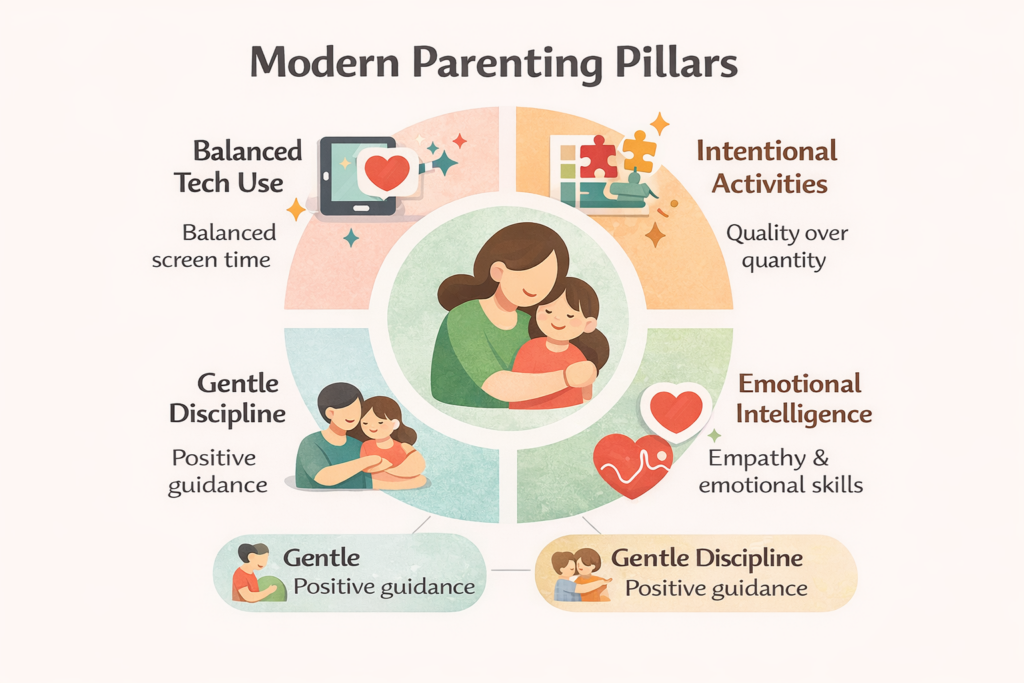
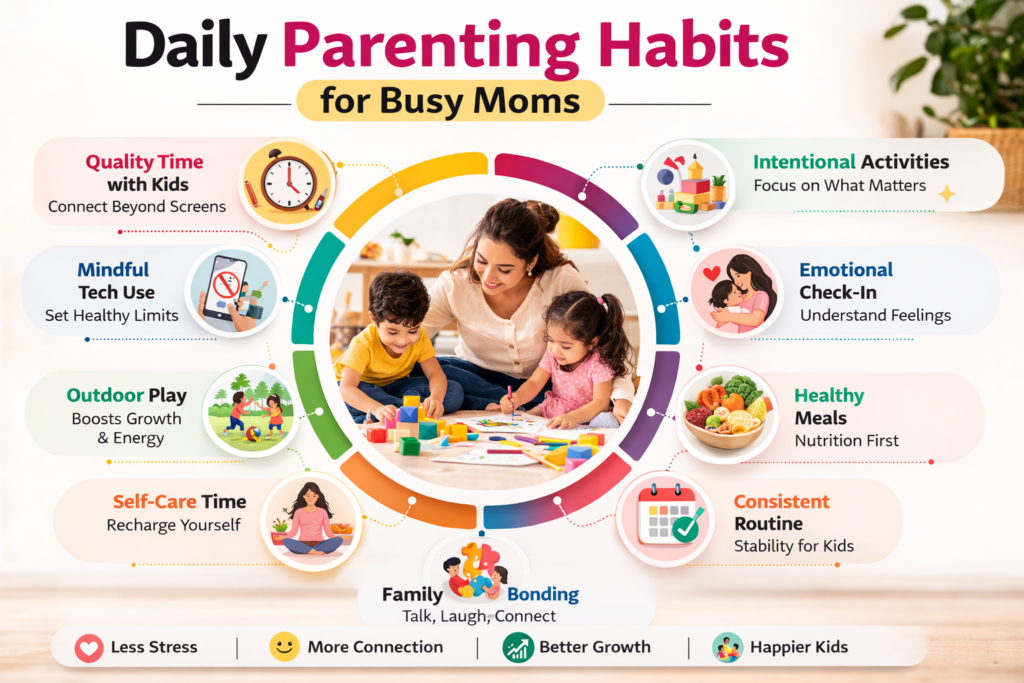
Focus on quality over quantity. Instead of five classes a week, choose one or two meaningful activities that spark joy. For example, one family storytelling evening instead of scrolling reels. This builds deeper bonds and reduces burnout for both kids and parents.

Analog Parenting & Screen-Free Play

The biggest shift in parenting trends India 2026 is going analog.

  • Device-free zones (meals, bedrooms, first hour after school)
  • Board games (Ludo, Carrom), outdoor play (lagori, kho-kho), messy art
  • Family rituals: weekend park time, rangoli together, Panchatantra stories

Result: kids develop creativity, patience, and social skills naturally.

Presence Over Perfection Parenting

Moms are prioritizing being present over being perfect.

  • 20–30 minutes of undivided attention daily (no phone)
  • Celebrating effort (“You tried so hard!”) instead of only results
  • Accepting tantrums and mistakes as learning moments

This trend resonates deeply with Indian families — blending empathy with cultural values of connection.

Mindful Tech Use (Not Elimination)

Tech isn’t banned — it’s intentional.

  • Quality educational apps (max 30–60 min/day)
  • Co-viewing and discussing content
  • Parents modeling phone-free time

Gen Z parents in India are especially vocal about this balanced approach in 2026.

Emotional Intelligence & Gentle Boundaries

Teaching kids to name feelings, manage frustration, and respect limits kindly.

  • “I see you’re angry — let’s take deep breaths together”
  • Firm “no” with empathy, not yelling

This helps children build resilience while honoring Indian values like respect for elders.

How to Start These Parenting Trends India 2026 in Your Home

  1. Pick ONE change this month (device-free dinners or 20 min of play)
  2. Involve the whole family — grandparents can share stories, dads can join park time
  3. Track small wins — a calmer evening or happier child is real success
  4. Be kind to yourself — progress, not perfection

Final Thoughts: Parenting Trends India 2026 Are About Connection

The new parenting trends India 2026 aren’t about doing more — they’re about doing less, but with more heart. Intentional parenting, analog play, presence over perfection, and mindful boundaries help raise emotionally strong, happy kids.

Which parenting trend India 2026 are you most excited to try? Drop it in the comments — let’s inspire each other, Karnataka moms!

Related Articles on Momsaathi.com:

External Resources:

Parenting Trends India 2026: What’s In, What’s Out for Busy Moms This Year

Indian family enjoying screen-free analog playtime with board games at home in 2026 – parenting trends India

Edited by: MomSaathi Editorial Team

Reviewed by: Based on modern parenting trends, social behavior insights, and family lifestyle research

Parenting Trends India 2026 are evolving rapidly as busy moms balance careers, home responsibilities, and conscious parenting choices. From gentle discipline to digital boundaries and sustainable living, Indian parenting is seeing a powerful shift this year.

Momsaathi.com provides content for informational and educational purposes only. It is not intended to serve as a substitute for professional medical advice, diagnosis, or treatment. Always consult your pediatrician, child psychologist, or healthcare provider for personalized parenting guidance.

As we move deeper into 2026, parenting trends in India are shifting dramatically. Gone are the days of packed schedules, constant achievement pressure, and screen-filled days. Today’s Indian moms (especially in Karnataka and urban homes) are embracing intentional parentingpresence over perfection, and analog living — choosing calmer, more connected childhoods for their kids.

Whether you’re a working mom juggling Bengaluru traffic or a homemaker in a joint family, these new parenting trends 2026 India focus on emotional well-being, real play, and mindful boundaries. Here’s what’s trending — and what smart moms are leaving behind.

[fc-water-intake]

1. What’s OUT in Parenting Trends India 2026

  • Overscheduling every hour with classes and activities, parents are realizing that constant tuition, sports, and hobby classes leave kids (and moms) exhausted. The “more is better” myth is fading fast.
  • Perfection pressure and comparison culture, Instagram-perfect parenting is being replaced by real, messy, joyful moments. Moms are done chasing flawless milestones.
  • Unlimited screen time as default entertainment. Tablets and YouTube are no longer the go-to babysitter. The anti-screen movement is growing stronger.
  • “Children should be seen, not heard” mindset. Old-school strictness is giving way to open emotional conversations.

2. What’s IN: Top Parenting Trends India 2026

Intentional Parenting India: Focus on quality over quantity. Instead of 5 classes a week, choose 1–2 meaningful activities that spark joy. Example: One family storytelling evening instead of scrolling reels. Why it works: Builds deeper bonds and reduces burnout for both kids and parents.

Analog Parenting & Screen-Free Play The biggest shift: Going analog.

  • Device-free zones (meals, bedrooms, first hour after school)
  • Board games (Ludo, Snakes & Ladders, Carrom), outdoor play (lagori, kho-kho), and messy art
  • Family rituals: Weekend park time, rangoli together, or Panchatantra story sessions. Result: Kids develop creativity, patience, and social skills naturally.

Presence Over Perfection Parenting Moms are prioritizing being present over being perfect.

  • 20–30 minutes of undivided attention daily (no phone)
  • Celebrating effort (“You tried so hard!”) instead of only results
  • Accepting tantrums and mistakes as learning moments. This trend resonates deeply with Indian families — blending empathy with our cultural value of connection.

Mindful Tech Use (Not Elimination) Tech isn’t banned — it’s intentional.

  • Quality educational apps (max 30–60 min/day)
  • Co-viewing and discussing content
  • Parents modeling phone-free time, Gen Z parents in India are especially vocal about this balanced approach.

Emotional Intelligence & Gentle Boundaries: Teaching kids to name feelings, manage frustration, and respect limits kindly.

  • “I see you’re angry — let’s take deep breaths together.”
  • Firm “no” with empathy, not yelling. This trend helps kids build resilience while honoring Indian values like respect for elders.

3. How to Start These Parenting Trends India 2026 in Your Home

  1. Pick ONE change this month (e.g., device-free dinners or 20 min of play).
  2. Involve the whole family — grandparents can share stories, dads can join park time.
  3. Track small wins — a calmer evening or a happier child is success.
  4. Be kind to yourself — progress, not perfection.

If you’re rethinking screen rules, read our detailed toddler screen-time guide.

Final Thoughts: Parenting Trends India 2026 Are About Connection

The new parenting trends 2026 India aren’t about doing more — they’re about doing less, but with more heart. Intentional parenting, analog play, presence over perfection, and mindful boundaries are helping Indian families raise emotionally strong, happy kids.

Which parenting trend in India 2026 are you most excited to try? Drop it in the comments — let’s inspire each other, Karnataka moms!

[irp]

FAQs: Parenting Trends India 2026

What are the biggest parenting trends in India in 2026?

The biggest parenting trends in India in 2026 include a focus on emotional well-being, gentle parenting, digital awareness, and science-backed decision-making. Parents are prioritizing balanced development over academic pressure.

What is “in” for parenting in 2026 for busy moms?

In 2026, busy moms are focusing on:

  • Emotional bonding with children
  • Minimalist and sustainable parenting
  • Shared parenting responsibilities
  • Quality time over quantity
  • Conscious product choices

What is “out” in modern parenting trends in India?

Outdated trends include:

  • Strict, fear-based discipline
  • Over-reliance on academic pressure
  • Ignoring mental health
  • Excessive screen exposure
  • Comparing children constantly

Why is emotional well-being important in parenting today?

Modern parenting emphasizes emotional well-being because it helps children build confidence, resilience, and better communication skills from an early age.

How are fathers becoming more involved in parenting in 2026?

Fathers are now actively participating in daily childcare, attending doctor visits, sharing responsibilities, and bonding with their children more than ever before.

How are Indian parents managing screen time for kids?

Parents are setting structured screen limits, encouraging offline activities, and monitoring content quality instead of completely banning technology.

What is minimalist parenting, and why is it trending?

Minimalist parenting focuses on fewer but meaningful choices—like buying essential products, reducing clutter, and prioritizing experiences over material things.

How can busy moms follow modern parenting trends?

Busy moms can adapt by:

  • Creating simple daily routines
  • Focusing on quality interactions
  • Using digital tools wisely
  • Sharing responsibilities with partners
  • Practicing self-care

Is traditional parenting completely outdated in 2026?

No, modern parenting in India blends traditional values with scientific knowledge, creating a balanced and informed approach.

What is the future of parenting in India?

The future of parenting in India is more conscious, emotionally aware, and child-focused, with a strong emphasis on mental health and holistic development.

🔗 Expert Insights & Resources

Gentle Parenting in Joint Families: How to Make It Work with Grandparents

Momsaathi.com provides content for informational and educational purposes only. It is not intended to serve as a substitute for professional medical advice, diagnosis, or treatment. Always consult a qualified pediatrician, child psychologist, or family counselor for personalized parenting guidance.

Living in a joint family is beautiful — grandparents’ love, shared chores, festival celebrations, and built-in support are priceless. However, gentle parenting in joint families in India often feels challenging when grandparents follow traditional, stricter styles (“children should obey instantly,” “no tantrums allowed,” “don’t pamper too much”). In 2026, more young Indian parents want to raise emotionally intelligent kids with empathy and firm boundaries — without constant conflict.

This guide shows how to make gentle parenting work smoothly in joint families — practical, respectful tips that honor elders while protecting your parenting values.

Why Gentle Parenting Feels Hard in Joint Families

Gentle parenting focuses on connection, validating feelings, and kind limits. Traditional Indian joint family styles often emphasize obedience, quick discipline, and “tough love.” These differences can lead to:

  • Mixed messages for kids
  • Tension between parents and grandparents
  • Mom guilt (“Am I disrespecting elders?”)
  • Kids are getting confused about the rules

The goal: blend both worlds respectfully — keep family harmony while raising emotionally strong children.

Start with Respectful Communication – Set the Tone Early

Talk openly but kindly before the baby arrives or early on.

How to start the conversation:

  • Choose a calm moment (not during a disagreement).
  • Use “we” language: “We want to raise our child with love and clear boundaries — how can we work together?”
  • Acknowledge grandparents’ experience: “You raised us so well — we value your wisdom and want to include it.”
  • Share one gentle parenting book/article (e.g., “The Whole-Brain Child” or Indian blogs) — read together.

Desi tip: Many Karnataka families use “family meetings” during evening chai time — make it a monthly habit.

[fc-calories-calculator]

Find Common Ground – Blend Traditions with Gentle Principles

Most grandparents want the same outcome: happy, respectful, successful kids. Highlight shared values.

Examples of blending:

  • Respect for elders → Teach kids to say “Namaste” and listen, but allow polite expression of feelings.
  • Discipline → Use natural consequences (“If toys aren’t picked up, they rest tomorrow”) instead of scolding.
  • Food & routines → Keep traditional foods and bedtime stories, but explain gently why screen limits help focus.

Tip: Frame gentle parenting as “modern love with old values” — grandparents often warm up when they see it works.

Set Clear, Kind Boundaries – Without Disrespect

Boundaries protect your parenting style — deliver them calmly.

Practical scripts:

  • “We really appreciate your help. For tantrums, we’re trying to stay calm and name feelings — it’s working well for us.”
  • “Thank you for the advice! We’ve decided to follow our pediatrician’s sleep routine — it’s helping baby a lot.”
  • “We love how much you care. Let’s agree on one house rule together so the baby isn’t confused.”

Desi tip: Involve grandparents in small decisions (“Should we read Ramayana or Panchatantra tonight?”) — makes them feel included.

Involve Grandparents Positively – Turn Them into Allies

Grandparents can be gentle parenting superheroes when guided.

Ideas that work:

  • Ask them to tell stories or sing lullabies — it builds emotional connection.
  • Teach simple emotion words (“You look happy/sad/angry”) during play.
  • Let them handle outdoor play or park time — screen-free bonding.
  • Praise their efforts: “Baby calms so fast when you sing — thank you!”

Handle Conflicts Calmly – Protect Your Peace

Disagreements will happen — handle them without escalation.

Quick strategies:

  • Step away briefly if tension rises (“I need a minute to think”).
  • Use “I feel” statements: “I feel worried when the baby is scolded — it makes him scared.”
  • Reconnect later: “Let’s find a way that works for all of us.”
  • If needed: Seek neutral support (family elder, counselor).

Tip: Many Karnataka moms join online gentle parenting groups — great for support and scripts.

Benefits You’ll See in Joint Families Using Gentle Parenting

  • Kids feel safe expressing feelings → fewer tantrums long-term
  • Stronger family bonds — grandparents feel valued, not criticized
  • Less yelling, more cooperation
  • Emotionally resilient children who respect elders naturally

Final Words for Indian Moms in Joint Families

Gentle parenting in joint families in India is possible — it just takes patience, clear communication, and respect for everyone’s role. You’re not choosing between tradition and modern parenting — you’re creating a beautiful blend.

How do you balance gentle parenting with grandparents in your home? Share one tip that worked for you in the comments — let’s help each other, Karnataka moms!

Related Articles on Momsaathi.com:

External Resources:

Holi with Toddlers: Safe, Fun & Gentle Ways to Celebrate Without Tears

Holi with Toddlers (1–3 Years): Safe, Fun & Gentle Ways to Celebrate Without Tears

Holi is magical for little ones—the colors, water play, family vibes—but for toddlers (1–3 years), it can quickly turn overwhelming: loud music, crowds, powder in eyes/mouth, synthetic colors causing rashes, or scary water balloons. In Indian homes (especially Karnataka with warm March weather), many moms keep it gentle, home-based, or low-key to avoid meltdowns, allergies, or tears. The goal: fun sensory play + family bonding without risks.

This guide draws from pediatric tips (e.g., from Indian child specialists), mom experiences (Instagram, blogs like My Little Moppet, EuroKids ideas), and 2025–2026 safety advice: prioritize natural/organic colors, close supervision, no harsh play, and toddler-paced activities.

Safety First: Must-Dos for Toddlers

  • Choose safe colors — Ditch synthetic/chemical gulaal (mercury, lead, etc. cause rashes, eye irritation, breathing issues). Use organic, herbal, or homemade natural colors:
    • Turmeric (haldi) + water for yellow/orange.
    • Beetroot juice/boiled for pink/red.
    • Spinach/palak paste for green.
    • Hibiscus/rose petals for pink/purple.
    • Sandalwood powder or cornflour + food colors (edible-grade).
    • Buy certified organic brands if making at home is hard.
  • Prep skin & hair — Apply coconut oil (nariyal tel) or mild moisturizer + sunscreen on face/body before play. It creates a barrier, makes colors wash off easier, and prevents dryness/rash.
  • Clothing — Full-sleeve cotton kurta-pajama or old long clothes (easy to discard if stained). Cap/hat for head, avoid loose hair.
  • Eye & mouth protection — No direct face powder throwing. Use goggles/sunglasses if they tolerate. Supervise constantly—toddlers put hands in mouth.
  • Avoid — Water balloons (injury risk), high-pressure pichkari (scary/intense), crowds/street play (overstimulation, strangers), loud public events early in day.
  • Hydration & snacks — Keep water, coconut water, fruits handy. Light meals before/after—no heavy sweets if tummy-sensitive.
  • Post-play — Lukewarm bath (no harsh soap/scrub), oil massage to remove colors gently. Check for rashes/redness.

Gentle, Fun Ways to Celebrate (Home or Small Family Setup)

Related Articles on MomSaathi

Keep it short (30–60 min max), in a controlled space like balcony, courtyard, or tiled room with mats.

  1. Color Handprints & Footprints Dip little hands/feet in natural color pastes (diluted) on large paper/old bedsheet. Make “rainbow family” prints. Sensory fun, no mess on body.
  2. DIY Natural Color Mixing Station Bowls with safe pastes (beetroot, turmeric, spinach) + brushes/sponges. Let them “paint” on paper, cardboard, or white cloth. Add water play with droppers for mixing colors.
  3. Water-Only Play (Gentle Version) Small buckets with plain water + floating toys/colors (diluted natural). Use soft squeeze bottles or cups for pouring. Skip if they hate wet.
  4. Foam or Bubble Color Fun Make edible foam: shaving cream (non-toxic) + food color, or condensed milk + color for “paint.” Finger paint on trays/body (washable).
  5. Rangoli with Safe Powders Use rice flour, flower petals, or natural color powders on floor/mat. Toddler can sprinkle or place flowers. Traditional + low-contact.
  6. Color Balloon Art (No Throwing) Fill balloons with water + natural color (tie tight), but use for gentle rolling or popping indoors with supervision. Or paint on balloons.
  7. Sensory Bin with Colors Tub with rice/beans + natural color powders, scoops, toys. Pour, mix, hide—calm alternative if powder scares them.
  8. Music & Dance Party Play soft Holi songs (“Rang Barse,” desi rhymes), dance with light color tikka on forehead/cheeks. Involve family for hugs/claps.
  9. Storytime & Pretend Read Holi books or tell simple stories while applying gentle tikka (forehead only). Use stuffed toys for “color play.”
  10. Treat Time — After gentle play, enjoy thandai (mild, no bhang), gujiya, or fruit chaat. Family photo in light colors!

Quick Tips from Indian Moms (Karnataka/Desi Homes)

  • Start small — Test a tiny bit of color on arm day before to check allergy.
  • Read cues — If tears/overwhelm, stop and switch to indoor calm activity.
  • Family involvement — Let dadi/nani apply tikka, papa play gently—makes it joyful.
  • For very young (under 18 months) — Mostly observer: tikka + photos, no full play.
  • Eco twist — Use flower petals, avoid waste—many moms prefer water-free or minimal.

Holi with toddlers is about creating happy memories, not Instagram perfection. A gentle, supervised celebration often ends with giggles, not tears. If your little one is sensitive (eczema, fears water/noise), lean more indoor/sensory.

10 Gentle Parenting Phrases Every Indian Mom Should Use Instead of Scolding (2026 Guide)

One minute you’re calmly asking your child to finish homework, the next minute you hear yourself saying, “Kitni baar bola hai?!”, “Chup ho jao!”, or “Badmaash mat bano!”

And then comes the guilt.

Scolding may give instant results, but it slowly breaks the emotional connection we want with our children. Gentle parenting isn’t about never correcting them — it’s about correcting them with respect and love.

Here are 10 gentle parenting phrases that thousands of Indian moms are already using successfully. Replace the old scolding words with these and watch the magic happen.

1. Instead of “Bas karo rona!”

Say: “I can see you’re really upset, beta. Come, let me hold you.”

Why it works: It validates their feelings instead of dismissing them. Children feel safe and calm down faster.

2. Instead of “Kitni baar bola hai!”

You may also enjoy our guide on screen-free activities for toddlers.

Say: “Let’s try again together. I’m here to help you.”

Why it works: It shifts from blame to teamwork. Your child feels supported, not shamed.

3. Instead of “Badmaash / Naughty mat bano”

Say: “That behaviour is not okay. Let’s find a better way.”

Why it works: It separates the child from the behaviour. They learn that they are still loved even when they make mistakes.

Positive parenting techniques for children

Link: https://www.unicef.org/eap/place-for-parents/positive-parenting-tips-0-5

Positive parenting focuses on building a caring relationship with children and guiding behaviour with kindness and respect instead of punishment.

4. Instead of “Jaldi khao!” or “Khaana chhod ke mat utho”

Say: “Take your time and enjoy your food, beta.”

Why it works: Mealtime becomes peaceful instead of a battle zone. Children eat better when they feel relaxed.

5. Instead of “Chup ho jao!”

Say: “I want to hear what you have to say, but in a softer voice.”

Why it works: It teaches emotional regulation while still giving them the right to speak.

[fc-calories-calculator]

6. Instead of “Lazy ho tum / Kitna slow hai tu”

Say: “I believe you can do this. Let’s do it step by step.”

Why it works: It builds confidence instead of damaging self-esteem — especially important during homework and studies.

According to UNICEF, positive parenting helps children feel emotionally secure.

7. Instead of “Because maine kaha na!”

Say: “Here’s why it’s important…” (then give a short, simple reason)

Why it works: Children learn logic and respect instead of blind obedience.

8. Instead of “You always do this!” or “Kabhi nahi sunte”

Say: “Next time we can try it this way. I know you can do better.”

Why it works: It focuses on future improvement instead of past mistakes.

9. Instead of “Phone mat chhuo!”

Say: “This is Mummy’s phone. Here’s your toy / book to play with.”

Why it works: It gives them an alternative instead of just a strict “No”.

10. Instead of “Shut up” or “Bilkul mat bolna”

Say: “I’m feeling upset right now. Let’s both take a deep breath and talk calmly.”

Why it works: You model the exact behaviour you want from them — emotional regulation.

Bonus Tip for Indian Moms

Stick these 10 phrases on your fridge or save them as a phone wallpaper for the first 15 days. It takes only 2–3 weeks for these new words to become your natural response.

Experts suggest that gentle parenting focuses on empathy, respect, and emotional understanding while maintaining healthy boundaries for children. Parents who use positive communication help build stronger emotional connections with their kids.
According to research on positive parenting techniques, supportive communication and encouragement can improve children’s emotional development and behaviour.

Frequently Asked Questions (FAQ)

Q1. Will these gentle parenting phrases work with strong-willed children? Yes! They work even better with strong-willed kids because they feel respected instead of controlled.

Q2. What if my child still doesn’t listen after using these phrases? Stay consistent. Combine the phrase with calm action (like gentle redirection or natural consequence). Change takes time.

Q3. Can I use these phrases in a joint family? Absolutely. Many MomSaathi moms share these with grandparents too. Explain that you’re teaching your child the same values — just with more love and respect.

Q4. Are these suitable for toddlers as well as school-going kids? Yes. Just keep the language simpler for toddlers (2–4 years) and slightly more detailed for older children (5+ years).


Final Words from MomSaathi You don’t have to be a perfect mom. You just need to be a mom who is trying to do better every day.

These 10 gentle parenting phrases are small changes in words, but they create huge changes in your relationship with your child.

Start with just one or two phrases this week. You’ve got this, Mama.

Which of these 10 phrases are you going to use first? Tell me in the comments — I personally reply to every mom.

If this post helped you, share it with another Indian mom who needs it

Subscribe to MomSaathi for more practical, guilt-free parenting tips every week.

5 Gentle Parenting Tips Every Mom Should Know in 2026 (Practical & Easy Guide)

parenting tips 2026 gentle parenting guide

Edited by: MomSaathi Editorial Team

Reviewed by: Based on modern parenting trends, social behavior insights, and family lifestyle research

Parenting tips 2026 are evolving as more parents focus on emotional connection, empathy, and positive discipline. Modern parenting is no longer about strict rules alone — it’s about guiding children with patience and understanding. If you are looking for practical parenting tips 2026, gentle parenting strategies can help you raise confident, emotionally strong, and happy children.

Gentle parenting is not about letting children do whatever they want. Instead, it focuses on understanding children, setting respectful boundaries, and guiding them with patience and empathy. When practiced consistently, this parenting style can help children grow into confident, emotionally intelligent individuals.

If you are looking for simple yet effective parenting tips in 2026, these gentle parenting strategies can help make everyday parenting easier and more meaningful.

What Is Gentle Parenting?

Gentle parenting is a respectful parenting approach that focuses on communication, empathy, and positive discipline. Instead of punishment or fear-based control, parents guide children by helping them understand their emotions and actions.

The main goal of gentle parenting is to raise children who feel safe, respected, and emotionally secure.

Parents practicing gentle parenting usually focus on:

  • Understanding the child’s feelings

  • Setting clear and calm boundaries

  • Teaching emotional awareness

  • Building trust and connection

This approach encourages cooperation rather than conflict.

[fc-bmi-cal]

Why Gentle Parenting Is Becoming Popular in 2026

Parents today are increasingly aware that emotional well-being plays a huge role in a child’s development. Gentle parenting supports healthy emotional growth while strengthening the parent-child relationship.

Some reasons why more families are adopting gentle parenting include:

  • Greater focus on children’s mental health

  • Increased awareness of emotional intelligence

  • Research supporting positive parenting methods

  • Parents want stronger communication with their kids

This shift reflects a broader move toward mindful and supportive parenting.

If you’re planning for a baby, you may also find our pregnancy diet chart guide helpful.

You can also explore our collection of baby boy names and baby girl names.

5 Gentle Parenting Tips Every Mom Should Know
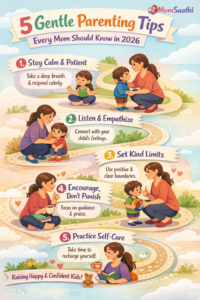
gentle parenting tips 2026 infographic for modern parents

1. Listen to Your Child With Patience

Children often act out when they feel unheard or misunderstood. One of the most effective parenting tips is to listen carefully to what your child is trying to express.

Instead of immediately correcting them, pause and try to understand their perspective. A simple response like “I understand you’re upset” can help children feel validated and calm down more quickly.

Active listening builds trust and encourages open communication between parents and children.

2. Set Clear but Kind Boundaries

Gentle parenting does not mean avoiding rules. In fact, children need boundaries to feel secure and understand acceptable behavior.

The key difference is how boundaries are communicated.

Rather than raising your voice or using punishment, calmly explain the rule and the reason behind it. For example, instead of saying “Stop that now!”, you might say “We need to be gentle because hitting can hurt others.”

Children respond better when boundaries are explained with respect.

3. Teach Kids How to Handle Their Emotions

Children are still learning how to manage strong feelings like anger, frustration, or disappointment. Parents can play a big role in helping them understand these emotions.

When your child becomes upset, help them label their feelings by saying things like:

  • “It seems like you’re feeling frustrated.”

  • “Are you feeling sad about what happened?”

Helping children recognize emotions teaches them valuable emotional skills that will benefit them throughout life.

4. Be the Role Model Your Child Needs

Children learn a great deal by observing their parents. The way parents respond to stress, conflict, and emotions often becomes the behavior children copy.

If parents demonstrate patience, kindness, and calm communication, children naturally begin to adopt these qualities.

Simple habits like apologizing when you make a mistake or speaking respectfully to others can teach powerful life lessons.

5. Encourage Independence and Confidence

One important goal of parenting is helping children become confident and capable individuals. Encouraging independence allows kids to develop problem-solving skills and self-belief.

Instead of doing everything for your child, guide them to try things on their own. Whether it’s dressing themselves, completing a small task, or solving a problem, these experiences help build resilience and confidence.

Supporting independence also strengthens a child’s sense of responsibility.

Common Parenting Mistakes to Avoid

Even with the best intentions, parents sometimes fall into habits that can create unnecessary conflict. Recognizing these mistakes can help improve the overall parenting experience.

Some common parenting challenges include:

  • Comparing children with others

  • Ignoring a child’s emotional needs

  • Reacting with anger instead of patience

  • Inconsistent rules and expectations

Gentle parenting encourages parents to pause, reflect, and respond thoughtfully instead of reacting emotionally.

Gentle Parenting Tips for Toddlers

Toddlers are naturally curious and energetic, which can make parenting this stage both exciting and challenging. Gentle parenting can be particularly helpful during toddler years.

Helpful strategies include:

  • Keeping daily routines consistent

  • Offering simple choices (for example, choosing between two outfits)

  • Redirecting behavior instead of punishing

  • Staying calm during tantrums

Toddlers often need guidance and reassurance as they learn about the world around them.

Research on child development highlights the importance of responsive parenting : Read more

Parenting Trends to Watch in 2026

Parenting continues to evolve as new research highlights the importance of emotional well-being and healthy family relationships.

Some key parenting trends gaining attention in 2026 include:

  • Mindful parenting practices

  • Emotional intelligence education

  • Balanced screen time for children

  • Positive discipline strategies

  • Focus on mental and emotional health

These trends reflect a growing understanding that parenting is about guiding children, not controlling them.

Benefits of Gentle Parenting

Parents who adopt gentle parenting often notice several long-term benefits. Children raised with this approach tend to develop strong emotional awareness and healthy social skills.

Some key benefits include:

  • Improved communication between parents and children

  • Stronger emotional intelligence

  • Greater self-confidence in children

  • Healthier parent-child relationships

  • Better problem-solving skills

Gentle parenting creates a supportive environment where children feel comfortable expressing themselves and learning from their experiences.

These parenting tips 2026 focus on building strong emotional bonds between parents and children.

According to the American Academy of Pediatrics, positive parenting improves emotional development in children : Read more

Final Thoughts

Parenting is one of the most rewarding yet challenging journeys in life. As parenting approaches continue to evolve, many families are embracing more compassionate and understanding methods.

By focusing on empathy, communication, and positive guidance, gentle parenting offers a practical way to raise emotionally healthy children.

These gentle parenting tips for 2026 can help parents build stronger relationships with their children while creating a supportive and loving home environment.

FAQs

What are the best parenting tips for modern parents?

The best parenting tips include listening to children, setting respectful boundaries, teaching emotional awareness, and encouraging independence.

Yes, gentle parenting has been shown to help children develop emotional intelligence, confidence, and stronger social skills.

Yes, gentle parenting works very well for toddlers because it focuses on understanding emotions and guiding behavior rather than punishment.

Busy parents can practice gentle parenting by spending quality time with their children, communicating calmly, and being mindful of their child’s emotional needs.

The best parenting tips include listening to children, setting respectful boundaries, teaching emotional awareness, and encouraging independence.

Yes, gentle parenting has been shown to help children develop emotional intelligence, confidence, and stronger social skills.

Yes, gentle parenting works very well for toddlers because it focuses on understanding emotions and guiding behavior rather than punishment.

Busy parents can practice gentle parenting by spending quality time with their children, communicating calmly, and being mindful of their child’s emotional needs.

External Resources & Further Reading

Want to dive deeper into gentle parenting? These trusted external websites, experts, and books perfectly support the 5 practical tips in this guide — patient listening, kind boundaries, emotional coaching, role modeling, and building independence.

Official & Science-Backed Organizations

Top Gentle Parenting Experts & Blogs

Must-Read Books (2025–2026 Recommendations)

  • The Whole-Brain Child by Daniel J. Siegel & Tina Payne Bryson – Master emotional intelligence and connection.
  • Good Inside by Dr. Becky Kennedy – A fresh, practical guide for today’s moms.
  • Peaceful Parent, Happy Kids by Dr. Laura Markham – Stop yelling and build strong bonds.
  • Raising Good Humans by Hunter Clarke-Fields – Mindful parenting for busy moms.

These external resources align perfectly with the 2026 gentle parenting approach shared in the article. Bookmark them for ongoing support!
Who Can Adopt a Child in India? Complete Eligibility Criteria 2026

Adoption Eligibility Criteria in India: A Complete Guide for Prospective Parents

Adopting a child is a heartfelt way to build your family, offering a loving home to a little one in need. In India, the process is regulated by the Central Adoption Resource Authority (CARA) under the Juvenile Justice (Care and Protection of Children) Act, 2015, and the Adoption Regulations, 2022. These rules ensure the child’s best interests while making adoption accessible to eligible parents.

If you’re considering adoption, understanding the eligibility criteria for adoptive parents in India is the first step. This guide breaks it down simply, covering resident Indians, NRIs, OCIs, and foreigners.

Who Can Adopt a Child in India?

CARA allows adoption for:

  • Indian residents.
  • Non-Resident Indians (NRIs).
  • Overseas Citizens of India (OCIs).
  • Foreigners (from Hague Convention countries).

Both married couples and single individuals can apply, with some specific conditions.

General Eligibility Requirements

Prospective adoptive parents (PAPs) must meet these core criteria:

  • Physical and Mental Health: You should be physically fit, mentally sound, emotionally stable, and free from any life-threatening medical conditions.
  • Financial Stability: You need a steady income to support the child’s needs (specific minimums apply based on family size).
  • Criminal Record: No history of serious crimes or child abuse.
  • Motivation: A genuine desire to provide a nurturing home.

Eligibility for Married Couples

  • Must be in a stable marital relationship for at least 2 years.
  • Both partners must consent to the adoption.
  • Age limits (composite age of couple):
    • Up to 90 years for adopting a child under 4 years.
    • Up to 100 years for a child aged 4-8 years.
    • Up to 110 years for a child aged 8-18 years.
  • The minimum age for each parent is 25 years, with at least a 25-year gap between the parent and child.

Eligibility for Single Parents

  • Single women can adopt a child of any gender.
  • Single men can only adopt a male child (not a girl child, for safety reasons).
  • Age limits:
    • Up to 45 years for adopting a child under 4 years.
    • Up to 50 years for a child aged 4-8 years.
    • Up to 55 years for a child aged 8-18 years.
  • Minimum age: 25 years, with the required age gap to the child.

Special Considerations

  • NRIs, OCIs, and Foreigners: Additional steps like home study reports from authorized agencies and adherence to Hague Convention rules apply. Foreigners typically adopt older children or those with special needs.
  • Adopting Multiple Children: Possible, but siblings are prioritized to stay together.
  • Health Conditions: Minor correctable issues may be allowed, but serious conditions could disqualify.

Quick Summary Table: Age Criteria at a Glance

Applicant Type Child Age (0-4 yrs) Child Age (4-8 yrs) Child Age (8-18 yrs)
Married Couple (Composite Age) Up to 90 years Up to 100 years Up to 110 years
Single Parent Up to 45 years Up to 50 years Up to 55 years

These are general guidelines—exact details may vary slightly based on updates from CARA.

Next Steps If You’re Eligible

  1. Register online on the CARA portal (cara.wcd.gov.in).
  2. Complete a home study report.
  3. Get referred a child and proceed with legal formalities.

Adoption in India is a rewarding journey that requires patience—waiting times can vary from months to years depending on preferences.

Disclaimer: This information is based on current CARA guidelines as of 2026 and is for educational purposes only. Rules can change, so always check the official CARA website or consult a licensed adoption agency/legal expert for the latest details and personalized advice.

If you’re ready to start, reach out to CARA-registered agencies in your area. Building a family through adoption is truly special—best wishes on your journey

Journey of Adoption

The Beautiful Journey of Adoption: Creating Families Built on Love.

How to adopt a child in India is a common question for couples and single parents looking to grow their family through legal adoption.

Welcoming a child through adoption is one of the most heartfelt ways to build a family. It’s a path filled with patience, hope, and immense joy as you open your home and heart to a new member. Adoption isn’t just about paperwork—it’s about forming unbreakable bonds and creating lifelong memories rooted in love and commitment.

Bonding with Your Baby | Adoptive Families

A Brief Look at Adoption Through the Ages

Adoption has deep historical roots. In ancient Rome, it was a practical way for noble families to secure heirs and preserve wealth, allowing childless men to adopt sons. This practice continued in various forms through the centuries, though it faced restrictions in the Middle Ages when bloodlines became paramount for inheritance.

Understanding the adoption eligibility criteria is the first step for parents who want to adopt a child legally in India.

By the 19th century, the focus shifted toward the child’s well-being. The 1851 Massachusetts Adoption of Children Act was a landmark law, ensuring adopted children received proper care and legal protections. Over time, adoption evolved into a child-centered process, with modern laws prioritizing safety, stability, and family unity.

You may also read our guide on early pregnancy symptoms here:

Adoption Today: A Growing Path to Parenthood

In recent years, adoption has become more supported and streamlined, with agencies and resources helping families every step of the way. In the U.S. alone, hundreds of thousands of children find permanent homes each year through domestic and international adoptions.

International adoptions bring unique considerations, like honoring a child’s cultural heritage and navigating different countries’ laws. Many follow guidelines from the Hague Adoption Convention to ensure ethical, transparent processes that protect everyone involved.

Understanding how to adopt a child in India can help parents complete the procedure smoothly through CARA.

Adopting Infants, Toddlers, or Older Children

Adoption comes in many forms. Some families welcome newborns or toddlers, while others open their hearts to older children or teens, often transitioning from foster care. Adopting an older child requires understanding their background and needs, but it can lead to profoundly rewarding connections.

No matter the age, every adoption story is unique—driven by a desire to provide stability, overcome infertility, or simply share love. Families come together through choice, building traditions and creating a sense of belonging that transcends biology.

The Early Days: Adjusting and Bonding

The first months can bring adjustments as everyone settles into new routines. Questions about differences in appearance, cultural backgrounds, or past experiences may arise, especially in transracial or international adoptions. Patience and open conversations help—these are natural stepping stones toward a strong family foundation.

With time, the bond deepens through everyday moments: shared meals, bedtime stories, playtime, and celebrations. Support from adoption communities, counselors, and resources makes the transition smoother.

Family, Adoption and Love with a Mother, Father and Foster Child Together on Living Room Couch for Fun, Happiness and Stock Image - Image of child, mother: 261181183

Adoption is a testament to the power of love—it shows that families are built on care, commitment, and connection, not just shared DNA. Whether you’re just starting the process or already cherishing your adopted child, this journey is one of resilience and endless reward. Celebrate the love that brought you together, and embrace the beautiful life you’re creating as a family.

Following the correct steps is important when learning how to adopt a child in India legally and safely.

Single Parenting Tips & Advice for Moms & Dads | MomSaathi

These single-parenting tips will help moms and dads raise children confidently while managing daily responsibilities.

Single parenting is a unique journey—one that comes with its share of challenges but also incredible rewards. Millions of families around the world are led by one dedicated parent, proving every day that love, resilience, and determination can create a nurturing home. If you’re navigating this path, know that you’re building something special, and with the right mindset and support, you and your children can flourish.

Embracing the Challenges and Joys

Single parenting isn’t always easy. Juggling work, finances, household duties, and emotional needs can feel overwhelming at times. You might worry about giving your child everything they need or battle moments of loneliness. Yet, these very challenges often forge incredible strength. You become a master multitasker, fiercely independent, and a role model of perseverance. Your child sees firsthand what resilience looks like—and that’s a powerful gift.

Balancing Work and Parenting Duties as a Single Parent - Single Parent Support Network

The Positive Impact on Your Child

Children in single-parent homes often grow up with a strong sense of responsibility and independence. They learn to pitch in around the house, mature a bit faster, and develop empathy from seeing your hard work. With your undivided attention, they get space to explore their interests fully and build a close, trusting bond with you. Many thrive, becoming confident and capable individuals who admire your strength.

Chores for Children According to Age - Single Mother Survival Guide

Making Quality Time Count

In a busy single-parent routine, intentional moments together are everything. Whether it’s chatting during dinner, reading at bedtime, or playing outdoors, these connections strengthen your relationship. If you have multiple kids, carve out one-on-one time for each—simple things like a walk or a shared hobby make them feel truly seen and valued.

One of the best single-parenting tips is to build a strong support system for both parent and child.

Parenting Journey Links

Don’t Forget Self-Care

You pour so much into your family—it’s essential to recharge yourself too. Even small rituals, like a quiet morning coffee with a book or a short walk, can make a big difference. Prioritizing your well-being isn’t selfish; it helps you show up as your best self for your kids.

UNICEF provides helpful parenting guidance and emotional support for families: UNICEF Parenting Resources.

[fc-walking-test]

Building a Support Network

Loneliness can creep in, especially with a packed schedule. Reach out—connect with other single parents in your community, join online groups, or lean on friends and family. Sharing experiences, swapping tips, and just venting to someone who gets it can lighten the load. Over time, this network becomes your village, and it opens doors to new friendships (or even dating when you’re ready).

Single parenting is a testament to your courage and love. The bond you share with your child is deep and unbreakable, built on open communication and shared experiences. Celebrate your wins, big and small—you’re raising resilient, caring kids while becoming an even stronger version of yourself. You’ve got this, and brighter days are always ahead.

Following these single-parenting tips can make life easier and help you create a happy home environment.

Parenthood

Welcome to Parenthood: A Heartfelt Guide for New Parents

MomSaathi provides trusted pregnancy and parenting tips to support moms and families through every stage of motherhood, from pregnancy symptoms to raising happy children.

Congratulations on your new arrival! Becoming a parent is one of life’s most transformative adventures—full of joy, wonder, and a few challenges along the way. Whether you’re navigating those first sleepless nights or planning a celebration before baby arrives, you’re not alone. This guide offers practical tips, encouragement, and inspiration to help you feel supported and confident every step of the way.

How to Play With Your Newborn to Boost Development

Pregnancy and Parenting Tips for Every Stage of Motherhood

Getting Started: Essential Tips for the Early Days

The newborn phase is all about bonding, feeding, and adjusting to your new routine. Breastfeeding, in particular, is a special journey that provides unmatched nutrition and builds your baby’s immune system with natural antibodies. It’s a skill that takes time to master—focus on finding comfortable positions, watching for hunger cues (like rooting or sucking on fists), and staying patient as your supply adjusts to your baby’s needs.

Practical advice can make a big difference: soothe a fussy baby with skin-to-skin contact, gentle rocking, or white noise; establish flexible sleep routines early; and don’t hesitate to ask for help. Every family is different, so trust your instincts while leaning on reliable guidance for feeding, sleep, and building that deep connection with your little one.

For expert child health and parenting guidance, visit UNICEF Parenting Resources.

[fc-blood-type]

Cherishing Every Moment

Time flies in parenthood—one day they’re tiny newborns, the next they’re taking first steps and saying their first words. Savor the small milestones: those midnight cuddles, gummy smiles, and tiny hands wrapped around your finger. Parenting truly takes a village, and surrounding yourself with support—from family, friends, or online communities—makes the journey richer and less overwhelming.

Explore our helpful guides:

Celebrating with a Baby Shower

A baby shower is a beautiful way to honor the parents-to-be and welcome the new addition with love and excitement. From themes and invitations to decorations and activities, there are endless ways to make it memorable.

Decorations that set the mood: Think soft balloons, themed banners, fresh flowers, and cozy seating areas that reflect your style—whether it’s whimsical, modern, or classic.

Fun Games to keep everyone laughing: Classics like baby bingo, guess-the-baby-food, or a lighthearted diaper-changing relay bring guests together and create joyful memories.

Thoughtful Gifts: Practical items like onesies, swaddles, diapers, or keepsakes paired with heartfelt notes mean the world to new parents.

10 Cutest Baby Shower Gift Wrapping Ideas Mom-To-Be Will Love

Gather loved ones for an afternoon of laughter, stories, and anticipation—it’s a celebration of the beautiful chapter ahead.

Parenthood is a remarkable ride filled with love and discovery. Embrace the highs and lows, lean on your support network, and know that you’re doing an incredible job. Here’s to the laughter, the cuddles, and all the wonderful moments to come