Parenting Trends India 2026 – What’s In & What’s Out for Busy Moms
Momsaathi.com provides content for informational and educational purposes only. It is not intended to serve as a substitute for professional medical advice, diagnosis, or treatment. Always consult your pediatrician or child psychologist for personalized parenting guidance.
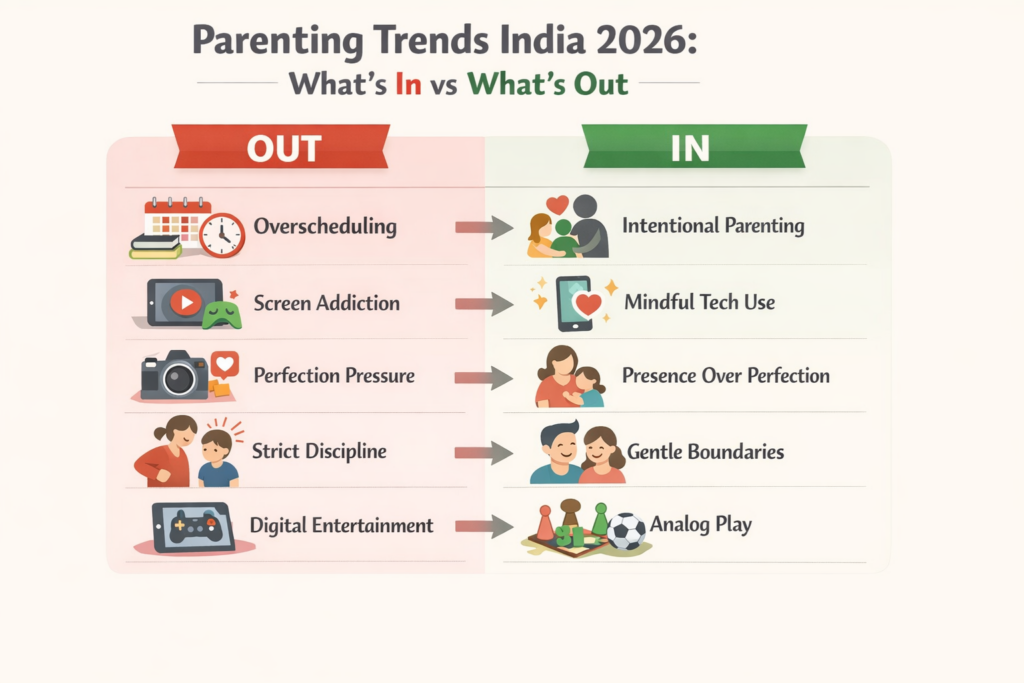
Parenting trends India 2026 are shifting fast. Many moms in Karnataka and across the country are moving away from packed schedules, perfection pressure, and screen-filled days. Instead, the focus is on calmer, more connected childhoods — with intentional parenting, presence over perfection, and analog living.
Whether you’re a working mom in Bengaluru or managing a joint family, these new parenting trends 2026 India prioritize emotional well-being, real play, and mindful boundaries. Here’s what’s trending — and what smart moms are happily leaving behind.
What’s OUT in Parenting Trends India 2026
Overscheduling every hour with classes and activities Many parents now realize that constant tuition, sports, and hobby classes leave both kids and moms exhausted. The “more is better” myth is fading fast.
Perfection pressure and comparison culture Instagram-perfect parenting is being replaced by real, messy, joyful moments. Moms are done chasing flawless milestones.
Unlimited screen time as default entertainment Tablets and YouTube are no longer the go-to babysitter. The anti-screen movement is growing stronger in 2026.
“Children should be seen, not heard” mindset Old-school strictness is giving way to open emotional conversations and empathy.
What’s IN: Top Parenting Trends India 2026
Intentional Parenting India
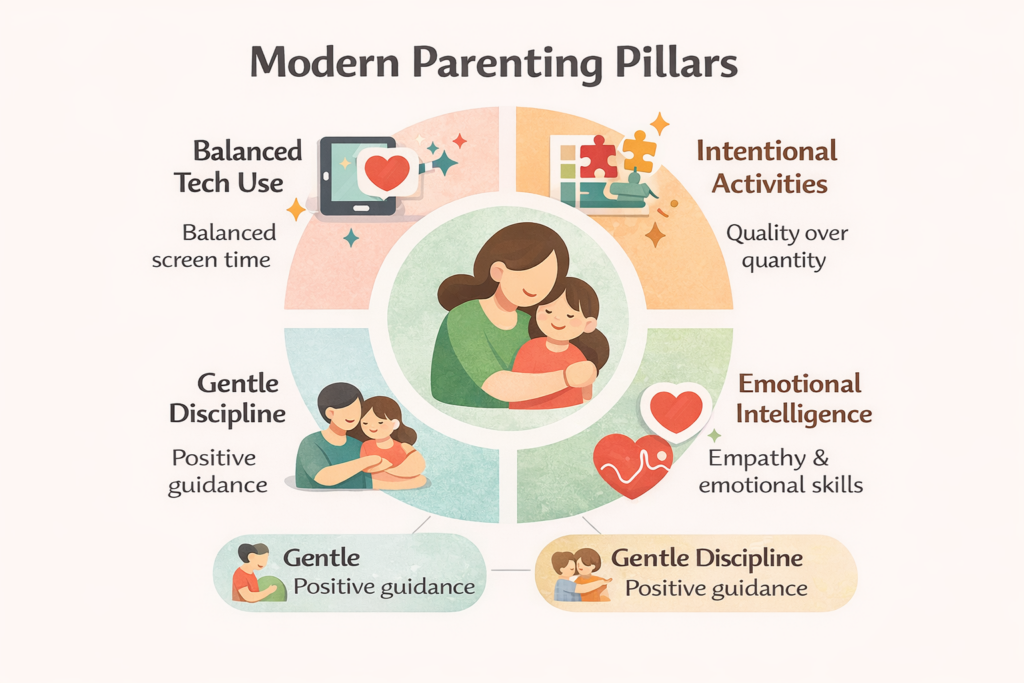
Focus on quality over quantity. Instead of five classes a week, choose one or two meaningful activities that spark joy. For example, one family storytelling evening instead of scrolling reels. This builds deeper bonds and reduces burnout for both kids and parents.
Analog Parenting & Screen-Free Play
The biggest shift in parenting trends India 2026 is going analog.
Device-free zones (meals, bedrooms, first hour after school)
Board games (Ludo, Carrom), outdoor play (lagori, kho-kho), messy art
Family rituals: weekend park time, rangoli together, Panchatantra stories
Result: kids develop creativity, patience, and social skills naturally.
Presence Over Perfection Parenting
Moms are prioritizing being present over being perfect.
20–30 minutes of undivided attention daily (no phone)
Celebrating effort (“You tried so hard!”) instead of only results
Accepting tantrums and mistakes as learning moments
This trend resonates deeply with Indian families — blending empathy with cultural values of connection.
Mindful Tech Use (Not Elimination)
Tech isn’t banned — it’s intentional.
Quality educational apps (max 30–60 min/day)
Co-viewing and discussing content
Parents modeling phone-free time
Gen Z parents in India are especially vocal about this balanced approach in 2026.
Emotional Intelligence & Gentle Boundaries
Teaching kids to name feelings, manage frustration, and respect limits kindly.
“I see you’re angry — let’s take deep breaths together”
Firm “no” with empathy, not yelling
This helps children build resilience while honoring Indian values like respect for elders.
How to Start These Parenting Trends India 2026 in Your Home
Pick ONE change this month (device-free dinners or 20 min of play)
Involve the whole family — grandparents can share stories, dads can join park time
Track small wins — a calmer evening or happier child is real success
Be kind to yourself — progress, not perfection
Final Thoughts: Parenting Trends India 2026 Are About Connection
The new parenting trends India 2026 aren’t about doing more — they’re about doing less, but with more heart. Intentional parenting, analog play, presence over perfection, and mindful boundaries help raise emotionally strong, happy kids.
Which parenting trend India 2026 are you most excited to try? Drop it in the comments — let’s inspire each other, Karnataka moms!
Reviewed by: Based on modern parenting trends, social behavior insights, and family lifestyle research
Parenting Trends India 2026 are evolving rapidly as busy moms balance careers, home responsibilities, and conscious parenting choices. From gentle discipline to digital boundaries and sustainable living, Indian parenting is seeing a powerful shift this year.
Momsaathi.com provides content for informational and educational purposes only. It is not intended to serve as a substitute for professional medical advice, diagnosis, or treatment. Always consult your pediatrician, child psychologist, or healthcare provider for personalized parenting guidance.
As we move deeper into 2026, parenting trends in India are shifting dramatically. Gone are the days of packed schedules, constant achievement pressure, and screen-filled days. Today’s Indian moms (especially in Karnataka and urban homes) are embracing intentional parenting, presence over perfection, and analog living — choosing calmer, more connected childhoods for their kids.
Whether you’re a working mom juggling Bengaluru traffic or a homemaker in a joint family, these new parenting trends 2026 India focus on emotional well-being, real play, and mindful boundaries. Here’s what’s trending — and what smart moms are leaving behind.
[fc-water-intake]
1. What’s OUT in Parenting Trends India 2026
Overscheduling every hour with classes and activities, parents are realizing that constant tuition, sports, and hobby classes leave kids (and moms) exhausted. The “more is better” myth is fading fast.
Perfection pressure and comparison culture, Instagram-perfect parenting is being replaced by real, messy, joyful moments. Moms are done chasing flawless milestones.
Unlimited screen time as default entertainment. Tablets and YouTube are no longer the go-to babysitter. The anti-screen movement is growing stronger.
“Children should be seen, not heard” mindset. Old-school strictness is giving way to open emotional conversations.
2. What’s IN: Top Parenting Trends India 2026
Intentional Parenting India: Focus on quality over quantity. Instead of 5 classes a week, choose 1–2 meaningful activities that spark joy. Example: One family storytelling evening instead of scrolling reels. Why it works: Builds deeper bonds and reduces burnout for both kids and parents.
Analog Parenting & Screen-Free Play The biggest shift: Going analog.
Device-free zones (meals, bedrooms, first hour after school)
Board games (Ludo, Snakes & Ladders, Carrom), outdoor play (lagori, kho-kho), and messy art
Family rituals: Weekend park time, rangoli together, or Panchatantra story sessions. Result: Kids develop creativity, patience, and social skills naturally.
Presence Over Perfection Parenting Moms are prioritizing being present over being perfect.
20–30 minutes of undivided attention daily (no phone)
Celebrating effort (“You tried so hard!”) instead of only results
Accepting tantrums and mistakes as learning moments. This trend resonates deeply with Indian families — blending empathy with our cultural value of connection.
Final Thoughts: Parenting Trends India 2026 Are About Connection
The new parenting trends 2026 India aren’t about doing more — they’re about doing less, but with more heart. Intentional parenting, analog play, presence over perfection, and mindful boundaries are helping Indian families raise emotionally strong, happy kids.
Which parenting trend in India 2026 are you most excited to try? Drop it in the comments — let’s inspire each other, Karnataka moms!
[irp]
FAQs: Parenting Trends India 2026
What are the biggest parenting trends in India in 2026?
The biggest parenting trends in India in 2026 include a focus on emotional well-being, gentle parenting, digital awareness, and science-backed decision-making. Parents are prioritizing balanced development over academic pressure.
What is “in” for parenting in 2026 for busy moms?
In 2026, busy moms are focusing on:
Emotional bonding with children
Minimalist and sustainable parenting
Shared parenting responsibilities
Quality time over quantity
Conscious product choices
What is “out” in modern parenting trends in India?
Outdated trends include:
Strict, fear-based discipline
Over-reliance on academic pressure
Ignoring mental health
Excessive screen exposure
Comparing children constantly
Why is emotional well-being important in parenting today?
Modern parenting emphasizes emotional well-being because it helps children build confidence, resilience, and better communication skills from an early age.
How are fathers becoming more involved in parenting in 2026?
Fathers are now actively participating in daily childcare, attending doctor visits, sharing responsibilities, and bonding with their children more than ever before.
How are Indian parents managing screen time for kids?
Parents are setting structured screen limits, encouraging offline activities, and monitoring content quality instead of completely banning technology.
What is minimalist parenting, and why is it trending?
Minimalist parenting focuses on fewer but meaningful choices—like buying essential products, reducing clutter, and prioritizing experiences over material things.
How can busy moms follow modern parenting trends?
Busy moms can adapt by:
Creating simple daily routines
Focusing on quality interactions
Using digital tools wisely
Sharing responsibilities with partners
Practicing self-care
Is traditional parenting completely outdated in 2026?
No, modern parenting in India blends traditional values with scientific knowledge, creating a balanced and informed approach.
What is the future of parenting in India?
The future of parenting in India is more conscious, emotionally aware, and child-focused, with a strong emphasis on mental health and holistic development.
🔗 Expert Insights & Resources
Science-backed parenting guidance and child development insights — UNICEF Parenting India
Momsaathi.com provides content for informational and educational purposes only. It is not intended to serve as a substitute for professional medical advice, diagnosis, or treatment. Always consult your obstetrician, gynecologist, or maternal-fetal medicine specialist immediately for personalized guidance on high-risk pregnancy. Never ignore symptoms — seek urgent care if needed.
A high-risk pregnancy means extra monitoring is needed due to factors that could affect mom or baby — but with proper care, most result in healthy outcomes. In India in 2026, nearly half of pregnancies involve some risk (e.g., anemia, hypertension, gestational diabetes, multiples, advanced/teenage maternal age, or pre-existing conditions like thyroid issues). Government programs like Pradhan Mantri Surakshit Matritva Abhiyan (PMSMA) offer free specialist check-ups on the 9th of every month, making expert care more accessible.
High-risk doesn’t mean fear — it means proactive steps for safety. Here’s a practical guide with essential high-risk pregnancy tips for India 2026 to help you navigate confidently.
Follow your doctor’s plan, listen to your body, and seek support early. With India’s improving care (PMSMA, SUMAN schemes), outcomes are better than ever.
What’s one tip helping you right now? Share in comments — Karnataka moms, let’s support each other!
Resources:
Internal: Link to pregnancy tips India 2026 for general prep.
Pregnancy Tips India 2026: 4 Essential Things Every Expecting Parent Should Know
Momsaathi.com provides content for informational and educational purposes only. It is not intended to serve as a substitute for professional medical advice, diagnosis, or treatment. Always consult your obstetrician, gynecologist, or healthcare provider for personalized guidance on your pregnancy, nutrition, exercise, vaccinations, or any health concerns.
As we move deeper into 2026, many expecting parents in Karnataka and across India are focusing on intentional, preventive steps for a healthier pregnancy journey. However, with nearly half of pregnancies now classified as high-risk (due to factors like age, lifestyle, nutrition gaps, anemia, or gestational diabetes), experts emphasize starting strong — even small daily choices can make a big difference in maternal and baby outcomes.
Pregnancy is not a disease, but it brings profound body changes. The “first 1000 days” (pregnancy + first 2 years of baby life) set the foundation for lifelong health. Therefore, here are 4 key pregnancy tips India 2026 every expecting parent should keep in mind — practical, desi-friendly, and backed by current expert recommendations.
1. Make Balanced Nutrition a Daily Priority – Fuel Mom & Baby Right
Nutrition is the cornerstone of a healthy pregnancy. In India, where anemia and nutrient deficiencies remain common, focus on iron-rich, folate-packed, and varied home-cooked meals.
Key nutrients & desi sources:
Folic acid (600 mcg/day): Prevents neural tube defects — start supplements 1–3 months before conception if planning. Foods include palak, methi, dal, oranges, guava.
Iron (27–30 mg/day): Combats anemia — pair with vitamin C for absorption. Foods include jaggery, dates, beetroot, lentils, lean chicken/fish.
Calcium (1000 mg/day): For baby’s bones/teeth. Foods include curd, paneer, milk, sesame seeds (til), ragi porridge.
Protein (extra 25g/day): Builds tissues. Foods include dal, eggs, paneer, nuts, sprouts.
Healthy fats (DHA/omega-3): Brain development. Foods include walnuts, flaxseeds (alsi), fish (if non-veg).
Trimester tips:
First trimester: Small, frequent meals to fight nausea — ginger tea, idli, khichdi.
Screen for high-risk factors early (thyroid, GDM, anemia).
Folic acid + iron supplements as prescribed.
In India, institutional deliveries and early care have improved outcomes — prioritize visits!
4. Make Informed Choices – Filter Advice & Prioritize Mental/Emotional Health
Pregnancy brings joy but also anxiety — especially with family advice overload.
Informed decisions: Trust your OB-GYN over myths (e.g., “avoid water” or “no exercise” — often unsafe). Mental health: Practice deep breathing, meditation, or light walks. Talk openly about worries — postpartum blues can start early. Lifestyle: Zero alcohol/smoking, limit stress, get 7–9 hours sleep, stay hydrated (8–10 glasses water + coconut water/nimbu paani).
For working Karnataka moms: Set boundaries for rest — accept help from family/partners.
Quit smoking/alcohol/tobacco — body needs 3 months to optimize egg/sperm quality.
Your 2026 Pregnancy Mantra
Focus on consistency over perfection — balanced meals, gentle movement, regular check-ups, and self-compassion. These small habits support a strong, healthy pregnancy and baby.
What’s one pregnancy tip you’re focusing on this month? Share in the comments — let’s support each other, Karnataka moms!
Baby Care Trends India 2026 – Natural, Eco-Friendly & Smart Choices for New Parents
Momsaathi.com provides content for informational and educational purposes only. It is not intended to serve as a substitute for professional medical advice, diagnosis, or treatment. Always consult your pediatrician or healthcare provider before trying new baby products, especially for newborns with sensitive skin or allergies.
Baby care trends India 2026 are shifting toward more intentional, natural, and sustainable choices. New parents in Karnataka and across India are prioritizing toxin-free skincare, breathable eco-diapers, low-screen smart gear, and gentle hygiene — all while blending traditional wisdom (warm oil massages, home remedies) with modern safety standards.
The Indian baby care market in 2026 is booming — driven by rising awareness of infant skin sensitivity, urban pollution, and eco-consciousness. Here are the top baby care trends India 2026 that moms and dads are loving right now — practical, relatable, and perfect for Indian homes.
Why it’s trending: High concern over rashes, allergies, and long-term skin health in humid/dry Indian climates and city pollution. Practical tip: Start with a simple routine — mild tear-free wash + natural moisturizer after bath. Karnataka note: Coconut-based or local herbal blends work best in tropical weather.
2. Eco-Friendly & Sustainable Essentials Gain Momentum
Why parents love it: Verifiable eco-claims, reduced waste, and skin-friendly materials align with health + planet values. Indian context: Many families blend tradition (cloth nappies in joint homes) with convenient biodegradable options. Budget tip: Start with essentials like organic onesies or plant-based wipes — affordable swaps.
3. Smart, Low-Screen & Intentional Tech for Calm Parenting
Tech supports parents without overwhelming babies.
Interactive non-glowing toys/walkers for motor skills
Soothing devices (white noise, gentle vibrations)
Why it’s popular: Balances convenience (for working moms in Bengaluru) with developmental play and reduced screen exposure. For families: Great for busy commutes — calming car seats or monitors that let you focus on bonding.
4. Hygiene, Grooming & Rash Prevention Focus
Daily care emphasizes gentleness and protection.
Hot items:
Mild, tear-free shampoos/body washes
Natural barrier rash creams
Baby-safe sunscreens, soft brushes, nail clippers
Trend driver: Infection prevention, fragrance-free formulas for sensitive eyes/skin. Routine idea: Warm bath, pat dry, apply gentle lotion/oil — avoid overwashing to preserve natural skin barrier.
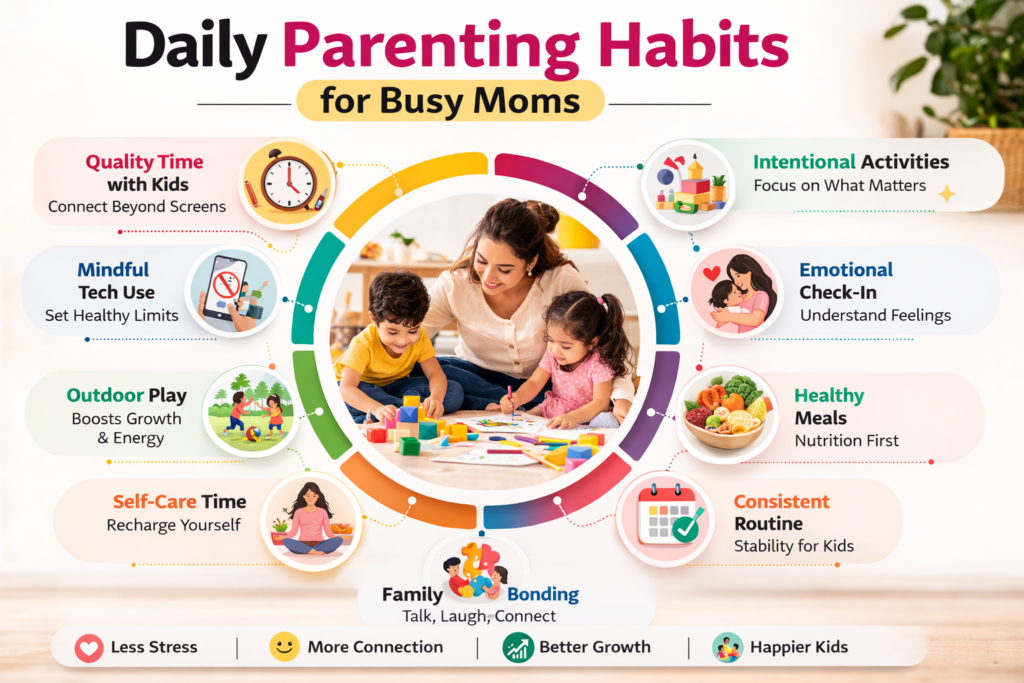
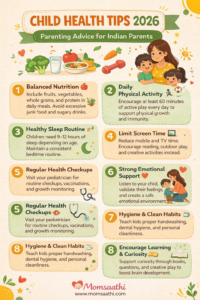
Child Health Tips 2026 are essential for Indian parents who want to build strong foundations for their child’s growth and development. Healthy nutrition, proper sleep, hygiene, and active routines play a crucial role in long-term well-being.
As we progress through February 2026, parents in Karnataka and across India are looking for realistic ways to support their children’s long-term health. With busy schedules, school pressures, urban pollution, and endless family advice, it’s easy to feel overwhelmed. The good news? You don’t need fancy diets, expensive supplements, or perfect routines.
The key to child health tips 2026 lies in building strong foundations through simple, everyday habits that fit real Indian family life — whether you’re a working mom in Bengaluru handling WFH and school drops, or managing a joint family in a smaller town.
Experts highlight four core areas: nutrition and routines, emotional well-being, smart screen management, and natural immunity building. These align with modern parenting goals 2026 India — focusing on consistency, empathy, and balance rather than perfection.
Let’s dive into practical, India-specific child health tips 2026 that busy parents can start today.
Why Child Health Tips 2026 Matter for Indian Families
1. Nail Everyday Habits – Nutrition, Sleep, and Movement for Lifelong Health
Everyday habits form the strongest base for strong foundations child health. These basics support physical growth, brain development, and immunity without extra effort.
Nutrition: Embrace Desi Superfoods in Daily Meals Indian home cooking is already powerful. Prioritize balanced thalis with:
Proteins: Dal, paneer, eggs, or chicken/fish (2–3 times/week).
Whole grains: Ragi, jowar, bajra rotis, or brown rice — great for Karnataka winters.
Veggies & fruits: Seasonal picks like palak, methi, carrots, bananas, guava, or papaya.
Dairy: Curd, buttermilk, or warm milk with turmeric for gut health.
Age-specific ideas:
Toddlers (1–3 years): Finger-friendly options like soft idli-sambar, mashed ragi porridge, or fruit purees. Let them self-feed to build independence.
School-age (4–10+ years): Involve kids in simple prep — rolling chapatis or chopping veggies — to spark interest and reduce picky eating.
Common challenge: Junk cravings from ads or peer influence. Solution: Make “rainbow plates” fun (red tomatoes, green spinach, yellow dal), limit packaged snacks to once/week, and swap sweets with jaggery-based treats or fresh fruit chaat.
Hydration tip: 4–8 glasses of water daily (plus nimbu paani or tender coconut water in summer heat).
Following Child Health Tips 2026 helps improve immunity and overall development.
[fc-bmi-cal]
Sleep Routines: The Hidden Booster Quality sleep regulates hormones, boosts immunity, and sharpens focus. Aim for:
Toddlers: 11–14 hours (including naps).
School kids: 9–11 hours.
Wind-down ritual: Turmeric milk, family storytelling (Panchatantra or local folktales), dim lights, no screens 60 minutes before bed. In joint families, create quiet zones with earplugs if needed.
Daily Movement: Play Is Medicine 60+ minutes of active play daily fights obesity (rising in urban India). Options:
Outdoor: Park runs, cycling, lagori, or kho-kho.
Indoor: Bollywood dance-offs, simple yoga (child-friendly Surya Namaskar), or household games.
These healthy child habits Indian parents use create natural wellness — no gym required.
2. Strengthen Child Emotional Well-Being India – Key to Resilient Kids
Physical health gets checked at doctor visits, but child emotional well-being India often gets overlooked amid marks and milestones. In 2026, with rising school stress and social media, emotional foundations matter more than ever.
Doctors recommend structured routines as part of Child Health Tips 2026.
Validate Feelings and Build Connection Replace “Don’t cry” with “I see you’re upset — it’s okay, tell me more.” This teaches regulation and reduces tantrums.
Daily habit: 5-minute check-ins at dinner — “What made you happy/sad today?” It counters old “children should be seen, not heard” norms.
Model Calm Behavior Kids copy us. During traffic or work frustration, take deep breaths and say, “I’m feeling annoyed — let’s pause.” Use stories or emotion cards for younger kids.
Safe Spaces for Expression Encourage hobbies (drawing, music) over constant achievements. Family device-free meals foster open talk.
Challenge: Over-advice from relatives. Solution: Appreciate love while gently setting boundaries (“Thanks, aunty — we’ll discuss with the doctor”).
Emotionally secure kids handle challenges better — a top parenting goals 2026 India trend.
3. Implement Smart Screen Time Limits Kids India – Protect Growing Minds
Screens are part of education and fun, but excess links to poor sleep, posture issues, and attention problems.
2026 Guidelines:
Under 2: Minimal (video calls only).
2–5 years: Max 1 hour/day, always co-viewed.
6+: 1–2 hours recreational.
Practical Rules:
Device-free zones: Meals, bedrooms, study time.
Co-view & discuss: “What did that show teach you?”
Alternatives: Board games (Ludo, Carrom), outdoor play, or reading Amar Chitra Katha comics.
Challenge: “All friends have tablets.” Solution: Explain benefits — “More play builds stronger bodies and sharper minds.” Track family progress together.
Intentional screen time limits kids India safeguard eyes, creativity, and mental health.
4. Boost Immunity & Resilience – Natural Strategies for Indian Climates
Pollution, changing seasons, and infections demand proactive steps.
Allow safe failures (losing a game) to teach coping.
Praise effort: “You tried so hard — that’s awesome!”
Combine these for robust strong foundations child health.
Overcoming Real Indian Parenting Challenges in 2026
Joint families: Use grandparents for stories/outdoor play; set polite boundaries on advice.
Working parents: Weekend quality time; use reminders/apps for routines.
Budget-friendly: Stick to home foods over supplements.
Your 2026 Parenting Action Plan
Start small: Pick one habit this week (family meals, bedtime routine, or park time). Track wins as a family.
These child health tips 2026 empower you to raise healthier, happier kids rooted in love and consistency.
What’s one tip you’re trying first? Share in the comments — let’s support each other, Karnataka moms and beyond!
Momsaathi.com provides content for informational and educational purposes only. It is not intended to serve as a substitute for professional medical advice, diagnosis, or treatment. Always consult your pediatrician or healthcare provider for personalized guidance, especially regarding vaccinations, nutrition plans, or any health concerns.
Frequently Asked Questions (FAQs)
Why are everyday habits so important for a child’s long-term health?
Everyday habits shape a child’s growth, immunity, behaviour, and emotional stability. Simple routines like eating nutritious meals, sleeping on time, staying active, and maintaining hygiene create a strong foundation that supports both physical and mental development. Small daily actions build lifelong health patterns.
How can parents build healthy routines without overwhelming their child?
Start small and stay consistent. Introduce one habit at a time — such as fixed bedtime or daily outdoor play — and make it enjoyable. Children respond better when routines feel natural rather than forced. Consistency, encouragement, and positive reinforcement make habits stick.
What role does nutrition play in strengthening immunity?
Balanced meals rich in proteins, seasonal fruits, vegetables, whole grains, and healthy fats provide essential vitamins and minerals. Proper nutrition supports brain development, boosts immunity, and improves energy levels. Regular meal timings also help regulate digestion and overall wellbeing.
How much sleep does a growing child actually need?
Sleep needs vary by age, but most children require 9–12 hours of quality sleep daily. Adequate rest supports memory, learning, emotional regulation, and physical growth. Creating a calming bedtime routine and limiting screens before sleep can significantly improve sleep quality.
Everyday habits shape a child’s growth, immunity, behaviour, and emotional stability. Simple routines like eating nutritious meals, sleeping on time, staying active, and maintaining hygiene create a strong foundation that supports both physical and mental development. Small daily actions build lifelong health patterns.
Start small and stay consistent. Introduce one habit at a time — such as fixed bedtime or daily outdoor play — and make it enjoyable. Children respond better when routines feel natural rather than forced. Consistency, encouragement, and positive reinforcement make habits stick.
Balanced meals rich in proteins, seasonal fruits, vegetables, whole grains, and healthy fats provide essential vitamins and minerals. Proper nutrition supports brain development, boosts immunity, and improves energy levels. Regular meal timings also help regulate digestion and overall wellbeing.
Sleep needs vary by age, but most children require 9–12 hours of quality sleep daily. Adequate rest supports memory, learning, emotional regulation, and physical growth. Creating a calming bedtime routine and limiting screens before sleep can significantly improve sleep quality.
Toddler Screen Time Guide: Healthy Limits & Practical Tips (2026)
Toddler Screen Time Guide helps parents understand safe digital exposure limits for young children. Managing screen habits early is essential for healthy brain development, better sleep, and balanced behaviour in toddlers.
In today’s digital world, screens are everywhere — from smartphones and tablets to TVs and laptops. For parents of toddlers, one common question is: How much screen time is actually safe?
Understanding expert-recommended screen time guidelines for toddlers (0–3 years) can help you make confident, informed decisions for your child’s healthy development.
Why a Toddler Screen Time Guide Is Important for Modern Parents
The first three years of life are critical for brain development. During this period, toddlers learn best through:
Face-to-face interaction
Physical play
Talking and storytelling
Sensory exploration
Excessive screen exposure may reduce opportunities for active play, sleep, and real-world interaction — all of which are essential for cognitive, emotional, and language development.
Expert Screen Time Recommendations by Age
Following a Toddler Screen Time Guide can prevent excessive digital exposure and behavioural concerns.
According to the American Academy of Pediatrics (AAP) and the World Health Organization (WHO), here are the current guidelines:
0–18 Months
Avoid screen time except for video chatting with family.
Babies learn best from real human interaction.
18–24 Months
Introduce high-quality, educational content only.
Always watch together (co-viewing) to help your child understand what they see.
2–3 Years
Limit screen time to no more than 1 hour per day.
Choose interactive and age-appropriate programs.
Avoid screens at least 1 hour before bedtime.
Consistency is key. Occasional flexibility is fine, but daily habits matter most.
Effects of Too Much Screen Time on Toddlers
Experts suggest using a structured Toddler Screen Time Guide to maintain bedtime routines.
While screens can be useful in moderation, excessive use may lead to:
Delayed speech development
Sleep disturbances
Reduced attention span
Increased irritability
Less physical activity
Blue light exposure before bedtime can also disrupt melatonin production, making it harder for toddlers to fall asleep.
How to Make Screen Time Healthier
If you choose to allow screen time, follow these practical tips:
1. Co-View and Talk About It
Sit with your toddler and explain what’s happening on screen. Ask simple questions to build language skills.
2. Choose Quality Over Quantity
Look for slow-paced, educational content rather than fast-moving cartoons.
3. Create Screen-Free Zones
Keep bedrooms, dining tables, and play areas free from screens.
4. Model Healthy Habits
Children copy adults. Limiting your own screen use encourages balanced behavior.
5. Prioritize Sleep and Play
Ensure your toddler gets:
10–14 hours of sleep (depending on age)
Daily outdoor play
Interactive family time
By using this Toddler Screen Time Guide, parents can build healthier digital habits for their children.
Best Alternatives to Screen Time for Toddlers
Instead of handing over a device, try:
Storytelling and picture books
Sensory bins
Building blocks
Music and dance time
Simple pretend play
These activities stimulate creativity and strengthen parent-child bonding.
Screen time for toddlers doesn’t have to be completely eliminated — but it should be limited, intentional, and age-appropriate. Following expert recommendations from trusted health organizations can help you balance technology with healthy development.
As a parent, your goal isn’t perfection — it’s creating a healthy routine that supports your child’s growth while adapting to modern life.
Experts like the American Academy of Pediatrics recommend:
Under 18 months: Avoid screen time (except video calls).
18–24 months: Limited, high-quality content with parental supervision.
2–3 years: No more than 1 hour per day of educational programming.
Quality and parental involvement matter more than just time limits.
Can screen time cause speech delay in toddlers?
Excessive screen time, especially without interaction, may contribute to speech delays. Toddlers learn language best through real conversations, storytelling, and face-to-face communication rather than passive watching.
Is educational screen content okay for 2-year-olds?
Yes, but it should be:
Age-appropriate
Slow-paced
Free from violent or fast-changing visuals
Watched together with a parent (co-viewing)
Discussing what’s happening on screen improves understanding and learning.
Does screen time affect toddler sleep?
Yes. Screen exposure — especially before bedtime — can interfere with melatonin production and make it harder for toddlers to fall asleep. Experts suggest avoiding screens at least 1 hour before bed.
What are healthy alternatives to screen time for toddlers?
Instead of screens, try:
Reading picture books
Outdoor play
Building blocks
Singing and dancing
Pretend play activities
These activities promote cognitive, emotional, and physical development.
Experts like the American Academy of Pediatrics recommend:
Under 18 months: Avoid screen time (except video calls).
18–24 months: Limited, high-quality content with parental supervision.
2–3 years: No more than 1 hour per day of educational programming.
Quality and parental involvement matter more than just time limits.
Excessive screen time, especially without interaction, may contribute to speech delays. Toddlers learn language best through real conversations, storytelling, and face-to-face communication rather than passive watching.
Yes, but it should be:
Age-appropriate
Slow-paced
Free from violent or fast-changing visuals
Watched together with a parent (co-viewing)
Discussing what’s happening on screen improves understanding and learning.
Yes. Screen exposure — especially before bedtime — can interfere with melatonin production and make it harder for toddlers to fall asleep. Experts suggest avoiding screens at least 1 hour before bed.
Instead of screens, try:
Reading picture books
Outdoor play
Building blocks
Singing and dancing
Pretend play activities
These activities promote cognitive, emotional, and physical development.
Momsaathi.com provides content for informational and educational purposes only. It is not intended to serve as a substitute for professional medical advice, diagnosis, or treatment. Always consult a qualified pediatrician, child psychologist, or family counselor for personalized parenting guidance.
Living in a joint family is beautiful — grandparents’ love, shared chores, festival celebrations, and built-in support are priceless. However, gentle parenting in joint families in India often feels challenging when grandparents follow traditional, stricter styles (“children should obey instantly,” “no tantrums allowed,” “don’t pamper too much”). In 2026, more young Indian parents want to raise emotionally intelligent kids with empathy and firm boundaries — without constant conflict.
This guide shows how to make gentle parenting work smoothly in joint families — practical, respectful tips that honor elders while protecting your parenting values.
Why Gentle Parenting Feels Hard in Joint Families
Gentle parenting focuses on connection, validating feelings, and kind limits. Traditional Indian joint family styles often emphasize obedience, quick discipline, and “tough love.” These differences can lead to:
Mixed messages for kids
Tension between parents and grandparents
Mom guilt (“Am I disrespecting elders?”)
Kids are getting confused about the rules
The goal: blend both worlds respectfully — keep family harmony while raising emotionally strong children.
Start with Respectful Communication – Set the Tone Early
Talk openly but kindly before the baby arrives or early on.
How to start the conversation:
Choose a calm moment (not during a disagreement).
Use “we” language: “We want to raise our child with love and clear boundaries — how can we work together?”
Acknowledge grandparents’ experience: “You raised us so well — we value your wisdom and want to include it.”
Share one gentle parenting book/article (e.g., “The Whole-Brain Child” or Indian blogs) — read together.
Desi tip: Many Karnataka families use “family meetings” during evening chai time — make it a monthly habit.
[fc-calories-calculator]
Find Common Ground – Blend Traditions with Gentle Principles
Most grandparents want the same outcome: happy, respectful, successful kids. Highlight shared values.
Examples of blending:
Respect for elders → Teach kids to say “Namaste” and listen, but allow polite expression of feelings.
Discipline → Use natural consequences (“If toys aren’t picked up, they rest tomorrow”) instead of scolding.
Food & routines → Keep traditional foods and bedtime stories, but explain gently why screen limits help focus.
Tip: Frame gentle parenting as “modern love with old values” — grandparents often warm up when they see it works.
Set Clear, Kind Boundaries – Without Disrespect
Boundaries protect your parenting style — deliver them calmly.
Practical scripts:
“We really appreciate your help. For tantrums, we’re trying to stay calm and name feelings — it’s working well for us.”
“Thank you for the advice! We’ve decided to follow our pediatrician’s sleep routine — it’s helping baby a lot.”
“We love how much you care. Let’s agree on one house rule together so the baby isn’t confused.”
Desi tip: Involve grandparents in small decisions (“Should we read Ramayana or Panchatantra tonight?”) — makes them feel included.
Involve Grandparents Positively – Turn Them into Allies
Grandparents can be gentle parenting superheroes when guided.
Ideas that work:
Ask them to tell stories or sing lullabies — it builds emotional connection.
Teach simple emotion words (“You look happy/sad/angry”) during play.
Let them handle outdoor play or park time — screen-free bonding.
Praise their efforts: “Baby calms so fast when you sing — thank you!”
Handle Conflicts Calmly – Protect Your Peace
Disagreements will happen — handle them without escalation.
Quick strategies:
Step away briefly if tension rises (“I need a minute to think”).
Use “I feel” statements: “I feel worried when the baby is scolded — it makes him scared.”
Reconnect later: “Let’s find a way that works for all of us.”
If needed: Seek neutral support (family elder, counselor).
Tip: Many Karnataka moms join online gentle parenting groups — great for support and scripts.
Benefits You’ll See in Joint Families Using Gentle Parenting
Stronger family bonds — grandparents feel valued, not criticized
Less yelling, more cooperation
Emotionally resilient children who respect elders naturally
Final Words for Indian Moms in Joint Families
Gentle parenting in joint families in India is possible — it just takes patience, clear communication, and respect for everyone’s role. You’re not choosing between tradition and modern parenting — you’re creating a beautiful blend.
How do you balance gentle parenting with grandparents in your home? Share one tip that worked for you in the comments — let’s help each other, Karnataka moms!
Holi with Toddlers (1–3 Years): Safe, Fun & Gentle Ways to Celebrate Without Tears
Holi is magical for little ones—the colors, water play, family vibes—but for toddlers (1–3 years), it can quickly turn overwhelming: loud music, crowds, powder in eyes/mouth, synthetic colors causing rashes, or scary water balloons. In Indian homes (especially Karnataka with warm March weather), many moms keep it gentle, home-based, or low-key to avoid meltdowns, allergies, or tears. The goal: fun sensory play + family bonding without risks.
This guide draws from pediatric tips (e.g., from Indian child specialists), mom experiences (Instagram, blogs like My Little Moppet, EuroKids ideas), and 2025–2026 safety advice: prioritize natural/organic colors, close supervision, no harsh play, and toddler-paced activities.
Safety First: Must-Dos for Toddlers
Choose safe colors — Ditch synthetic/chemical gulaal (mercury, lead, etc. cause rashes, eye irritation, breathing issues). Use organic, herbal, or homemade natural colors:
Turmeric (haldi) + water for yellow/orange.
Beetroot juice/boiled for pink/red.
Spinach/palak paste for green.
Hibiscus/rose petals for pink/purple.
Sandalwood powder or cornflour + food colors (edible-grade).
Buy certified organic brands if making at home is hard.
Prep skin & hair — Apply coconut oil (nariyal tel) or mild moisturizer + sunscreen on face/body before play. It creates a barrier, makes colors wash off easier, and prevents dryness/rash.
Clothing — Full-sleeve cotton kurta-pajama or old long clothes (easy to discard if stained). Cap/hat for head, avoid loose hair.
Eye & mouth protection — No direct face powder throwing. Use goggles/sunglasses if they tolerate. Supervise constantly—toddlers put hands in mouth.
Avoid — Water balloons (injury risk), high-pressure pichkari (scary/intense), crowds/street play (overstimulation, strangers), loud public events early in day.
Hydration & snacks — Keep water, coconut water, fruits handy. Light meals before/after—no heavy sweets if tummy-sensitive.
Post-play — Lukewarm bath (no harsh soap/scrub), oil massage to remove colors gently. Check for rashes/redness.
Gentle, Fun Ways to Celebrate (Home or Small Family Setup)
Keep it short (30–60 min max), in a controlled space like balcony, courtyard, or tiled room with mats.
Color Handprints & Footprints Dip little hands/feet in natural color pastes (diluted) on large paper/old bedsheet. Make “rainbow family” prints. Sensory fun, no mess on body.
DIY Natural Color Mixing Station Bowls with safe pastes (beetroot, turmeric, spinach) + brushes/sponges. Let them “paint” on paper, cardboard, or white cloth. Add water play with droppers for mixing colors.
Water-Only Play (Gentle Version) Small buckets with plain water + floating toys/colors (diluted natural). Use soft squeeze bottles or cups for pouring. Skip if they hate wet.
Foam or Bubble Color Fun Make edible foam: shaving cream (non-toxic) + food color, or condensed milk + color for “paint.” Finger paint on trays/body (washable).
Rangoli with Safe Powders Use rice flour, flower petals, or natural color powders on floor/mat. Toddler can sprinkle or place flowers. Traditional + low-contact.
Color Balloon Art (No Throwing) Fill balloons with water + natural color (tie tight), but use for gentle rolling or popping indoors with supervision. Or paint on balloons.
Sensory Bin with Colors Tub with rice/beans + natural color powders, scoops, toys. Pour, mix, hide—calm alternative if powder scares them.
Music & Dance Party Play soft Holi songs (“Rang Barse,” desi rhymes), dance with light color tikka on forehead/cheeks. Involve family for hugs/claps.
Storytime & Pretend Read Holi books or tell simple stories while applying gentle tikka (forehead only). Use stuffed toys for “color play.”
Treat Time — After gentle play, enjoy thandai (mild, no bhang), gujiya, or fruit chaat. Family photo in light colors!
Quick Tips from Indian Moms (Karnataka/Desi Homes)
Start small — Test a tiny bit of color on arm day before to check allergy.
Read cues — If tears/overwhelm, stop and switch to indoor calm activity.
Family involvement — Let dadi/nani apply tikka, papa play gently—makes it joyful.
For very young (under 18 months) — Mostly observer: tikka + photos, no full play.
Eco twist — Use flower petals, avoid waste—many moms prefer water-free or minimal.
Holi with toddlers is about creating happy memories, not Instagram perfection. A gentle, supervised celebration often ends with giggles, not tears. If your little one is sensitive (eczema, fears water/noise), lean more indoor/sensory.
Mom Guilt is Real: How to Stop Feeling Guilty as a Working Indian Mom
Mom guilt hits hard for working moms in India—it’s that constant voice saying you’re not doing enough at home while chasing deadlines, or that your child misses you because you’re at the office. In 2025–2026, it’s still widespread: studies show up to 80% of Indian moms experience guilt or self-doubt about parenting, with working moms facing extra pressure from cultural expectations of “perfect” motherhood, family judgments, lack of support, and the “supermom” myth. Recent reports highlight that 34–50% of women leave jobs due to work-life imbalance and guilt, often amplified by societal views that mothers should prioritize home over career. But guilt doesn’t mean you’re failing—it means you’re human, caring deeply in a system that demands too much from moms.
Celebrities like Yami Gautam and Neha Dhupia have openly shared their struggles (e.g., guilt over long shoots or missing milestones), and everyday Indian moms on Instagram, Reddit (r/TwoXIndia), and blogs echo the same: tears at the door leaving for work, anxiety about creche safety, or feeling selfish for self-care. The good news? You can reduce it significantly. Here’s a realistic, Indian-mom-approved guide based on expert tips, psychologist advice (like Kamna Chhibber), and shared experiences.
Why Mom Guilt Feels So Intense in India
Cultural pressure — Expectations of self-sacrifice, joint family opinions (“Beta ko time nahi deti”), and the idea that “good moms stay home.”
Practical realities — Long commutes (especially in Karnataka cities), limited creches/flexible work, and extra household load even with help.
Internal loop — You work for your child’s future (better education, security), but then worry they’re missing “quality time.”
Consequences — It leads to stress, anxiety, burnout, and sometimes career exits—health impacts include depression, physical aches, and emotional exhaustion.
10 Practical Ways to Beat Mom Guilt (Tested by Desi Working Moms)
Reframe the Narrative Remind yourself: Working isn’t selfish—it’s providing stability, role-modeling ambition, and financial independence. Many moms say, “My kids see me as strong and capable—that’s a gift.” Replace “I’m failing” with “I’m doing my best in both roles.”
Focus on Quality Over Quantity. Prioritize meaningful moments: 30–60 min dedicated play/story time after work (no phones), weekend rituals (park, family movie), or bedtime cuddles. Indian moms often share that kids remember love and presence more than hours.
Set Realistic Boundaries & Routines. Create predictable schedules—e.g., fixed family dinner or morning hugs. Communicate at work (if possible) for flex hours. Psychologists suggest routines reduce anxiety; one mom tip: “Plan weekly goals—work wins + family wins—so guilt feels less overwhelming.”
Build a Strong Support System. Involve partner/family fairly (shared chores, childcare). If creche/maid, trust and check in calmly. Join mom communities (Instagram groups, local WhatsApp circles) for validation—many say “hearing others struggle normalizes it.”
Practice Self-Compassion & Let Go of Perfection Accept “good enough” parenting—no one is supermom. Drop comparison (Instagram highlights vs. real life). Daily affirmations: “I’m enough” or reminders like “Your kids love you more than you think.”
Carve Out Self-Care (Even 10 Min) Short walks, chai in peace, or hobbies—guilt lessens when you’re recharged. Moms note: “When I’m happier, I’m a better mom and employee.”
Celebrate Small Wins Track positives: “Today I finished that project AND read a book to my toddler.” Praise yourself—kids pick up on your pride in your work.
Challenge External Judgments Politely set boundaries: “I’m doing what’s best for our family.” If elders criticize, respond with “Doctor/pediatrician says it’s fine” or share positive stories.
Seek Professional Help if Needed. If guilt turns to constant anxiety/depression, talk to a counselor (iCall helpline, NIMHANS teleconsults, or apps like YourDOST). Therapy helps unpack cultural conditioning.
Remember the Long Game. Kids of working moms often grow independent, value equality, and admire their moms’ strength. One Reddit thread from adult daughters: Many don’t resent working parents—they appreciate the sacrifices and security.
[fc-walking-test]
Quick Reminders for Tough Days (From Indian Mom Shares)
You’re not alone—millions juggle this.
Your child benefits from a happy, fulfilled mom.
Guilt fades with time and practice; it doesn’t define you.
You’re modeling resilience and balance for your kids.
Mom guilt is real, but it doesn’t have to run the show. Start with one small shift today—like a guilt-free evening cuddle or saying “no” to extra chores. You’ve got this—balancing career and motherhood is a strength, not a failure.




 Why Child Health Tips 2026 Matter for Indian Families


