How to Beat Pregnancy Fatigue & Nausea – Natural Remedies Indian for Moms

Pregnancy Fatigue & Nausea Remedies India – Natural Tips Moms Swear By

Momsaathi.com provides content for informational and educational purposes only. It is not intended to serve as a substitute for professional medical advice, diagnosis, or treatment. Always consult your gynecologist before trying any remedy during pregnancy, especially if nausea is severe or you have other health conditions.

The first trimester often brings two exhausting companions: pregnancy fatigue and nausea (morning sickness). In India, many moms hear endless family advice (“just eat less,” “avoid cold things,” “drink this kadha”). However, most of these tips are not evidence-based. In 2026, with better awareness, here are safe, natural pregnancy fatigue nausea remedies India moms actually use — and gynecologists commonly approve.

Why Fatigue & Nausea Hit Hard in Early Pregnancy

Hormones (hCG, progesterone) surge rapidly. Additionally, blood volume increases, blood sugar fluctuates, and your body works overtime to build the placenta. In Indian homes, heat, humidity (especially in Karnataka), and stress from family expectations can make it feel even worse.

Most women feel worst weeks 6–12. The good news? For 70–80% of moms, nausea eases by week 14, and energy slowly returns in the second trimester.

Safe Natural Remedies for Pregnancy Nausea (Indian Favorites)

1. Ginger (Adrak) – The #1 Doctor-Recommended Remedy

Ginger reduces nausea by calming the stomach and blocking certain brain signals. How to use:

  • Sip warm ginger tea (1–2 thin slices boiled in water) 2–3 times/day
  • Chew small pieces of fresh ginger or ginger candy
  • Add grated ginger to khichdi or lemon water Tip: Avoid very strong ginger if it increases acidity — start small.

2. Jeera (Cumin) Water – Great for Digestion & Bloating

Jeera helps with gas, acidity, and queasiness. How to use: Boil 1 tsp jeera in 1 glass water → sip throughout the day. Desi tip: Many Karnataka moms add a pinch of ajwain for extra relief.

3. Tulsi (Holy Basil) Tea – Calms Stomach & Mind

Tulsi is anti-inflammatory and reduces stress-related nausea. How to use: Steep 5–7 fresh tulsi leaves in hot water → drink 1–2 cups/day. Bonus: Helps with mild headaches too.

4. Coconut Water & Nimbu Paani – Hydration Heroes

Dehydration makes nausea & fatigue worse — especially in Indian summers. How to use: Drink fresh coconut water daily (natural electrolytes). Add lemon + pinch of black salt to water for quick relief.

5. Small, Frequent Desi Meals – Prevents Empty Stomach Nausea

Eating every 2–3 hours keeps blood sugar stable. Easy options:

  • Plain idli or khichdi
  • Roasted poha or murmura
  • Banana or seasonal fruit (apple, guava)
  • Curd rice (light & soothing)

Natural Ways to Fight Pregnancy Fatigue (That Actually Work)

1. Short Power Naps & Rest When Baby Rests

Even 20–30 minutes recharges you. Desi tip: Lie down after lunch — common in joint families.

2. Light Movement (Doctor-Approved)

Walking 15–20 min daily or gentle prenatal yoga boosts energy & mood. Tip: Morning walk in park — fresh air helps a lot.

3. Iron-Rich Foods (If Anemic – Very Common in India)

Fatigue is often anemia. Foods: Jaggery, dates, beetroot, palak, ragi porridge, pomegranate. Pair with: Lemon/vitamin C for better absorption.

4. Hydration & Electrolytes

Drink 8–10 glasses water + coconut water/nimbu paani daily.

When to See Your Doctor Immediately

Contact your gynecologist right away if:

  • Nausea is severe (can’t keep any food/water down → hyperemesis gravidarum)
  • Vomiting + weight loss + dehydration (dry mouth, dark urine)
  • Extreme fatigue + dizziness + pale skin (possible anemia or thyroid issue)
  • Nausea after week 14–16 (uncommon — needs checking)

In India, PMSMA camps (9th of every month) offer free specialist check-ups — use them!

Final Encouragement for Indian Moms

Pregnancy fatigue and nausea are tough — especially when family keeps saying “sab normal hai.” You’re not weak; your body is doing huge work. Try one or two remedies at a time, rest when you can, and lean on your support system.

Which remedy helped you most? Share your tip in the comments — let’s support each other, Karnataka moms!

Related Articles on Momsaathi.com:

External Resources:

Daily Routine for Toddlers (1-3 Years): Easy Indian Schedule with Meal Timings

Daily Routine for Toddlers 1–3 Years – Easy Indian Schedule with Meal Timings

Momsaathi.com provides content for informational and educational purposes only. It is not intended to serve as a substitute for professional medical advice, diagnosis, or treatment. Always consult your pediatrician before following any toddler routine, especially if your child has sleep issues, feeding difficulties, or developmental concerns.

A daily routine for toddlers 1–3 years brings calm, predictability, and healthy habits to your home — especially in busy Indian families. Many Karnataka moms (and parents across India) struggle with tantrums, poor sleep, picky eating, or constant screen demands. A simple, flexible Indian schedule with fixed meal timings, play, naps, and family time can reduce chaos and support brain development, immunity, and emotional security.

This 2026 guide gives you an easy, realistic daily routine for toddlers 1–3 years — tailored for Indian homes (joint families, working parents, desi foods).

Why a Daily Routine Matters for Toddlers in India

Toddlers crave structure — it helps them feel safe and learn self-regulation. In Indian homes, routines also:

  • Reduce tantrums (predictability lowers frustration)
  • Improve sleep (consistent timings = better melatonin rhythm)
  • Support healthy eating (fixed meal times prevent grazing/junk)
  • Balance screen time with real play
  • Give parents breathing room

Sample Daily Routine for Toddlers 1–3 Years (Indian Family)

This is a flexible template — adjust ±30–60 min based on your child’s natural rhythm and your work/family needs.

Wake-up & Morning Routine (6:30–8:00 AM)

  • Wake-up gently (soft music or sunlight)
  • Diaper change + face wash + quick oil massage (if tradition)
  • Breastfeed / formula / cow milk (if >1 year)
  • 15–20 min free play or cuddles

Tip: Start day with calm — avoid phone first thing.

Breakfast & Morning Activity (8:00–9:30 AM)

  • Breakfast time (fixed slot): Ragi porridge, idli-sambar, poha, upma, banana + milk
  • 30–45 min outdoor play or indoor sensory play (balls, blocks, water play)

Desi tip: Involve grandparents in morning stories/songs — builds bonding.

Mid-Morning Snack & Learning Time (9:30–11:00 AM)

  • Snack: Fruit (apple, papaya, banana) or khakra/murmura
  • 30–45 min focused activity: Colors, shapes, puzzles, simple rhymes, or reading books
  • 15 min music/dance (Bollywood rhymes or rhymes in Kannada/Tamil/Hindi)

Lunch & Nap Time (11:00 AM–2:30 PM)

  • Lunch (11:30–12:30): Rice + dal + sabzi + curd (small portions)
  • Post-lunch wind-down: Story or lullaby
  • Nap: 1–2 hours (most toddlers 1–3 years need this)

Tip: Dark, cool room + white noise (fan sound) helps.

Afternoon Play & Snack (2:30–5:00 PM)

  • Wake-up milk + snack: Sprouts chaat, paneer cubes, fruit, or biscuit with milk
  • 60–90 min active play: Park, cycling, ball games, or messy play (rice/flour sensory)
  • Limit screen to 0–15 min (educational rhymes only)

Evening Routine & Dinner (5:00–8:00 PM)

  • Evening snack: Poha, upma, or khichdi
  • Family time: 30 min with parents/grandparents (story, songs, light play)
  • Dinner (7:00–7:30 PM): Light — roti + sabzi + dal or khichdi
  • Bath + oil massage (if tradition) + pajamas

Bedtime Routine (8:00–9:00 PM)

  • Wind-down: Dim lights, no screens 60 min before
  • Story or lullaby (Panchatantra, Ramayana tales)
  • Bedtime milk + cuddles
  • Lights out: 8:30–9:00 PM (most toddlers need 11–13 hours sleep)

Note: Adjust dinner/bedtime if your toddler wakes early — consistency matters more than exact hour.

Tips to Make This Daily Routine for Toddlers 1–3 Years Work in Indian Homes

  • Involve family: Grandparents can handle stories/outdoor play — reduces mom load
  • Be flexible ±30 min — strict routines cause stress
  • Use visual timetable (pictures on fridge) — toddlers love predictability
  • Meal timings: Keep gaps 2.5–3 hours — prevents crankiness
  • Screen rule: Max 30–60 min/day (educational only) — follow WHO/AAP guidelines

When to Adjust or Seek Help

Consult your pediatrician if:

  • Toddler refuses meals consistently or shows poor weight gain
  • Sleep is <10 hours/night or frequent night waking
  • Extreme tantrums or developmental delays
  • Signs of anemia (pale skin, fatigue, poor appetite)

In India, free checks are available at Anganwadi, government hospitals, or well-baby clinics.

Final Words for Indian Moms

A simple daily routine for toddlers 1–3 years creates calm, healthy habits — and gives you sanity in busy Indian homes. Start with 2–3 fixed points (meals + bedtime) — the rest will fall into place.

What’s your toddler’s favorite part of the day? Share your routine tweaks in the comments — let’s help each other, Karnataka moms!

Related Articles on Momsaathi.com:

External Resources:

Postpartum Depression in Indian Mothers: Signs, Real Stories & Where to Get Help

Postpartum Depression in Indian Mothers: Signs, Real Stories & Where to Get Help

Postpartum depression (PPD) is a serious but treatable mental health condition that affects many new mothers—far more than the temporary “baby blues” (which fade in 1–2 weeks). In India, cultural expectations of instant joy in motherhood, family pressures, stigma around mental health, and limited awareness often make moms suffer in silence. But PPD is real, common, and not a sign of weakness or bad parenting. You’re not alone, and help is available.

Prevalence in India (2026 Perspective)

Recent studies and meta-analyses (including systematic reviews from 2020–2025) show:

  • Pooled prevalence of PPD in India is around 19–22% (some estimates up to 30% in certain groups or regions).
  • Higher in southern India (~26%) vs. northern (~15%).
  • Rates can reach 28% in some hospital-based studies, with postpartum anxiety even higher (~34%).
  • Many cases go undiagnosed due to low mental health literacy (only ~50% of moms have adequate knowledge) and stigma.
  • Risk factors common in Indian contexts: financial stress, lack of husband/family support, domestic violence, marital conflict, birth of a girl child (in some studies), unplanned pregnancy, low education, past mental health issues, or labor complications.

These numbers come from sources like PMC reviews, WHO-linked data, and Indian journals—higher in rural/low-resource areas, but urban moms face it too due to isolation, work pressure, or high expectations.

Common Signs & Symptoms

PPD usually starts within weeks to months after birth (can last months if untreated). It differs from baby blues by intensity and duration.

Key signs (often overlapping):

  • Persistent sadness, hopelessness, or crying spells (without clear reason).
  • Extreme fatigue or low energy (beyond normal new-mom tiredness).
  • Loss of interest/pleasure in things, including bonding with baby.
  • Irritability, anger outbursts, or feeling overwhelmed by everything.
  • Guilt, worthlessness, or thoughts like “I’m a bad mom” or “Baby would be better without me.”
  • Changes in sleep (insomnia or oversleeping) or appetite (weight loss/gain).
  • Anxiety/panic attacks, racing thoughts, or fear of harming self/baby.
  • Difficulty concentrating or making decisions.
  • Physical aches (headaches, stomach issues) with no medical cause.

Red flags for immediate help: Thoughts of self-harm or harming the baby, severe detachment from baby, hallucinations, or inability to function/care for self/baby.

Related Articles on MomSaathi

If symptoms last >2 weeks or interfere with daily life, seek help—early intervention works best.

Real Stories from Indian Moms (Anonymized/Adapted from Shared Experiences)

Many Indian moms share bravely on Instagram, blogs, YouTube, and forums—breaking the silence.

  • Shalini from Pune (shared on mental health sites): After her first baby, she felt constant sadness, cried endlessly, and couldn’t bond. Family said “It’s normal, adjust kar lo,” but she felt like a failure. Eventually sought counseling—therapy + family understanding helped her recover. She now advocates: “It’s not ‘just hormones’—it’s real, and asking for help saved me.”
  • Riya from Chennai (from Live Love Laugh Foundation blog): Struggled silently for months with guilt, exhaustion, and detachment. Thought “Good moms don’t feel this.” Therapy helped her see it as illness, not character flaw. She emphasizes: “Talking to someone who listens without judgment changes everything.”
  • Other common themes from desi moms (Instagram reels, YouTube): Overwhelm from “perfect” expectations, pressure to breastfeed/exclusively care without rest, isolation in nuclear families, or elders dismissing feelings as “weakness.” Many recover with therapy, meds (if needed), support groups, and open family talks. One mom shared: “I thought I was broken—turns out I was sick, and treatment made me whole again.”

These stories show hope: With help, most moms get better and enjoy motherhood.

Where to Get Help in India (2026 Resources)

Don’t wait—reach out. Start with your gynecologist/pediatrician (many screen now), but specialized support exists.

Helplines (Free, Confidential, 24/7 or extended hours):

  • The Live Love Laugh Foundation Helplines: Multiple verified lines for stress/anxiety/depression (check thelivelovelaughfoundation.org/find-help for regional numbers in multiple languages).
  • iCall (TISS Mumbai): 022-25521111 (Mon–Sat, 8 AM–10 PM) – counseling for maternal mental health.
  • Vandrevala Foundation: 9999666555 or help@vandrevalafoundation.com.
  • 1Life Helpline: 24/7 support (1life.org.in).
  • Voice That Cares (VTC): PAN-India psychological first aid.

Other Support:

  • NIMHANS (Bengaluru): Maternal mental health clinics (especially relevant in Karnataka—teleconsults available).
  • Local psychiatrists/psychologists via Practo or hospital OPDs (many offer perinatal focus).
  • NGOs like Sangath or BasicNeeds for community support.
  • Online: Apps like YourDOST or tele-counseling platforms; Instagram communities (@mompower360, desi mom groups) for peer support.
  • If severe: Emergency—go to nearest hospital or call 104/108 ambulance.

Tips for Starting:

  • Tell a trusted person (partner, mom, friend): “I’m struggling more than normal—can we talk?”
  • Track symptoms for 1–2 weeks.
  • Self-care basics: Rest, nutrition, short walks, hydration—while seeking professional help.

PPD is treatable—therapy (CBT), meds (safe for breastfeeding), support groups all help. In India, awareness is growing (thanks to WHO, NMHS, and advocates). You’re strong for recognizing this—reaching out is the bravest step.

How to Potty Train Your Toddler in 7 Days – Indian Mom Approved Method

The 7-Day Potty Training Method – Indian Mom Approved (Realistic, Gentle, and Desi-Adapted)

Potty training a toddler (usually 18–30 months) can feel overwhelming in Indian homes—joint family opinions, small bathrooms (often Indian-style squat toilets), hot weather making naked time doable, and the cultural mix of early starts vs. modern “wait till ready” advice. Many Indian moms (from podcasts like Modern Indian Parent, YouTube vlogs, Instagram reels, and blogs in 2025–2026) adapt popular quick methods like Oh Crap Potty Training (by Jamie Glowacki) or 3-day/7-day intensive approaches. They report real success in 7–10 days of focused effort, not magic overnight, with patience for accidents.

Important reality check first (from Indian mom experiences):

  • Not every child is ready at the same age. Signs of readiness: stays dry 2+ hours, tells you before/after peeing/pooping, shows interest in potty/toilet, can pull pants up/down, follows simple instructions.
  • Aim for 20–30 months ideally (earlier with Elimination Communication/common in desi families, but that’s different).
  • 7 days means intensive focus—dedicate a week (holidays/vacation), clear schedule, stay home mostly. Expect accidents (lots in first 3–4 days)—no punishment, just calm redirection.
  • Many Indian moms combine this with traditional elements: using the Indian toilet (squat position helps natural pooping), family involvement (dadi helping), and simple rewards like claps/praise instead of big bribes.
  • If your toddler resists strongly or regresses (e.g., new sibling, travel), pause and try later—no rush.

Preparation (1–2 Days Before Starting)

  1. Get supplies:
    • Sturdy potty chair (floor-level for Indian homes) + potty seat reducer for adult toilet.
    • Lots of cheap cotton underwear (or padded training ones like SuperBottoms for less mess).
    • Waterproof mats/sheets for floors (old bedsheets work).
    • Books like “Everyone Poops” or desi potty stories.
    • Plenty of fluids (water, chaas, coconut water) to create practice opportunities.
  2. Talk it up: Show the potty, let them sit clothed, read books, say “Pee/poop goes in potty” casually. Dump a dirty diaper into the potty in front of them to connect the dots.
  3. Choose your week: Pick low-stress time—no travel, guests, or illnesses.

The 7-Day Plan (Adapted for Indian Moms)

Core principle (from Oh Crap + Indian adaptations): Go diaper-free from Day 1 (bottomless at home) so baby feels the sensation and learns body signals fast. Stay close, watch for cues (squirming, holding crotch, silent pause), and guide to potty immediately. Praise successes hugely; clean accidents calmly (“Oops, next time in potty!”).

Related Articles on MomSaathi

Days 1–3: Naked/Bottomless Intensive (The Messy Phase)

  • Day 1: Bottomless at home. Give lots of liquids. Take to potty every 15–20 min or at signs. Stay in one room (living area with mats). Catch them mid-pee/poop and rush to potty (say “Pee coming? Let’s go potty!”). Celebrate big (clap, “Yay big boy/girl!”).
  • Day 2: Continue bottomless or loose shorts. Extend intervals as they start signaling. Many Indian moms note pooping is easier in squat position—use Indian toilet if available (hold hands for balance if needed).
  • Day 3: Add loose underwear. Keep prompting. Accidents drop; they start telling you or going themselves. Outdoor play? Use portable potty or quick trips home.

Days 4–5: Underwear + Routine Building

  • Switch to underwear full-time at home. Set timers for potty sits (every 30–60 min + after meals/naps/drinks).
  • Practice pulling pants up/down.
  • Introduce outings short (park with potty in car). Use public restrooms—carry seat reducer or squat if Indian style.
  • Nighttime: Many keep diapers/pull-ups at night till dry mornings (can take months longer—normal).

Days 6–7: Independence & Reinforcement

  • Toddler leads more—ask “Do you need potty?” instead of always prompting.
  • Handle outings longer (mall, family visits).
  • Night training optional—watch for dry diapers.
  • If poop resistance (common), encourage squatting position (many desi toddlers prefer it naturally).

Indian-Specific Tips That Actually Work (From Moms in Karnataka & Across India)

  • Squat advantage: Indian-style toilets help with pooping (better angle). If Western toilet, use footstool for knees-up position.
  • Family help: Involve elders—many grandmas have experience with early training. But set boundaries: no forcing or shaming.
  • Mess management: Do in bathroom/tiled area first. Use old newspapers/mats. Hot Karnataka weather? Naked time is cooling + easy cleanup.
  • Cultural tweaks: Skip harsh traditional methods (no fear tactics). Use positive words: “Potty jaana hai?” Praise in mother tongue.
  • Common boosters: Songs/rhymes while sitting (“Potty potty karo beta”), sticker chart for big kids, or small treat (piece of fruit/chocolate after success).
  • For stubborn poopers: Let them play near potty, read books while sitting—no pressure.

What to Expect & Red Flags

  • Accidents: 10–20+ in first days—normal learning.
  • Regression: Travel, illness, or stress can cause it—go back to basics.
  • When to pause: If meltdowns, fear of potty, or constipation—wait 1–2 months.
  • Success markers: Dry periods lengthening, self-initiating, fewer accidents by week 2.

This isn’t foolproof—some kids take 2–4 weeks—but many Indian moms (Rinie from Modern Indian Parent, YouTube Indian Mom on Duty, Instagram desi moms) say dedicating 7 focused days + consistency gets 80–90% success quickly. Stay calm, hydrated, and kind to yourself too.

15 Screen-Free Activities for Toddlers That Actually Work (Tested by Indian Moms)

Screen free toddler activities India – fun play with household items

Screen Free Toddler Activities – 15 Fun No-Screen Ideas for Indian Kids

Momsaathi.com provides content for informational and educational purposes only. It is not intended to serve as a substitute for professional medical advice, diagnosis, or treatment. Always consult your pediatrician if your toddler shows developmental concerns or needs activity adaptations.

Screen free toddler activities are becoming essential for Indian parents in 2026. Many moms in Karnataka and across the country want simple, fun, low-cost play ideas that fit joint family life, small homes, and busy schedules — without relying on tablets or TV.

This list of 15 screen free toddler activities is perfect for 1–3 year olds. All are safe, educational, use everyday household items, and promote creativity, motor skills, and family bonding.

Why Screen Free Play Matters for Toddlers in India

The World Health Organization and Indian Academy of Pediatrics recommend zero recreational screen time under 2 years, and max 60 min/day (high-quality only) for 2–5 years. In 2026, more Indian families are choosing screen free toddler activities because they help build imagination, language skills, physical movement, and emotional regulation.

Additionally, these activities reduce overstimulation, tantrums, and sleep issues common in screen-heavy homes.

15 Best Screen Free Toddler Activities for Indian Homes

1. Kitchen Sensory Play (Messy but Magical)

Give safe items: plastic bowls, spoons, dry dal, rice, water. Let toddler pour, scoop, mix. Benefits: Fine motor skills, sensory exploration. Tip: Do this on a floor mat — easy cleanup.

2. Ragi or Flour Painting

Mix ragi flour + water → finger paint on paper or tray. Benefits: Creativity, texture play, iron boost if they taste (supervised). Desi twist: Use edible colors (turmeric, beetroot juice).

3. Cardboard Box Fort or Tunnel

Large boxes → cut windows/doors or connect as tunnel. Benefits: Gross motor, imagination, hide-and-seek fun.

4. Bubble Wrap Stomp & Pop

Tape bubble wrap to floor — let toddler jump/walk on it. Benefits: Sensory, physical activity, giggles guaranteed.

5. Water Play in Large Tub

Fill tub with water + cups, spoons, floating toys. Benefits: Sensory, pouring practice, cooling in summer.

6. Homemade Playdough (Ragi or Wheat Flour)

Mix flour + salt + oil + water → knead. Add turmeric for color. Benefits: Fine motor, creativity, non-toxic.

7. Laundry Basket Ball Toss

Basket + soft balls (or rolled socks) → throw from distance. Benefits: Hand-eye coordination, gross motor.

8. Nature Treasure Hunt (Balcony/Park)

Collect leaves, stones, flowers (supervised). Benefits: Outdoor time, curiosity, vocabulary.

9. Shadow Play with Torch

Dark room + torch → make hand shadows on wall. Benefits: Imagination, light concepts.

10. Musical Pots & Spoons

Give safe utensils → bang rhythms. Benefits: Rhythm, cause-effect, noise fun.

11. Simple Puzzles (DIY)

Cut cardboard into big shapes → match. Benefits: Problem-solving, focus.

12. Fabric Scrap Sensory Bin

Old saree pieces, ribbons, soft cloth → explore textures. Benefits: Tactile learning, calm play.

13. Animal Sounds & Actions

Mom/grandparent says animal → toddler imitates. Benefits: Language, movement, laughter.

14. Stack & Knock Down (Blocks or Cups)

Build tower → knock down (repeat forever). Benefits: Balance, cause-effect.

15. Family Dance Party (No Screen)

Play music on speaker → dance together. Benefits: Bonding, gross motor, joy.

Tips to Make Screen Free Toddler Activities Work in Indian Homes

  • Rotate 3–4 activities daily — prevents boredom
  • Involve grandparents — they love storytelling & singing
  • Use low-cost items (dal, boxes, old clothes)
  • Keep sessions 15–30 min — toddlers have short attention
  • Praise effort: “Wow, you poured so nicely!”
  • Limit screen to educational rhymes (max 30 min/day)

When to Consult a Pediatrician

If your toddler:

  • Avoids all play/activities
  • Shows no interest in toys/people
  • Has delayed milestones (speech, walking, social smile)
  • Seems overstimulated or extremely fussy after play

Free checks are available at Anganwadi, government hospitals, or well-baby clinics in India.

Final Words for Indian Moms

Screen free toddler activities are simple, joyful, and powerful for development. You don’t need fancy toys — everyday items + your love create the best playtime.

Which activity does your toddler love most? Share in the comments — let’s inspire each other, Karnataka moms!

Related Articles on Momsaathi.com:

External Resources:

Breastfeeding vs Bottle Feeding: Honest Comparison for Indian Mothers 2026

Breastfeeding vs Bottle Feeding (Formula Feeding): Honest Comparison for Indian Mothers in 2026

As a new mom in India, you’re navigating a mix of strong cultural support for breastfeeding (jaappa traditions, family advice, government programs like MAA), aggressive formula marketing, workplace pressures, and modern realities like returning to work early. Exclusive breastfeeding rates have improved—around 63.7% for the first 6 months (from recent NFHS-5 and WBTi 2025 data)—but many moms supplement or switch due to perceived low supply, pain, work, or family pressure. WHO, UNICEF, AAP, and Indian guidelines still recommend exclusive breastfeeding for ~6 months, then continued with complementary foods up to 2 years or beyond.

This is a realistic, no-guilt comparison based on current evidence (2025–2026 studies and guidelines). Breast milk remains the gold standard, but formula is a safe, nutritionally adequate option when needed—no judgment here.

Quick Side-by-Side Comparison (2026 Perspective)

Aspect Breastfeeding (Exclusive/Continued) Formula/Bottle Feeding
Nutrition Dynamic, perfectly tailored; changes with baby’s needs (e.g., more water in hot Indian summers). Colostrum = first immunity boost. Live cells, enzymes, hormones. Mimics breast milk closely (iron-fortified, DHA/ARA added in many brands). Static composition; lacks live antibodies/bioactives. Adequate for growth.
Digestion & Comfort Easier to digest → less gas, constipation, colic. Lower risk of spit-up. Heavier → longer intervals between feeds (good for sleep sometimes), but more constipation/gas in some babies.
Immunity & Infections Antibodies + good bacteria → lower risk of diarrhea, respiratory infections, ear infections, SIDS. In India, protects against common issues like diarrhea (high in monsoons). No live immunity → higher risk of GI/respiratory infections, allergies. Studies show more diarrhea episodes.
Long-term Health Lower obesity, type 2 diabetes, allergies, better cognitive scores. Mom: lower breast/ovarian cancer, diabetes risk. Slightly higher weight gain (0.29 kg more at 6 months in some meta-analyses); potential higher chronic disease risk later.
Bonding & Convenience Skin-to-skin, on-demand → strong bonding. Free, always ready, no prep. But mom is “on call.” Anyone can feed → shared responsibility, predictable schedule. Pumping/sterilizing adds work/cost.
Cost (India 2026) Almost free (extra food/calories for mom). ₹2,000–5,000+/month (premium brands like NanPro, Similac). Bottles, sterilization extra.
Environmental Impact Lowest footprint; sustainable. Higher carbon footprint (~48% more than breastfeeding). Packaging waste.
Challenges in India Latch pain, perceived low supply (common myth), work return (many resume by 3–6 months), family pressure for “top feeds,” pre-lacteals in some homes. Aggressive marketing, over-diagnosis of “allergy” leading to unnecessary switches, bottle risks (malocclusion, infections if not sterilized).

Breastfeeding: The Wins (and Real Struggles)

Pros — Unmatched for immunity (especially vital in India’s infection-prone environment), easier digestion, free, promotes bonding/uterine recovery/postpartum weight loss for mom. Reduces infant mortality risks (diarrhea/pneumonia common killers). Exclusive breastfeeding protects against fever, ARI, and diarrhea (evidence from India-specific studies).

Cons/Realities in India 2026

  • Early initiation still only ~42% (huge gap despite 88–90% hospital births).
  • Supply worries (often perception; cluster feeding normal).
  • Pain/soreness, engorgement, mastitis.
  • Work: Maternity leave (26 weeks paid for many), but pumping at office hard; crèches rare.
  • Cultural: “Baby not gaining enough” pressure → unnecessary top feeds/formula.
  • Bottle use rising (~22% in 0–12 months).

Support exists: Lactation consultants, MAA program, apps, online communities. Skin-to-skin, frequent feeds, hydration, traditional foods (methi, jeera, shatavari) help supply.

Formula/Bottle Feeding: When It’s Needed (and Trade-offs)

Pros — Reliable supply, measurable intake (reassuring for weight worries), shared feeding (dad/family help), predictable routine. Modern Indian formulas (e.g., iron-fortified, probiotics in some) support good growth. No shame if medically indicated (e.g., low supply, adoption, meds, severe pain).

Cons/Risks

  • Higher infection risk (diarrhea, respiratory—worse in polluted/hot Indian settings).
  • Cost + sterilization hassle (boil bottles in many homes).
  • Overfeeding possible → faster weight gain but potential obesity link.
  • No antibodies → misses immunity window.
  • Cultural pushback sometimes (seen as “modern” but criticized by elders).

Trends show formula use rising in urban/middle-class families due to work, marketing, and myths about inadequate milk. But evidence still shows breastfeeding superior for health outcomes.

Realistic Advice for Indian Moms in 2026

  • Try breastfeeding first — Most can succeed with support. Get latch help Day 1 in hospital (push for it). Track wet diapers (6+/day), weight gain.
  • Combo feeding common — Many do both; better than stopping breastfeeding entirely.
  • No guilt — Fed is best. If formula needed, choose Stage 1 (0–6 months), follow hygiene, consult pediatrician.
  • Red flags — Poor weight gain, dehydration → see doctor fast (don’t just add formula without guidance).
  • Support — Join local La Leche/Indian mom groups, use tele-lactation (growing in 2026), involve family positively.

Breast milk can’t be beaten for biology, but a happy, supported mom + fed baby is the real win. Millions of Indian moms mix both successfully.

First 30 Days with a Newborn: Realistic Survival Guide for New Indian Moms

The first 30 days with a newborn are intense, beautiful, and often exhausting—especially as a new mom in India, where family involvement, traditional practices (like jaappa or the 40-day confinement), and modern medical advice all mix together. This realistic survival guide focuses on what actually happens, not idealized Instagram versions. It’s about surviving and thriving, prioritizing your recovery, the baby’s health, and your sanity amid well-meaning family advice, sleep deprivation, and hormonal shifts.

1. Your Body After Delivery: Be Kind to Yourself

Your body just did something massive. Recovery takes time—longer after a C-section.

  • Rest is non-negotiable — In many Indian homes, the “40-day rule” (or jaappa) means limited visitors, no heavy work, and family help with chores. Embrace it if possible. Sleep when the baby sleeps, even if it’s just 20-minute naps.
  • Pain and bleeding — Lochia (postpartum bleeding) lasts 4–6 weeks, heaviest first week. Use maternity pads. For C-section moms: keep the incision clean/dry, watch for redness/swelling.
  • Nutrition and hydration — Eat nutrient-rich, warm foods (traditional postpartum meals like dal, ghee-laden khichdi, methi laddoos, or ajwain water help lactation and digestion). Drink plenty of water, jeera water, or lactation teas. Avoid very spicy/oily if it upsets your stomach.
  • Emotional rollercoaster — Baby blues hit 70–80% of moms (crying, anxiety, overwhelm). It usually passes in 2 weeks. If it worsens (sadness, guilt, detachment), talk to a doctor—postpartum depression is real and treatable.
  • Self-care basics — Gentle walks, pelvic floor exercises (Kegels), and short warm baths. Ask family for help so you can rest.

2. Feeding Your Newborn: The Real Deal

Newborns feed every 2–3 hours (8–12 times/24 hours), including nights. It’s cluster feeding (non-stop evenings) that’s normal.

  • Breastfeeding — Exclusive for 6 months (WHO/Indian pediatric guidelines). Colostrum (first milk) is gold—give it all. Latch can be tricky; get help from a lactation consultant or hospital nurse early. Sore nipples? Use lanolin cream.
  • Signs baby is getting enough — 6+ wet diapers/day after day 4–5, steady weight gain (regains birth weight by ~10–14 days), content after feeds.
  • Formula if needed — No shame; consult a pediatrician. Avoid cow’s milk/honey/jaggery water (traditional prelacteals)—they risk infection/allergies.
  • Burping — Always burp midway and after to reduce spit-up/gas.

3. Sleep (or Lack of It): What to Expect

Newborns sleep 14–17 hours/day in 2–4 hour chunks. No “schedule” yet—it’s survival mode.

  • Safe sleep — Back sleeping in a separate crib/bassinet in your room (reduces SIDS risk). Firm mattress, no pillows/blankets/toys. In Indian homes, avoid co-sleeping on adult beds if possible.
  • Day-night confusion — Common; keep days brighter/noisy, nights dim/quiet.
  • Swaddling — Helps (use light muslin cloth), but stop if baby shows rolling signs.

4. Daily Care Basics: Keep It Simple and Safe

  • Diapers — Change often (8–10/day). Clean with water/wipes; apply rash cream if needed. Track wet/poopy diapers to ensure feeding is good.
  • Umbilical cord care — Keep dry/clean. No need for oil/alcohol/turmeric unless doctor advises. Falls off in 7–14 days.
  • Bathing — Sponge baths until cord falls, then 2–3 times/week with lukewarm water and mild baby soap. Oil massage (gentle, with baby oil/coconut oil) is traditional and soothing—many Indian families do daily—but keep it light to avoid skin issues.
  • Skin and eyes — Vernix (white coating) absorbs naturally. Avoid kajal in eyes (infection risk). No ear/nose drops unless prescribed.
  • Temperature — Keep room 24–26°C. Dress in layers (cotton in most Indian climates). No direct sun exposure for long.

5. Family Dynamics and Traditional Practices in India

Indian families often rally around new moms—grandma/aunties help with food, baby holding, and advice. It can be supportive but overwhelming.

  • Well-meaning advice — Everyone has opinions (oil in ears, gripe water, head shaving). Politely thank them but follow pediatrician/WHO guidelines. Harmful traditional practices (e.g., applying ash/soot on cord, prelacteals, blowing in nose) can cause infections—skip them.
  • Boundaries — It’s okay to say “Doctor advised this” or limit visitors if you’re exhausted. Your recovery comes first.
  • Help — Accept it! Let family cook/clean so you bond/feed/rest.

6. When to Call the Doctor Immediately (Red Flags)

Don’t wait—Indian summers/monsoons can make infections rise fast.

  • Baby: Fever >38°C, lethargy, poor feeding, fewer than 6 wet diapers/day, yellow skin/eyes (jaundice—common but needs checking), breathing issues, constant crying.
  • You: Heavy bleeding (soaking pad/hour), fever, severe pain, signs of depression.

Realistic Expectations

  • You’ll feel like you’re failing some days—that’s normal.
  • It’s okay if the house isn’t spotless or meals aren’t gourmet.
  • The first month is hardest; things ease around weeks 6–8.
  • Celebrate small wins: a good feed, a smile, a nap.

You’re not alone—millions of Indian moms have survived this blur. Lean on your partner, family, pediatrician, or online mom communities. You’ve got this—one feed, one nap at a time. 💕

If you have specific concerns (e.g., C-section recovery or breastfeeding struggles), share more for tailored tips!

10 Gentle Parenting Phrases Every Indian Mom Should Use Instead of Scolding (2026 Guide)

One minute you’re calmly asking your child to finish homework, the next minute you hear yourself saying, “Kitni baar bola hai?!”, “Chup ho jao!”, or “Badmaash mat bano!”

And then comes the guilt.

Scolding may give instant results, but it slowly breaks the emotional connection we want with our children. Gentle parenting isn’t about never correcting them — it’s about correcting them with respect and love.

Here are 10 gentle parenting phrases that thousands of Indian moms are already using successfully. Replace the old scolding words with these and watch the magic happen.

1. Instead of “Bas karo rona!”

Say: “I can see you’re really upset, beta. Come, let me hold you.”

Why it works: It validates their feelings instead of dismissing them. Children feel safe and calm down faster.

2. Instead of “Kitni baar bola hai!”

You may also enjoy our guide on screen-free activities for toddlers.

Say: “Let’s try again together. I’m here to help you.”

Why it works: It shifts from blame to teamwork. Your child feels supported, not shamed.

3. Instead of “Badmaash / Naughty mat bano”

Say: “That behaviour is not okay. Let’s find a better way.”

Why it works: It separates the child from the behaviour. They learn that they are still loved even when they make mistakes.

Positive parenting techniques for children

Link: https://www.unicef.org/eap/place-for-parents/positive-parenting-tips-0-5

Positive parenting focuses on building a caring relationship with children and guiding behaviour with kindness and respect instead of punishment.

4. Instead of “Jaldi khao!” or “Khaana chhod ke mat utho”

Say: “Take your time and enjoy your food, beta.”

Why it works: Mealtime becomes peaceful instead of a battle zone. Children eat better when they feel relaxed.

5. Instead of “Chup ho jao!”

Say: “I want to hear what you have to say, but in a softer voice.”

Why it works: It teaches emotional regulation while still giving them the right to speak.

[fc-calories-calculator]

6. Instead of “Lazy ho tum / Kitna slow hai tu”

Say: “I believe you can do this. Let’s do it step by step.”

Why it works: It builds confidence instead of damaging self-esteem — especially important during homework and studies.

According to UNICEF, positive parenting helps children feel emotionally secure.

7. Instead of “Because maine kaha na!”

Say: “Here’s why it’s important…” (then give a short, simple reason)

Why it works: Children learn logic and respect instead of blind obedience.

8. Instead of “You always do this!” or “Kabhi nahi sunte”

Say: “Next time we can try it this way. I know you can do better.”

Why it works: It focuses on future improvement instead of past mistakes.

9. Instead of “Phone mat chhuo!”

Say: “This is Mummy’s phone. Here’s your toy / book to play with.”

Why it works: It gives them an alternative instead of just a strict “No”.

10. Instead of “Shut up” or “Bilkul mat bolna”

Say: “I’m feeling upset right now. Let’s both take a deep breath and talk calmly.”

Why it works: You model the exact behaviour you want from them — emotional regulation.

Bonus Tip for Indian Moms

Stick these 10 phrases on your fridge or save them as a phone wallpaper for the first 15 days. It takes only 2–3 weeks for these new words to become your natural response.

Experts suggest that gentle parenting focuses on empathy, respect, and emotional understanding while maintaining healthy boundaries for children. Parents who use positive communication help build stronger emotional connections with their kids.
According to research on positive parenting techniques, supportive communication and encouragement can improve children’s emotional development and behaviour.

Frequently Asked Questions (FAQ)

Q1. Will these gentle parenting phrases work with strong-willed children? Yes! They work even better with strong-willed kids because they feel respected instead of controlled.

Q2. What if my child still doesn’t listen after using these phrases? Stay consistent. Combine the phrase with calm action (like gentle redirection or natural consequence). Change takes time.

Q3. Can I use these phrases in a joint family? Absolutely. Many MomSaathi moms share these with grandparents too. Explain that you’re teaching your child the same values — just with more love and respect.

Q4. Are these suitable for toddlers as well as school-going kids? Yes. Just keep the language simpler for toddlers (2–4 years) and slightly more detailed for older children (5+ years).


Final Words from MomSaathi You don’t have to be a perfect mom. You just need to be a mom who is trying to do better every day.

These 10 gentle parenting phrases are small changes in words, but they create huge changes in your relationship with your child.

Start with just one or two phrases this week. You’ve got this, Mama.

Which of these 10 phrases are you going to use first? Tell me in the comments — I personally reply to every mom.

If this post helped you, share it with another Indian mom who needs it

Subscribe to MomSaathi for more practical, guilt-free parenting tips every week.

5 Gentle Parenting Tips Every Mom Should Know in 2026 (Practical & Easy Guide)

parenting tips 2026 gentle parenting guide

Edited by: MomSaathi Editorial Team

Reviewed by: Based on modern parenting trends, social behavior insights, and family lifestyle research

Parenting tips 2026 are evolving as more parents focus on emotional connection, empathy, and positive discipline. Modern parenting is no longer about strict rules alone — it’s about guiding children with patience and understanding. If you are looking for practical parenting tips 2026, gentle parenting strategies can help you raise confident, emotionally strong, and happy children.

Gentle parenting is not about letting children do whatever they want. Instead, it focuses on understanding children, setting respectful boundaries, and guiding them with patience and empathy. When practiced consistently, this parenting style can help children grow into confident, emotionally intelligent individuals.

If you are looking for simple yet effective parenting tips in 2026, these gentle parenting strategies can help make everyday parenting easier and more meaningful.

What Is Gentle Parenting?

Gentle parenting is a respectful parenting approach that focuses on communication, empathy, and positive discipline. Instead of punishment or fear-based control, parents guide children by helping them understand their emotions and actions.

The main goal of gentle parenting is to raise children who feel safe, respected, and emotionally secure.

Parents practicing gentle parenting usually focus on:

  • Understanding the child’s feelings

  • Setting clear and calm boundaries

  • Teaching emotional awareness

  • Building trust and connection

This approach encourages cooperation rather than conflict.

[fc-bmi-cal]

Why Gentle Parenting Is Becoming Popular in 2026

Parents today are increasingly aware that emotional well-being plays a huge role in a child’s development. Gentle parenting supports healthy emotional growth while strengthening the parent-child relationship.

Some reasons why more families are adopting gentle parenting include:

  • Greater focus on children’s mental health

  • Increased awareness of emotional intelligence

  • Research supporting positive parenting methods

  • Parents want stronger communication with their kids

This shift reflects a broader move toward mindful and supportive parenting.

If you’re planning for a baby, you may also find our pregnancy diet chart guide helpful.

You can also explore our collection of baby boy names and baby girl names.

5 Gentle Parenting Tips Every Mom Should Know
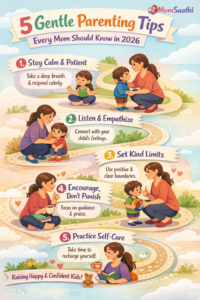
gentle parenting tips 2026 infographic for modern parents

1. Listen to Your Child With Patience

Children often act out when they feel unheard or misunderstood. One of the most effective parenting tips is to listen carefully to what your child is trying to express.

Instead of immediately correcting them, pause and try to understand their perspective. A simple response like “I understand you’re upset” can help children feel validated and calm down more quickly.

Active listening builds trust and encourages open communication between parents and children.

2. Set Clear but Kind Boundaries

Gentle parenting does not mean avoiding rules. In fact, children need boundaries to feel secure and understand acceptable behavior.

The key difference is how boundaries are communicated.

Rather than raising your voice or using punishment, calmly explain the rule and the reason behind it. For example, instead of saying “Stop that now!”, you might say “We need to be gentle because hitting can hurt others.”

Children respond better when boundaries are explained with respect.

3. Teach Kids How to Handle Their Emotions

Children are still learning how to manage strong feelings like anger, frustration, or disappointment. Parents can play a big role in helping them understand these emotions.

When your child becomes upset, help them label their feelings by saying things like:

  • “It seems like you’re feeling frustrated.”

  • “Are you feeling sad about what happened?”

Helping children recognize emotions teaches them valuable emotional skills that will benefit them throughout life.

4. Be the Role Model Your Child Needs

Children learn a great deal by observing their parents. The way parents respond to stress, conflict, and emotions often becomes the behavior children copy.

If parents demonstrate patience, kindness, and calm communication, children naturally begin to adopt these qualities.

Simple habits like apologizing when you make a mistake or speaking respectfully to others can teach powerful life lessons.

5. Encourage Independence and Confidence

One important goal of parenting is helping children become confident and capable individuals. Encouraging independence allows kids to develop problem-solving skills and self-belief.

Instead of doing everything for your child, guide them to try things on their own. Whether it’s dressing themselves, completing a small task, or solving a problem, these experiences help build resilience and confidence.

Supporting independence also strengthens a child’s sense of responsibility.

Common Parenting Mistakes to Avoid

Even with the best intentions, parents sometimes fall into habits that can create unnecessary conflict. Recognizing these mistakes can help improve the overall parenting experience.

Some common parenting challenges include:

  • Comparing children with others

  • Ignoring a child’s emotional needs

  • Reacting with anger instead of patience

  • Inconsistent rules and expectations

Gentle parenting encourages parents to pause, reflect, and respond thoughtfully instead of reacting emotionally.

Gentle Parenting Tips for Toddlers

Toddlers are naturally curious and energetic, which can make parenting this stage both exciting and challenging. Gentle parenting can be particularly helpful during toddler years.

Helpful strategies include:

  • Keeping daily routines consistent

  • Offering simple choices (for example, choosing between two outfits)

  • Redirecting behavior instead of punishing

  • Staying calm during tantrums

Toddlers often need guidance and reassurance as they learn about the world around them.

Research on child development highlights the importance of responsive parenting : Read more

Parenting Trends to Watch in 2026

Parenting continues to evolve as new research highlights the importance of emotional well-being and healthy family relationships.

Some key parenting trends gaining attention in 2026 include:

  • Mindful parenting practices

  • Emotional intelligence education

  • Balanced screen time for children

  • Positive discipline strategies

  • Focus on mental and emotional health

These trends reflect a growing understanding that parenting is about guiding children, not controlling them.

Benefits of Gentle Parenting

Parents who adopt gentle parenting often notice several long-term benefits. Children raised with this approach tend to develop strong emotional awareness and healthy social skills.

Some key benefits include:

  • Improved communication between parents and children

  • Stronger emotional intelligence

  • Greater self-confidence in children

  • Healthier parent-child relationships

  • Better problem-solving skills

Gentle parenting creates a supportive environment where children feel comfortable expressing themselves and learning from their experiences.

These parenting tips 2026 focus on building strong emotional bonds between parents and children.

According to the American Academy of Pediatrics, positive parenting improves emotional development in children : Read more

Final Thoughts

Parenting is one of the most rewarding yet challenging journeys in life. As parenting approaches continue to evolve, many families are embracing more compassionate and understanding methods.

By focusing on empathy, communication, and positive guidance, gentle parenting offers a practical way to raise emotionally healthy children.

These gentle parenting tips for 2026 can help parents build stronger relationships with their children while creating a supportive and loving home environment.

FAQs

What are the best parenting tips for modern parents?

The best parenting tips include listening to children, setting respectful boundaries, teaching emotional awareness, and encouraging independence.

Yes, gentle parenting has been shown to help children develop emotional intelligence, confidence, and stronger social skills.

Yes, gentle parenting works very well for toddlers because it focuses on understanding emotions and guiding behavior rather than punishment.

Busy parents can practice gentle parenting by spending quality time with their children, communicating calmly, and being mindful of their child’s emotional needs.

The best parenting tips include listening to children, setting respectful boundaries, teaching emotional awareness, and encouraging independence.

Yes, gentle parenting has been shown to help children develop emotional intelligence, confidence, and stronger social skills.

Yes, gentle parenting works very well for toddlers because it focuses on understanding emotions and guiding behavior rather than punishment.

Busy parents can practice gentle parenting by spending quality time with their children, communicating calmly, and being mindful of their child’s emotional needs.

External Resources & Further Reading

Want to dive deeper into gentle parenting? These trusted external websites, experts, and books perfectly support the 5 practical tips in this guide — patient listening, kind boundaries, emotional coaching, role modeling, and building independence.

Official & Science-Backed Organizations

Top Gentle Parenting Experts & Blogs

Must-Read Books (2025–2026 Recommendations)

  • The Whole-Brain Child by Daniel J. Siegel & Tina Payne Bryson – Master emotional intelligence and connection.
  • Good Inside by Dr. Becky Kennedy – A fresh, practical guide for today’s moms.
  • Peaceful Parent, Happy Kids by Dr. Laura Markham – Stop yelling and build strong bonds.
  • Raising Good Humans by Hunter Clarke-Fields – Mindful parenting for busy moms.

These external resources align perfectly with the 2026 gentle parenting approach shared in the article. Bookmark them for ongoing support!
Who Can Adopt a Child in India? Complete Eligibility Criteria 2026

Adoption Eligibility Criteria in India: A Complete Guide for Prospective Parents

Adopting a child is a heartfelt way to build your family, offering a loving home to a little one in need. In India, the process is regulated by the Central Adoption Resource Authority (CARA) under the Juvenile Justice (Care and Protection of Children) Act, 2015, and the Adoption Regulations, 2022. These rules ensure the child’s best interests while making adoption accessible to eligible parents.

If you’re considering adoption, understanding the eligibility criteria for adoptive parents in India is the first step. This guide breaks it down simply, covering resident Indians, NRIs, OCIs, and foreigners.

Who Can Adopt a Child in India?

CARA allows adoption for:

  • Indian residents.
  • Non-Resident Indians (NRIs).
  • Overseas Citizens of India (OCIs).
  • Foreigners (from Hague Convention countries).

Both married couples and single individuals can apply, with some specific conditions.

General Eligibility Requirements

Prospective adoptive parents (PAPs) must meet these core criteria:

  • Physical and Mental Health: You should be physically fit, mentally sound, emotionally stable, and free from any life-threatening medical conditions.
  • Financial Stability: You need a steady income to support the child’s needs (specific minimums apply based on family size).
  • Criminal Record: No history of serious crimes or child abuse.
  • Motivation: A genuine desire to provide a nurturing home.

Eligibility for Married Couples

  • Must be in a stable marital relationship for at least 2 years.
  • Both partners must consent to the adoption.
  • Age limits (composite age of couple):
    • Up to 90 years for adopting a child under 4 years.
    • Up to 100 years for a child aged 4-8 years.
    • Up to 110 years for a child aged 8-18 years.
  • The minimum age for each parent is 25 years, with at least a 25-year gap between the parent and child.

Eligibility for Single Parents

  • Single women can adopt a child of any gender.
  • Single men can only adopt a male child (not a girl child, for safety reasons).
  • Age limits:
    • Up to 45 years for adopting a child under 4 years.
    • Up to 50 years for a child aged 4-8 years.
    • Up to 55 years for a child aged 8-18 years.
  • Minimum age: 25 years, with the required age gap to the child.

Special Considerations

  • NRIs, OCIs, and Foreigners: Additional steps like home study reports from authorized agencies and adherence to Hague Convention rules apply. Foreigners typically adopt older children or those with special needs.
  • Adopting Multiple Children: Possible, but siblings are prioritized to stay together.
  • Health Conditions: Minor correctable issues may be allowed, but serious conditions could disqualify.

Quick Summary Table: Age Criteria at a Glance

Applicant Type Child Age (0-4 yrs) Child Age (4-8 yrs) Child Age (8-18 yrs)
Married Couple (Composite Age) Up to 90 years Up to 100 years Up to 110 years
Single Parent Up to 45 years Up to 50 years Up to 55 years

These are general guidelines—exact details may vary slightly based on updates from CARA.

Next Steps If You’re Eligible

  1. Register online on the CARA portal (cara.wcd.gov.in).
  2. Complete a home study report.
  3. Get referred a child and proceed with legal formalities.

Adoption in India is a rewarding journey that requires patience—waiting times can vary from months to years depending on preferences.

Disclaimer: This information is based on current CARA guidelines as of 2026 and is for educational purposes only. Rules can change, so always check the official CARA website or consult a licensed adoption agency/legal expert for the latest details and personalized advice.

If you’re ready to start, reach out to CARA-registered agencies in your area. Building a family through adoption is truly special—best wishes on your journey