Best Baby Carrier in India: Reviews, Buying Guide & Types for New Parents

Edited by: MomSaathi Editorial Team

Reviewed by: Based on expert product reviews, safety standards, and baby carrier buying guidelines

Best baby carrier India choices make hands-free parenting easier for urban moms and dads in Bengaluru or anywhere — whether you’re running errands, commuting, or bonding at home. With the rise of conscious mobility and working parents, ergonomic carriers that support baby’s hips (M-shape position) and distribute weight evenly are trending in 2025–2026.

This guide reviews the top 8–10 baby carriers in India, including newborn-friendly options, hip-seat styles, and structured carriers. It covers types, how to choose (for Indian weather, body types, and budgets), safety certifications (EN or ASTM standards), and carrying positions. Prices are approximate (Amazon/FirstCry/Flipkart as of early 2026).

Types of Baby Carriers: Which One for You?

  • Wraps/Slings: Soft fabric (e.g., ring sling or stretchy wrap) – great for newborns (0–6 months); cozy but learning curve.
  • Structured/Soft-Structured Carriers: Padded straps, buckles, hip support – versatile from newborn to toddler (3–36+ months); ergonomic (hip-healthy).
  • Hip-Seat Carriers: Built-in seat for older babies (6+ months); easy on back, good for short outings.
  • Mei Tai/Asian-Style: Hybrid (ties + straps) – breathable for Indian summers.

Prioritize hip-healthy designs (International Hip Dysplasia Institute approved) for babies under 6 months.

Top Picks: Best Baby Carrier in India (2025–2026 Reviews)

Here are highly rated options based on parent reviews, comfort, and availability in India.

Rank Product Name Type / Age Range Key Features Pros Cons Price Range (Approx.) Best For
1 Ergobaby Omni Breeze Structured / Newborn–Toddler Mesh breathable, 6 carry positions, lumbar support Excellent hip support, airy for Indian heat, adjustable Premium price ₹12,000–15,000 All-day comfort, hot/humid weather
2 LuvLap Elegant / Royal Hip Seat Hip-Seat / 4–24 months 4 positions, padded straps, storage pockets Affordable, easy to use, good for Indian body types Less newborn support without insert ₹1,500–3,000 Budget-conscious parents, daily use
3 Babyhug Cherish / Harmony 5-in-1 or 9-in-1 Structured / Newborn–Toddler Multiple positions, detachable hood, breathable mesh Versatile, storage, good value Bulkier for long wear ₹1,200–2,500 Indian families, multi-position needs
4 R for Rabbit Upsy Daisy / Hug Me Elite Structured / 3+ months Ergonomic, airflow mesh, hip seat option Comfortable straps, safe for Indian climate Limited newborn fit ₹2,000–4,000 Urban commuters, breathability
5 Chicco Easy Fit / Baby Carrier Structured / Newborn–Toddler Snug support, adjustable, padded Reliable brand, good newborn insert Slightly heavier ₹2,500–4,500 Newborn focus, safety
6 Mothercare / Babyhug Newborn Carrier Wrap/Structured Hybrid Soft, adjustable, head support Lightweight, cozy for early months Learning curve for wrapping ₹1,000–2,500 Newborns, bonding
7 Mee Mee / Little Pea All-Day Carrier Structured / Newborn+ Padded, breathable, multiple positions Affordable, comfortable for long wear Basic compared to premium ₹1,000–2,000 Budget daily use
Buying Tips for India:
  • Newborn (0–6 months): Look for infant insert or newborn mode (e.g., Ergobaby Embrace or LuvLap with newborn adapter).
  • Weather: Mesh/breathable fabrics (Ergobaby Breeze, R for Rabbit) for humid Bengaluru/monsoon; padded for winter.
  • Body Types: Adjustable wide straps for Indian shoulders/hips; hip belt for weight distribution.
  • Safety: Check EN 13209 or ASTM certification; M-position hips; no dangling legs.
  • Budget: Under ₹3,000 for good Indian brands (LuvLap, Babyhug); ₹10,000+ for international (Ergobaby).

How to Choose the Best Baby Carrier for Newborn India

  1. Age/Weight: Newborn needs head/neck support; toddler needs hip seat.
  2. Carry Positions: Front inward (newborn), front outward (6+ months), back carry (older).
  3. Comfort: Padded straps, lumbar support, breathable mesh.
  4. Ease of Use: Quick buckles for busy parents.
  5. Indian Needs: Lightweight for heat, machine-washable, affordable.

Best baby carrier India depends on your lifestyle — test fit if possible.

Explore more on MomSaathi:

Which baby carrier are you considering? Share your experience in the comments or follow @momsaathi for more parenting gear tips!

First Foods for Babies in India: 6-Month Weaning Chart & Homemade Recipes

First foods for baby India mark an exciting milestone around 6 months, when your little one is ready to explore solids alongside continued breastfeeding or formula. In India, parents often prefer homemade, easy-to-digest options like ragi porridge, dal khichdi, and mashed seasonal fruits/veggies — nutrient-rich, affordable, and culturally familiar.

According to IAP (Indian Academy of Pediatrics) and WHO guidelines, start complementary feeding at about 6 months (not before 4–6 months). Continue breastfeeding on demand while gradually introducing thin, smooth purees. Use the 3-day rule: Introduce one new food at a time, wait 3 days to watch for allergies (rash, vomiting, diarrhea).

This guide includes signs of readiness, a simple baby solid foods chart India, safe homemade recipes, texture progression, and common mistakes to avoid. Always consult your pediatrician before starting.

Signs Your Baby Is Ready for Solids (Around 6 Months)

Look for these developmental cues (not just age):

  • Good head and neck control (sits with support).
  • Shows interest in food (watches you eat, reaches for spoon).
  • Loss of tongue-thrust reflex (doesn’t push food out with tongue).
  • Can swallow purees (not just suck).
  • Doubled birth weight (common milestone).

If these signs appear earlier (4–6 months), discuss with doctor — exclusive breastfeeding is best until 6 months.

Baby Solid Foods Chart India: Month-by-Month Introduction (6–12 Months)

Start with 1–2 teaspoons once a day, increase gradually. No salt, sugar, honey, cow’s milk, or spices initially.

Age (Months) Texture Frequency & Amount Best First/Weaning Foods (India-Specific) Notes & Tips
6–7 Months Smooth, thin purees 1–2 meals/day, 2–3 tbsp each Ragi porridge, rice cereal/kanji, mashed banana, apple puree, carrot puree, moong dal water/khichdi Single-ingredient; iron-rich first (ragi/dal). 3-day rule.
7–8 Months Thicker mash, soft lumps 2–3 meals + 1 snack, ½ small bowl Mashed khichdi (moong dal + rice), pumpkin/lauki puree, papaya/chikoo mash, suji kheer (thin) Add ghee (¼ tsp) for calories; introduce veggies/fruits.
9–11 Months Soft lumps, finger foods 3 meals + 1–2 snacks, ¾ bowl Soft idli/dosa pieces, mashed roti in dal, finger foods (steamed carrot sticks, soft paneer) Self-feeding practice; no choking hazards.
12+ Months Family foods (mashed/chopped) 3 meals + 2 snacks Full khichdi, dal-rice, soft chapati, curd, seasonal fruits Transition to family meals; add mild spices gradually.
Portion sizes: Start small — baby’s tummy is tiny (walnut-sized at 6 months).

Best Weaning Foods India 6 Months: Safe & Nutritious Homemade Recipes

Start with iron-rich, low-allergy foods. All recipes: No salt/sugar; use breast milk/formula to thin if needed.

  1. Ragi Porridge (Finger Millet – Super Iron-Rich First Food)
    • Ingredients: 1 tsp ragi flour (store-bought or homemade), ½ cup water, ¼ tsp ghee (optional after 6 months).
    • Method: Mix ragi in water (no lumps). Cook on low flame 5–7 mins, stirring till thick. Cool, add ghee. Start with 1–2 tsp.
    • Why great: High calcium/iron; prevents anemia (common in India).
  2. Moong Dal Khichdi (Light & Digestible Protein)
    • Ingredients: 1 tbsp yellow moong dal (soaked), 1 tbsp rice, 1 cup water, pinch turmeric (optional).
    • Method: Pressure cook 3 whistles or boil till mushy. Mash smooth. Thin with water/breast milk.
    • Why great: Easy on tummy; protein + carbs; classic Indian weaning food.
  3. Mashed Banana or Steamed Apple Puree (Sweet & Gentle Fruit Intro)
    • Banana: Mash ripe banana smooth (no cooking needed).
    • Apple: Steam peeled apple 5 mins, mash/puree.
    • Why great: Natural sweetness; vitamin C; low allergy risk.
  4. Carrot or Pumpkin Puree (Veggie Starter)
    • Steam peeled carrot/pumpkin 10 mins, mash smooth.
    • Why great: Beta-carotene for eyes/immunity; colorful & appealing.

Introduce one new food every 3–4 days. Watch for reactions.

Texture Progression & Common Mistakes to Avoid

  • 6 months: Smooth puree (liquid-like).
  • 7–8 months: Thicker mash with soft lumps.
  • 9+ months: Soft finger foods for self-feeding.

Mistakes:

  • Starting too early (before 6 months) – risks allergies/obesity.
  • Adding salt/sugar/honey – harms kidneys/taste.
  • Forcing food – let baby lead.
  • Ignoring allergies – watch hives, swelling, vomiting.

First foods for baby India should be fun and stress-free. Start slow, enjoy the journey, and continue breastfeeding as the main nutrition source.

Explore more on MomSaathi:

Ready to start weaning? Share your baby’s first food experience in the comments or follow @momsaathi for more tips!

Baby Lotion India: Best Options & Dry Skin Care Routine for Winter

Baby lotion India choices are essential for keeping your little one’s delicate skin soft, especially during winter when dryness, flakiness, and itchiness spike due to low humidity, cold winds, and indoor heating. In India (from Bengaluru’s variable weather to North India’s harsh winters), babies’ thin skin loses moisture fast, leading to rough patches on cheeks, arms, legs, or folds.

This guide covers the best baby lotion for dry skin in India (affordable, safe, dermatologist-recommended options), a simple winter care routine, and tips to prevent issues. Focus on fragrance-free, hypoallergenic formulas without parabens, mineral oil, or harsh chemicals.

Why Winter Dry Skin Is Common in Indian Babies

Cold air holds less moisture, causing:

  • Dry, scaly patches (arms, legs, cheeks).
  • Itchiness or redness (especially in pollution-heavy cities like Bengaluru).
  • Cracked skin if not moisturized promptly.

Babies’ skin barrier is immature, so gentle, thick moisturizers (with ceramides, shea butter, oatmeal, or natural oils) lock in hydration. Apply within 3 minutes of bathing to seal moisture.

Best Baby Lotion in India for Dry Skin (Winter-Friendly Picks)

Here are top safe, effective options (based on popularity, reviews, and dermatologist recommendations in India). Prioritize pediatrician-tested, pH-balanced, and toxin-free.

Rank Product Name Key Ingredients Best For Price Range (Approx.) Why Recommended (India Context)
1 Cetaphil Baby Daily Lotion Shea butter, vitamin E, calendula Very dry/sensitive skin, winter ₹800–1,200 (400ml) Dermatologist-favorite; hypoallergenic, fragrance-free, long-lasting hydration. Great for Bengaluru winters.
2 Aveeno Baby Daily Moisture Lotion Natural oatmeal, glycerin Dry, itchy, eczema-prone ₹900–1,200 (354ml) Soothes irritation; pediatrician-recommended; oatmeal locks moisture without greasiness.
3 Sebamed Baby Body Lotion Allantoin, lipids Sensitive/dry skin, eczema ₹500–800 (200ml) pH 5.5 matches baby’s skin; clinically proven; excellent for winter dryness.
4 Mother Sparsh Milky Soft Baby Lotion Milk protein, coconut oil, shea butter Everyday + winter hydration ₹250–400 (400ml) Affordable Indian brand; paraben-free; nourishing for daily use in cold weather.
5 Mamaearth Daily Moisturizing Natural Baby Lotion Shea butter, coconut oil, aloe Natural/affordable dry skin ₹300–500 (400ml) Toxin-free, MadeSafe certified; good for eco-conscious parents; effective in Indian winters.
6 Himalaya Baby Lotion Aloe vera, olive oil Mild dryness, budget-friendly ₹150–300 (400ml) Widely available; gentle herbal formula; popular for everyday winter care.
7 Mustela Hydra Bebe Body Lotion Avocado perseose Intense hydration, premium ₹1,000–1,500 (300ml) Long-lasting moisture; safe for newborns; ideal for severe dryness.
Budget Tip: Start with Mother Sparsh or Himalaya (under ₹400) for mild cases; upgrade to Cetaphil/Aveeno for persistent dryness. Patch-test new lotions on a small area.

Baby Dry Skin Care Routine India Winter (Step-by-Step)

Follow this gentle routine to prevent and treat dryness:

  1. Bath Time (Limit to 2–3x/week)
    • Use lukewarm (not hot) water – hot strips natural oils.
    • Short baths (5–10 mins) with mild, fragrance-free cleanser (e.g., Cetaphil or Sebamed).
    • Pat dry gently – don’t rub.
  2. Moisturize Immediately
    • Apply lotion within 3 minutes of bath (while skin is damp) – locks in hydration.
    • Use thick cream/lotion on dry areas (cheeks, elbows, knees).
    • Reapply 2–3 times daily, especially after diaper changes or hand-washing.
  3. Daily Oil Massage (Traditional + Modern)
    • Warm coconut/sesame oil massage before bath – improves circulation and prevents dryness.
    • Follow with lotion for extra barrier.
  4. Clothing & Environment
    • Layer breathable cotton (inner) + light wool (outer) in winter.
    • Avoid direct heaters/blowers – use humidifier if indoor air is very dry.
    • Cotton mittens/booties to prevent scratching.
  5. Additional Protection
    • Avoid wool directly on skin (irritates).
    • Use lip balm or petroleum jelly on chapped lips/cheeks.
    • Extra feeds/hydration if breastfeeding – mom’s diet affects skin.

Red Flags: Persistent redness, oozing, or no improvement after 1 week – see pediatrician (could be eczema).

When to Choose Cream/Ointment Over Lotion

  • For severe dryness/cracks: Thicker creams (e.g., Aquaphor Baby or Mustela) form a better barrier in winter.

Baby lotion India for winter keeps skin soft and happy. Choose based on your baby’s needs and budget – consistency is key!

Explore more on MomSaathi:

What’s your go-to baby lotion for winter? Share in the comments or tag a mom friend!

Newborn Essentials Checklist India: Must-Haves for New Parents (Budget-Friendly Guide)

Newborn essentials checklist India helps expecting or new parents prepare without overspending. In India, with diverse climates (monsoon humidity in Bengaluru/Mumbai, winter chills in North, summer heat), focus on breathable cotton, affordable local brands, and multi-use items.

This guide covers must-haves for the first 3–6 months, grouped by category, with budget tips (aim for ₹10,000–20,000 total for basics; skip luxury items). Prioritize safety, comfort, and hygiene – consult your pediatrician for personalized needs.

1. Clothing & Swaddles (Most Essential – ₹2,000–5,000)

Newborns need soft, easy-to-change cotton clothes due to frequent spit-ups and diaper changes.

Item Quantity Why Needed / Tips Budget Brand Examples
Front-open onesies / Jhablas 8–12 Easy dressing; cotton for breathability in Indian heat/humidity FirstCry, Mee Mee, Babyhug
Full-body rompers / Sleepsuits 6–8 Nightwear; footed for warmth Mothercare, Pine Kids
Caps / Mittens / Booties 4–6 sets Prevent scratches, keep warm (extra in winter) Local cotton or Himalaya
Swaddle wraps / Muslin blankets 4–6 For cozy sleep; muslin for summer/monsoon SuperBottoms, Bummer
Socks / Woolen booties (winter) 4–6 Warm feet; avoid tight ones Woolen in North, cotton South
Seasonal Tips: Monsoon – quick-dry cotton; Winter – add light wool layers; Summer – minimal, loose fits.

2. Diapering & Hygiene (Daily Use – ₹3,000–6,000 Initial Stock)

Diapers and wipes are high-use items.

  • Newborn diapers (disposable or cloth): 100–150 pack (e.g., Huggies, Pampers New Baby) – start with NB size.
  • Cloth nappies / Muslin squares: 10–15 (eco-friendly, reusable in India).
  • Wipes: Unscented, alcohol-free (e.g., WaterWipes, Mamaearth).
  • Diaper rash cream: Zinc-based (e.g., Desitin, Himalaya).
  • Changing mat / Pad: Waterproof, portable.
  • Baby bathtub + mild soap/shampoo: No-tear formula (e.g., Johnson’s, Sebamed).
  • Hooded towels: 2–3 for post-bath warmth.
  • Nasal aspirator + saline drops: For stuffy noses (common in pollution/monsoon).

Budget Tip: Buy cloth diapers for long-term savings; stock disposables for hospital/home first week.

3. Feeding Essentials (Breastfeeding or Formula – ₹2,000–5,000)

Exclusive breastfeeding is ideal for first 6 months.

  • Breast pump (manual/electric): If returning to work (e.g., Medela, Pigeon).
  • Nursing pillow: For comfort (e.g., Boppy-style or local).
  • Bottles + nipples: 2–4 (BPA-free, slow-flow for newborns).
  • Bottle sterilizer/warmer: Electric or microwave (e.g., Philips Avent).
  • Burp cloths / Bibs: 8–10 muslin ones.
  • Milk storage bags: If pumping.

Tip: For Indian moms – include lactation boosters like methi laddoo or shatavari.

4. Sleep & Nursery Basics (Safety First – ₹3,000–8,000)

  • Crib / Co-sleeper / Bassinet: Firm mattress, no pillows.
  • Mosquito net: Essential in India (monsoon especially).
  • Baby monitor: Audio/video optional.
  • Swaddle sacks / Sleep sacks: Safer than loose blankets.
  • Night light: Soft glow for night feeds.

Safety Note: Back to sleep; room temperature 22–24°C.

5. Health & Safety Must-Haves (₹1,000–3,000)

  • Digital thermometer (rectal/oral).
  • Nail clipper/file + brush.
  • First aid kit: Cotton, antiseptic, band-aids.
  • Baby-safe moisturizer/lotion (e.g., Himalaya, Mamaearth).
  • Sunscreen (for outings after 6 months).

6. Travel & Outing Essentials (Optional but Useful – ₹2,000–5,000)

  • Pram/stroller or baby carrier.
  • Diaper bag with changing pad.
  • Car seat (mandatory for safety in India).

Budget Version Under ₹10,000–15,000 Total: Prioritize: Clothes, diapers, feeding basics, hygiene, sleep net. Shop sales on FirstCry, Amazon, or local stores; reuse family items.

Newborn essentials checklist India ensures you’re ready without overwhelm. Focus on quality over quantity – babies grow fast!

Explore more on MomSaathi:

What’s on your newborn shopping list? Share in the comments or tag a new mom!

Baby Weight Gain Chart India: Month-by-Month Guide for Healthy Growth

Edited by: MomSaathi Editorial Team

Reviewed by: Certified Pediatric Nutritionists & Child Health Specialists

The baby weight gain chart India helps parents track if their little one is growing normally. In India, babies often follow patterns slightly different from global averages due to genetics, diet (breastfeeding, Indian weaning foods), and environment. Pediatricians use charts based on the Indian Academy of Pediatrics (IAP) guidelines or adapted WHO standards to monitor growth.

This guide shows month-by-month weight ranges for boys and girls (0–12 months), average weekly/monthly gains, factors affecting weight, and red flags. Always weigh your baby regularly (at home or during check-ups) and consult your pediatrician – every child grows uniquely.

Why Track Baby Weight Gain in India?

Regular monitoring ensures:

  • Early detection of underweight/overweight issues.
  • Proper nutrition (exclusive breastfeeding for 6 months, timely solids).
  • Peace of mind for new parents.

Normal patterns:

  • Birth to 6 months: Fastest growth – weight doubles by ~5–6 months.
  • 6–12 months: Slower but steady – weight triples by 1 year.
  • After 1 year: ~200–250 grams per month.

Indian babies may start with lower birth weights (average 2.5–3.5 kg) compared to some global averages, but catch-up growth is common with good feeding.

Average Baby Weight Gain Month by Month (India-Specific Ranges)

These ranges are approximate, compiled from trusted Indian sources (Apollo Hospitals, IAP-adapted charts, and pediatric guidelines). They represent healthy percentiles (roughly 3rd–97th).

Boys Weight Chart (in KG)

Age (Months) Low Range (kg) Average (kg) High Range (kg) Typical Weekly Gain (g)
Newborn (Birth) 2.5 – 4.5 3.0 – 3.5 4.0 – 4.5
1 Month 3.4 – 5.7 4.0 – 5.0 5.0 – 5.7 150–250
2 Months 4.4 – 7.0 5.0 – 6.0 6.0 – 7.0 150–200
3 Months 5.1 – 7.9 5.8 – 7.0 7.0 – 7.9 100–200
4 Months 5.6 – 8.6 6.5 – 7.5 7.5 – 8.6 100–150
5 Months 6.1 – 9.2 7.0 – 8.0 8.0 – 9.2 100–150
6 Months 6.4 – 9.7 7.5 – 8.5 8.5 – 9.7 80–120
7 Months 6.7 – 10.2 7.8 – 9.0 9.0 – 10.2 70–100
8 Months 6.9 – 10.5 8.0 – 9.5 9.5 – 10.5 70–100
9 Months 7.1 – 10.9 8.5 – 9.8 9.8 – 10.9 60–90
10 Months 7.3 – 11.2 8.8 – 10.2 10.2 – 11.2 60–90
11 Months 7.5 – 11.5 9.0 – 10.5 10.5 – 11.5 50–80
12 Months 7.8 – 12.0 9.5 – 11.0 11.0 – 12.0 50–80

Girls Weight Chart (in KG)

Age (Months) Low Range (kg) Average (kg) High Range (kg) Typical Weekly Gain (g)
Newborn (Birth) 2.5 – 4.3 3.0 – 3.3 3.8 – 4.3
1 Month 3.2 – 5.4 3.8 – 4.8 4.8 – 5.4 140–220
2 Months 4.0 – 6.5 4.8 – 5.8 5.8 – 6.5 140–200
3 Months 4.6 – 7.4 5.4 – 6.5 6.5 – 7.4 100–180
4 Months 5.1 – 8.1 6.0 – 7.2 7.2 – 8.1 100–150
5 Months 5.5 – 8.7 6.5 – 7.8 7.8 – 8.7 90–140
6 Months 5.8 – 9.2 7.0 – 8.2 8.2 – 9.2 80–120
7 Months 6.1 – 9.6 7.3 – 8.6 8.6 – 9.6 70–100
8 Months 6.3 – 10.0 7.6 – 9.0 9.0 – 10.0 70–100
9 Months 6.6 – 10.4 8.0 – 9.4 9.4 – 10.4 60–90
10 Months 6.8 – 10.7 8.3 – 9.7 9.7 – 10.7 60–90
11 Months 7.0 – 11.0 8.5 – 10.0 10.0 – 11.0 50–80
12 Months 7.3 – 11.5 9.0 – 10.5 10.5 – 11.5 50–80
These are general ranges (roughly 3rd–97th percentiles). Boys often gain slightly faster than girls in early months.

Normal Weight Gain Patterns & Expectations

  • First 3 months: 150–250 grams/week (fastest phase).
  • 3–6 months: 100–150 grams/week.
  • 6–12 months: 70–100 grams/week (slows as solids start).
  • By 6 months: Birth weight roughly doubles.
  • By 12 months: Birth weight roughly triples.

Factors influencing gain in India:

  • Exclusive breastfeeding vs formula.
  • Timely introduction of solids (after 6 months: ragi, dal, fruits).
  • Genetics, prematurity, or illnesses.
  • Regional diet (e.g., South Indian vs North Indian weaning).

When to Worry & Consult a Doctor

Contact your pediatrician if:

  • Weight falls below low range consistently.
  • No weight gain (or loss) over 2–3 weeks.
  • Fewer than 6 wet diapers/day.
  • Lethargy, poor feeding, or frequent illnesses.

Regular check-ups (at 1, 3, 6, 9, 12 months) include weighing and plotting on growth charts.

Tips to Support Healthy Weight Gain in Indian Babies

  • Exclusive breastfeeding on demand.
  • Mom’s nutrition: Balanced diet with proteins, greens, nuts.
  • After 6 months: Nutrient-rich solids (khichdi, mashed veggies).
  • Monitor during illnesses – offer extra feeds.
  • Use home scale weekly, but trust doctor charts.

Baby weight gain chart India is a tool, not a strict rule – focus on overall health, milestones, and happiness.

Explore more on MomSaathi:

Have questions about your baby’s growth? Share in the comments or consult your pediatrician!

Newborn Care Tips for Indian Parents: Complete First Month Guide & Routine

Newborn care tips for Indian parents are essential during the first month, when your baby adjusts to life outside the womb and you step into parenthood. In India, this period often combines joyful family traditions—like daily oil massage (tel malish), grandparent support, and simple home remedies—with modern pediatric guidelines for safety and health.

This in-depth guide covers daily routines, feeding, hygiene, seasonal adaptations (monsoon humidity in Bengaluru, winter dryness, summer heat), jaundice monitoring, vaccinations, common concerns, and bonding. It draws from trusted sources like the World Health Organization (WHO), UNICEF India, and Indian Academy of Pediatrics (IAP).

Always consult your pediatrician for personalized advice, vaccinations, and any health concerns.

Why the First Month Is Critical in Newborn Baby Care in India

Newborns lose some birth weight initially (normal up to 10%) but regain it by day 10–14 with good feeding. They sleep 16–18 hours daily in short bursts and feed 8–12 times.

In Indian homes, extended family often provides support, but advice can vary. Focus on:

  • Exclusive breastfeeding (no water, honey, or gripe water for the first 6 months – WHO & IAP recommendation).
  • Preventing infections through hygiene.
  • Close monitoring for jaundice (very common in India) and danger signs.
  • Building strong bonding.

For urban parents in Bengaluru or similar cities, pollution and weather changes require extra care.

Daily Newborn Care Routine for Indian Parents (Flexible First-Month Schedule)

A gentle routine helps everyone adjust.

Time Slot Key Activities Indian-Specific Tips & Benefits
Early Morning Feed, burp, gentle play Skin-to-skin contact for warmth and bonding; burp well to ease gas.
Mid-Morning Oil massage + sponge bath (2–3 times/week) Use coconut or mustard oil for tel malish – improves circulation .
Daytime Frequent feeds, diaper changes, short tummy time Ventilate room; use mosquito net in humid/monsoon areas; light cotton clothes.
Evening Calm bonding, feeds Dim lights; soft family lullabies; avoid overstimulation.
Night Cluster feeds, safe sleep Back sleeping position; room temperature 22–24°C; safe co-sleep if preferred.
Track: 6+ wet diapers and 3–4 poops daily show good feeding.

1. Feeding: The Foundation of Newborn Baby Care in India

Exclusive breastfeeding on demand is ideal .

  • Positioning & Latch: Use cradle hold; ensure deep latch.
  • Frequency: Every 2–3 hours or on cue.
  • Mom’s Support: Drink plenty of fluids; include ajwain, jeera, or fenugreek in diet for better supply.
  • Burping: After every feed; gentle clockwise tummy massage helps.
  • Formula Feeding: Only if medically advised; follow pediatrician-recommended brands.

Avoid traditional prelacteal feeds (honey/jaggery) – they increase infection risk.

2. Bathing, Hygiene & Umbilical Cord Care

Delay the first full bath for at least 24 hours .

  • Oil Massage: Warm oil, gentle strokes – excellent for bonding and skin health.
  • Umbilical Cord: Keep it dry and clean; fold diaper below; avoid applying oil, turmeric, or surma .
  • Skin Care: Moisturize dry areas; no talcum powder. Dry skin folds thoroughly in humid/monsoon weather.

3. Seasonal Adaptations for Indian Climates

India’s weather varies greatly, so adapt care accordingly:

  • Monsoon (High Humidity & Rain): Use mosquito nets and safe repellents; change wet clothes quickly; keep skin dry to prevent fungal rashes and infections.
  • Winter (Dry & Cold): Layer breathable cotton + light wool; moisturize lips and cheeks; keep baths short to avoid chills.
  • Summer (Heat & Humidity): Choose loose cotton clothes; offer extra feeds for hydration; avoid direct sunlight (especially 10 AM–3 PM); use fan (not direct draft).

These simple changes help prevent heat rash, colds, or dehydration.

4. Jaundice Monitoring & Common Health Concerns

Jaundice (yellow skin/eyes) is common – peaks around day 3–5.

  • Signs to Watch: Yellowing spreading to body/legs; lethargy; poor feeding.
  • What to Do: Frequent breastfeeding helps flush bilirubin; doctor may check levels or recommend phototherapy .
  • Other Issues: Colic (evening fussiness) – soothe with rocking or swaddling; reflux – keep upright after feeds.

Vaccinations: Ensure birth doses (Hep B, BCG, OPV) are given – follow your pediatrician’s schedule.

5. Sleep Safety & Bonding

  • Safe Sleep: Always back position; firm mattress; no pillows, toys, or heavy blankets .
  • Bonding: Daily skin-to-skin (kangaroo care); talk, sing, and make eye contact.
  • For Parents: Rest when baby sleeps; accept family help; watch for postpartum mood changes.

Newborn care tips for Indian parents become easier and more instinctive with time. Trust your instincts, seek support when needed, and cherish these early moments.

FAQs for Indian Parents

How long should oil massage last?

10–15 minutes before bath.

When should I call the doctor immediately?

Fever over 100.4°F, fewer than 6 wet diapers, poor feeding, excessive crying, or breathing issues.

Is co-sleeping safe?

Room-sharing is recommended; bed-sharing requires precautions (firm surface, no smoking/alcohol nearby).

Explore more helpful guides on MomSaathi:

Ready to embrace your newborn journey? Share your questions or tips in the comments below, or follow us on Instagram (@momsaathi) for daily parenting inspiration!

Safe Natural Teething Remedies for Babies in India – Dr. Pooja Joshi Explains

safe natural teething remedies for babies – chilled washcloth and neem teether for teething relief

Reviewed by: Dr. Pooja Joshi, Dentist | Oral Health Specialist

Author: By Team MomSaathi Expert

Why Natural Teething Remedies Are So Popular Among Indian Moms in 2026

Teething can feel overwhelming for both babies and parents. In 2026, more moms across India — especially in cities like Bengaluru — are turning to natural remedies instead of medicated gels or numbing agents. This shift happens because parents want gentle, chemical-free ways to ease discomfort while keeping things safe and simple.

For example, common symptoms like excessive drooling, chewing on fingers, red or swollen gums, and mild fussiness affect almost every baby. However, high fever, severe diarrhea, or rashes are not normal — always check with a doctor if these appear.

We asked Dr. Pooja Joshi, a trusted pediatric and family oral health specialist practicing in Karnataka, to share her top recommendations. She explains the most effective safe natural teething remedies for babies that Indian families can easily try at home.

Complete Guide to Infant Teething: Signs, Remedies & Chart | Apollo Cradle

When Does Teething Usually Start & What Signs Should You Expect?

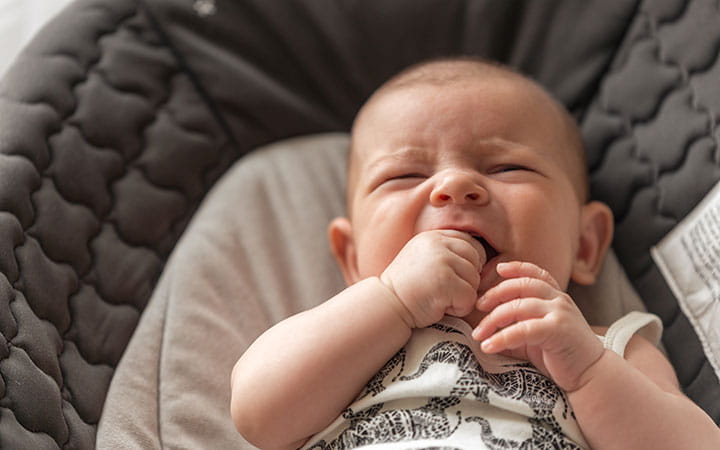
Most babies begin teething between 6 and 10 months, although some start as early as 4 months or as late as 12 months. First, you’ll often notice increased drooling and the baby wanting to chew on everything. Then, gums may look red, swollen, or feel firm to the touch. Additionally, mild irritability and trouble sleeping are common.

Importantly, teething usually doesn’t cause high fever or serious illness. Therefore, if your baby has a temperature above 100.4°F (38°C), vomiting, or seems very unwell, consult a pediatrician right away — it could be something else.

Feeding Your Teething Baby: A Parent's Guide to Nutrition and Dental Health

Gum Massage with Clean Finger Teething remedies for babies India parents use include this no-cost method — but hygiene is key. Reality (Dr. Pooja Joshi): “Gentle rubbing relieves pressure on erupting teeth; it’s effective and builds early oral care habits.”Safe Practice: Wash hands thoroughly. Dip finger in cool water and rub gums in circular motions for 1-2 minutes. Do after feeds. Desi Tip: Combine with oil massage ritual using coconut oil (sparingly) — avoids direct application to gums

How to Relieve Your Baby's Teething Pain Safely | University Hospitals

Safe & Natural Teething Remedies Recommended by Experts

Here are Dr. Pooja Joshi’s favorite remedies — all beginner-friendly, low-risk, and using items most Indian homes already have:

Chilled Washcloth or Muslin Cloth This is one of the simplest and safest options for babies in India. Many parents overlook it, but it provides quick relief.

Reality (Dr. Pooja Joshi): “A chilled cloth offers gentle pressure and cooling to reduce swelling and soothe sore gums — without any risks.”

Safe Practice: Dampen a clean muslin cloth, twist it into a rope shape, and place it in the fridge (not freezer) for 15–30 minutes. Then let your baby chew under close supervision. Repeat whenever needed.

Desi Tip: In many Karnataka households, moms pair this with evening oil massage — just wrap the chilled cloth around your finger for a gentle gum rub.

Frozen Fruits or Veggies in a Nibbler For babies 6+ months who are starting solids, this remedy works beautifully. Reality (Dr. Pooja Joshi): “Chilled banana, carrot, or cucumber soothes gums while adding a bit of nutrition — always use a mesh nibbler to prevent choking.” Safe Practice: Freeze small pieces of banana or carrot in a silicone nibbler. Supervise every moment and throw away leftovers. Desi Tip: Many Indian families love using chilled mango slices or pineapple rind — the natural sweetness makes it more appealing.

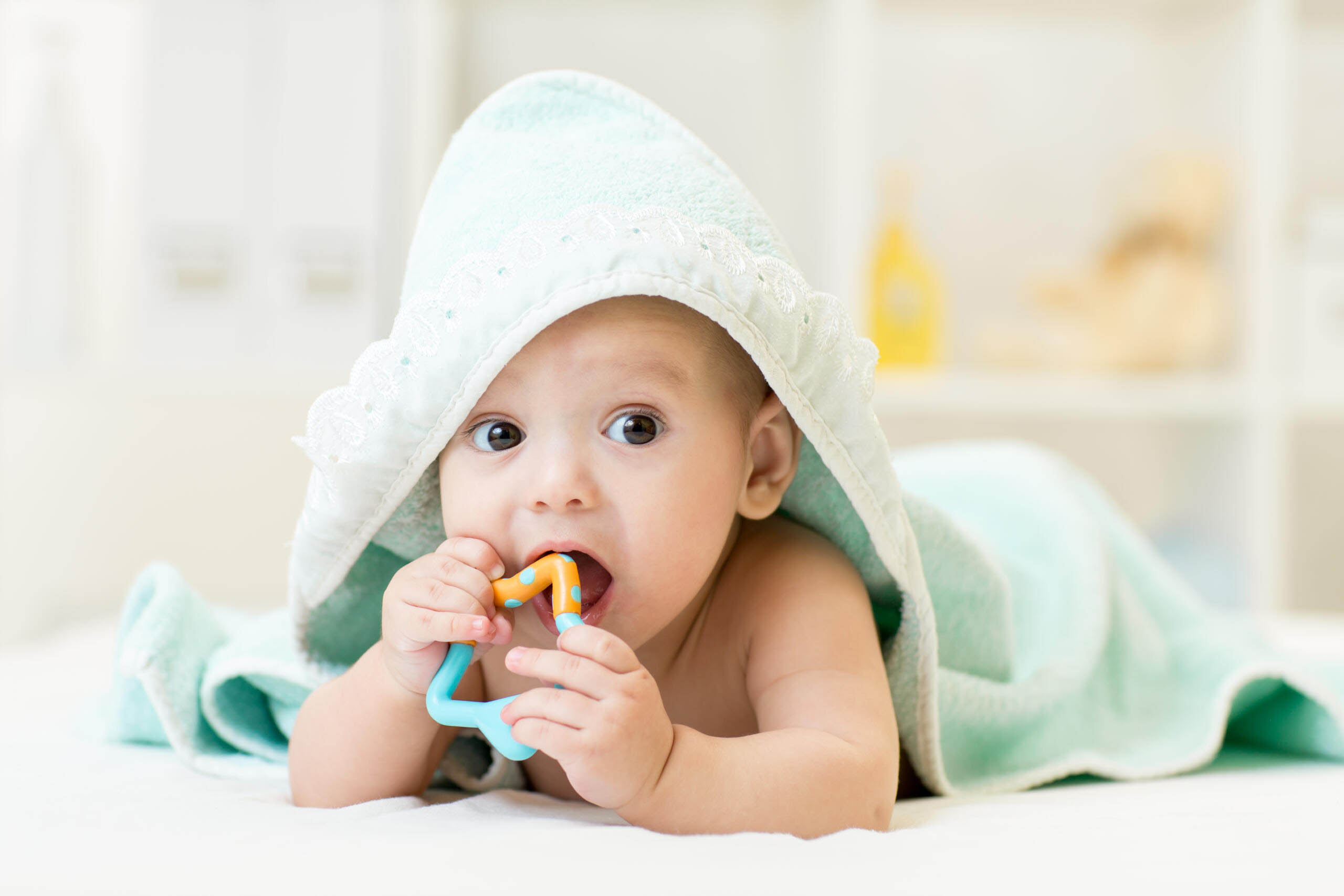
Buy Natural Neem Wood Baby Teether – Handmade Wooden Animal Toy, Biodegradable, Chemical-Free – Soothing Teething Relief, Safe for Infants' Oral & Sensory Development(5PCS) Online at Low Prices in India - Amazon.in

Breast Milk Ice Cubes Teething remedies for babies India include this for breastfed infants — nutrient-rich and soothing. Reality (Dr. Pooja Joshi): “Frozen breast milk calms gums while providing comfort; ideal for younger babies.”

Safe Practice: Freeze expressed milk in ice cube trays. Wrap in thin muslin and let baby suck. Use fresh milk only.

Desi Tip: Mix with tulsi water for added calming — a gentle Ayurvedic twist.

Sippy Cup with Cool Water Teething remedies for babies India for older tots — hydration helps overall. Reality (Dr. Pooja Joshi): “Cool water relieves dry mouth from drooling; use a sippy cup for easy access.”Safe Practice: Offer cool (not cold) boiled water in a BPA-free sippy cup for 6+ months. Limit to avoid overhydration. Desi Tip: Infuse with jeera for tummy soothing — common in Indian homes.

When to See a Pediatric Dentist Immediately

  • High fever (over 100.4°F), severe diarrhea, or rash — may not be teething.
  • Excessive drooling causing skin irritation.
  • Refusal to eat or signs of infection like pus on gums.
  • Persistent crying or discomfort lasting over a week.
  • Any choking incident or allergic reaction to remedies.

Which teething remedy are you trying this week? Share in the comments — let’s help other moms in Bengaluru, Karnataka, and across India!

FAQ

How often should I practice teething remedies?

Aim for short sessions 3-4 times a day or as needed, always under supervision.

Mild elevation is possible, but high fever needs doctor check.

Chilled fruits like banana or carrot in nibblers for 6+ months.

Avoid direct use; it can burn gums. Stick to diluted herbals.

Usually 6-10 months, but varies.

Aim for short sessions 3-4 times a day or as needed, always under supervision.

Mild elevation is possible, but high fever needs doctor check.

Chilled fruits like banana or carrot in nibblers for 6+ months.

Avoid direct use; it can burn gums. Stick to diluted herbals.

Usually 6-10 months, but varies.

External Resources:

Baby Feeding & Nutrition (4–12 Months): A Comprehensive Guide for Indian Parents in 2026

MomSaathi.com provides content for informational and educational purposes only. It is not intended to serve as a substitute for professional medical advice, diagnosis, or treatment. Always consult a pediatrician or nutritionist before making changes to your baby’s diet.

As your baby grows from 4 to 12 months, their nutritional needs evolve rapidly. This period marks the transition from exclusive milk feeds to introducing solids, laying the foundation for healthy eating habits. According to the latest guidelines from the World Health Organization (WHO) and the Indian Council of Medical Research-National Institute of Nutrition (ICMR-NIN) updated in 2024, exclusive breastfeeding is recommended for the first 6 months, with complementary feeding starting thereafter while continuing breastfeeding up to 2 years or beyond. In India, where cultural foods like dal, ragi, and khichdi play a key role, tailoring nutrition to local availability ensures balanced growth. This guide, relevant for parents in Bengaluru and Karnataka, covers age-specific recommendations, sample meal plans, and tips to support your little one’s development.

The Importance of Nutrition in the First Year

From 4 to 12 months, babies need nutrients for brain development, immune support, and physical growth. Key requirements include:

  • Iron: Crucial from 6 months as stores deplete; sources like ragi porridge or spinach.
  • Protein: For muscle growth; from dal, paneer, or eggs.
  • Vitamins and Minerals: Folate from greens, vitamin C from fruits like guava or oranges.
  • Calories: 700–800 at 6 months, increasing to 1,000–1,400 by 12 months.

Aim for a variety of foods from all groups: grains, fruits/veggies, dairy, proteins, and fats. Continue breastfeeding on demand (3–5 times daily) as it provides 50–70% of calories even after solids start.

4–6 Months: Focus on Exclusive Breastfeeding

Do not introduce solids before 6 months unless advised by a doctor, as per WHO and Indian Academy of Pediatrics (IAP) guidelines. This prevents risks like allergies or digestive issues.

  • Feeding Schedule: Breastfeed 8–12 times per day, on demand. If using formula, follow package instructions (about 150–200 ml per kg body weight daily).
  • Signs of Readiness for Solids (Around 6 Months): Sits with support, shows interest in food, loses tongue-thrust reflex.
  • What to Avoid: No water, juices, or solids—breast milk or formula meets all needs.

If your baby seems hungry often, consult a pediatrician for iron supplements if needed, especially in iron-deficient regions like parts of Karnataka.

Introducing Complementary Foods at 6 Months

Start solids at exactly 6 months with soft, mashed foods. Begin with 2–3 spoonfuls, 2–3 times a day, alongside breastfeeding.

  • First Foods: Iron-rich options like ragi porridge, mashed banana, or apple puree. Introduce one new food every 3–5 days to watch for allergies.
  • Texture: Pureed or mashed for easy swallowing.
  • Indian Favorites: Soft khichdi (rice + moong dal), vegetable purees (carrot, pumpkin), or fruit mashes (papaya, chikku).

Gradually increase to semi-solid consistency. Offer water in a sippy cup after feeds.

6–9 Months: Building Variety and Frequency

By 7–8 months, offer 3 meals a day (2/3 cup each) plus 1–2 snacks, totaling 3–4 feeds. Focus on nutrient-dense foods.

Recommended Foods

  • Grains: Ragi, suji, broken wheat porridge.
  • Fruits/Veggies: Mashed apple, pear, carrot, beetroot, spinach (palak).
  • Proteins: Soft dal, yogurt, paneer.
  • Fats: Ghee in moderation for energy.

Avoid honey (botulism risk), salt/sugar (under 1 year), and choking hazards like nuts.

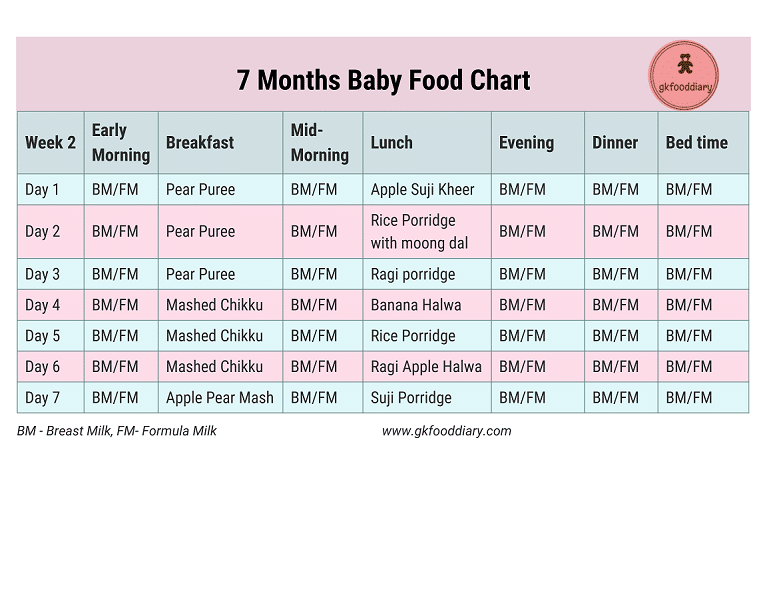
Sample 7-Month Meal Plan

Here’s a weekly chart adapted for Indian homes:

Day Early Morning Breakfast Mid-Morning Lunch Evening Snack Dinner Bedtime
Mon BM/FM Ragi Apple Porridge BM/FM Ghee Rice Yogurt with Fruit Millet Porridge BM/FM
Tue BM/FM Pear Puree BM/FM Broken Wheat Khichdi Lentil Soup Curd Rice BM/FM
Wed BM/FM Khichdi BM/FM Rice with Curd Boiled Vegetable Bowl Rice Porridge BM/FM
Thu BM/FM Wheat Pancakes BM/FM Fish Puree Carrot Badam Kheer Ragi Porridge BM/FM
Fri BM/FM Idli with Dal BM/FM Khichdi Banana Moong Dal Khichdi BM/FM

(BM = Breast Milk, FM = Formula Milk. Portions: 2–3 tbsp per meal.)

For visual inspiration, here’s a sample Indian baby food chart:

9–12 Months: Towards Family Foods

Increase to 3–4 meals (3/4–1 cup each) plus 2 snacks. Introduce finger foods for self-feeding skills.

  • New Introductions: Eggs, fish (low-mercury), cheese, oranges, strawberries, corn.
  • Textures: Finely chopped or soft pieces; encourage self-feeding with safe items like banana slices.
  • Indian Options: Idli, dosa, chapati dipped in dal, vegetable upma, poha.

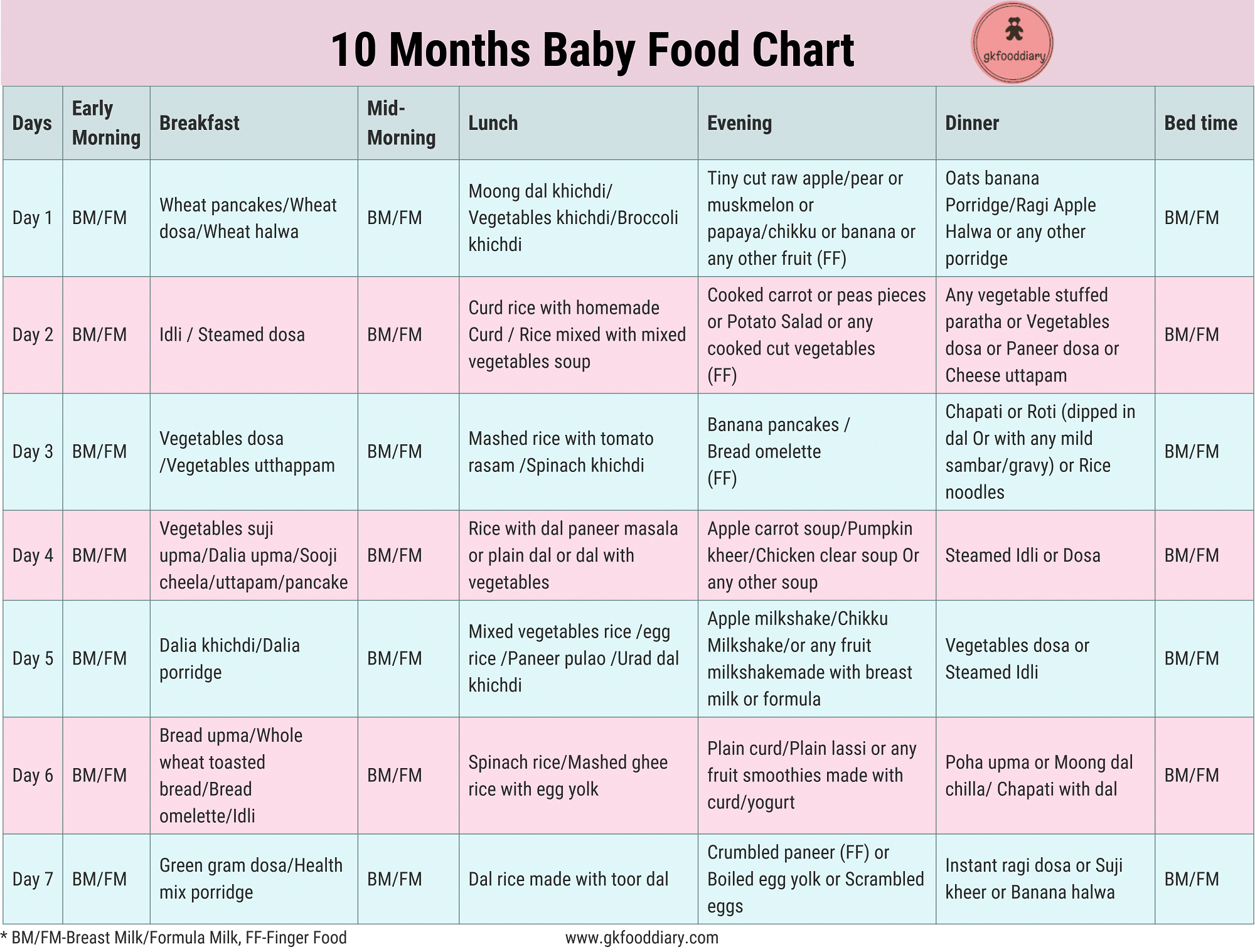
Sample 10-Month Meal Plan

Day Early Morning Breakfast Mid-Morning Lunch Evening Snack Dinner Bedtime
1 BM/FM Wheat Pancakes/Wheat Halwa BM/FM Moong Dal Khichdi/Vegetables Khichdi Tiny Cut Apple/Pear Oats Banana Porridge BM/FM
2 BM/FM Idli/Steamed Dosa BM/FM Curd Rice with Veggies Cooked Carrot/Peas Vegetable Dosa BM/FM
3 BM/FM Vegetables Dosa BM/FM Mashed Rice with Tomato Rasam Banana Pancakes Chapati with Dal BM/FM
4 BM/FM Vegetables Suji Upma BM/FM Rice with Dal Paneer Masala Apple Carrot Soup Steamed Idli/Dosa BM/FM
5 BM/FM Dalia Khichdi BM/FM Mixed Veggies Rice/Egg Rice Apple Milkshake Vegetables Dosa BM/FM
6 BM/FM Bread Upma BM/FM Spinach Rice/Mashed Ghee Rice Plain Curd Smoothie Poha Upma BM/FM
7 BM/FM Green Gram Dosa BM/FM Dal Rice with Toor Dal Crumbled Paneer Instant Ragi Dosa BM/FM

For more ideas:

10 Months Indian Baby Food Chart | Meal Plan or Diet Chart for 10 Months Baby

Safety Tips and Common Concerns

  • Allergies: Introduce common allergens (eggs, fish, nuts) one at a time after 6 months.
  • Choking Prevention: No whole grapes, nuts, or hard foods; supervise feeds.
  • Hygiene: Use clean utensils; boil water for mixing.
  • Picky Eating: Be patient; offer variety without force.
  • Supplements: Iron drops if anemic, as per doctor’s advice—common in India.

In Karnataka, leverage local produce like ragi (finger millet) for iron-rich porridges or seasonal fruits from Bengaluru markets.

Final Thoughts

Feeding your baby from 4–12 months is about balance, patience, and joy. Stick to guidelines, monitor growth via regular check-ups, and enjoy this bonding time. If in Bengaluru, consider consulting experts at local hospitals like Cloudnine or government NHM centers. What’s your favorite desi baby food? Share in the comments!

Related Articles on MomSaathi.com:

  • First 1000 Days Nutrition India
  • Signs Baby Getting Enough Breast Milk

External Resources:

  • WHO Infant Feeding Facts
  • ICMR-NIN Dietary Guidelines

Jaundice in Newborns – Home Remedies vs When to Rush to Hospital (Indian Moms Guide 2026)

Newborn jaundice spikes every summer and monsoon in India due to heat, dehydration risks, and infections. Many moms notice yellow skin/eyes in their baby and wonder: Can I manage with home remedies, or is it time for hospital?

Most cases are physiological (harmless) and resolve in 1–2 weeks, but high bilirubin can lead to serious issues like kernicterus if ignored. This guide explains symptoms, safe home care (focusing on breastfeeding), common myths (like direct sunlight), phototherapy truth, bilirubin levels chart, and clear signs to rush to hospital.

What Is Newborn Jaundice & Common Symptoms in Indian Babies

Jaundice happens when excess bilirubin (yellow pigment from red blood cell breakdown) builds up because the newborn liver is immature. It affects 60% of term and 80% of preterm babies in India.

Key Symptoms:

  • Yellow skin (starts on face, spreads to chest, belly, legs)
  • Yellow whites of eyes
  • Drowsiness or poor feeding
  • Dark urine (should be pale) or pale stools
  • In severe cases: lethargy, high-pitched cry, arching back (emergency!)

Physiological jaundice peaks at 3–5 days and fades by 2 weeks. Pathological (serious) starts early (<24 hours) or lasts longer.

(Alt text suggestion for image: “newborn jaundice symptoms yellow skin eyes Indian baby”)

Safe Home Care & Remedies for Mild Newborn Jaundice in India

For physiological jaundice (most cases), focus on supporting the baby’s natural elimination of bilirubin:

  1. Frequent Breastfeeding – The #1 “remedy” per IAP and pediatricians. Feed every 2–3 hours (8–12 times/day). Breast milk helps flush bilirubin via stools. Avoid stopping breastfeeding – it worsens jaundice.
  2. Ensure Good Hydration & Feeding – Watch for wet diapers (6+ daily) and stools. Poor intake causes “breastfeeding jaundice” from dehydration.
  3. Gentle Sun Exposure Myth Bust – Direct sunlight is NOT recommended! UV rays risk burns/dehydration; it’s a myth in India. Filtered/indirect morning light (near window, not direct) may help mildly but is NOT a substitute for treatment. AAP/IAP say no to sunbathing.
  4. Monitor & Comfort – Keep baby cool in summer/monsoon; avoid overheating.

Important: No turmeric, papaya leaves, or herbal mixes for newborns – they can be harmful. Always consult pediatrician before any remedy.

(Alt text suggestion: “frequent breastfeeding newborn jaundice home care India”)

Bilirubin Levels Chart: When It’s Normal vs Dangerous (India Guidelines)

Use age-specific total serum bilirubin (TSB) levels (from IAP/AAP-aligned Indian protocols for term babies ≥35 weeks):

Age (hours/days) Normal/Physiological Range (mg/dL) Phototherapy Threshold (approx.) High Risk/Exchange Transfusion
24 hours <8–10 >12–15 >19–20
48 hours <12–15 >15–18 >22
72 hours Peak <15–18 >18–20 >24
>1 week Declining <12–15 >20+ or persistent >25
  • Low risk: Term baby, no hemolysis.
  • Medium/High risk: Preterm, dehydration, hemolysis, G6PD (common in India).

Get TSB test if yellowing spreads fast or baby seems unwell. Home TcB devices help monitor but confirm with blood test.

(Alt text suggestion: “newborn jaundice bilirubin levels chart India 2026 guidelines”)

Phototherapy Truth: The Main Hospital Treatment

Phototherapy (blue light) breaks down bilirubin safely in skin – gold standard in India.

  • Baby placed under special lights (eyes masked, diaper only).
  • Intensive for high levels; home phototherapy possible in mild cases.
  • Duration: 1–2 days usually; monitor rebound. No proven risks like bronze baby in most cases.

Avoid myths – phototherapy is evidence-based, not “harsh”.

When to Rush to Hospital Immediately (Red Flags for Indian Moms)

Rush to pediatrician/NICU if:

  • Jaundice appears in first 24 hours
  • Yellowing spreads to arms/legs/palms/soles
  • Bilirubin rising fast (>5 mg/dL/day) or >15–18 mg/dL (check test)
  • Baby lethargic, refuses feeds, high-pitched cry, arching
  • Fever, poor weight gain, dark urine/pale stools
  • Family history of G6PD, Rh incompatibility

In summer/monsoon, dehydration worsens it – hospital for IV fluids/phototherapy if needed. Early checks prevent complications.

Final Thoughts for Indian Moms

Newborn jaundice is common and often harmless with good feeding and monitoring. Frequent breastfeeding is your best “home remedy” – myths like direct sunlight can harm more than help. Watch bilirubin levels and rush for tests/treatment if red flags appear. Most babies recover fully with timely care.

Momsaathi.com provides content for informational and educational purposes only. It is not intended to serve as a substitute for professional medical advice, diagnosis, or treatment. If your newborn shows jaundice signs (yellow skin/eyes, poor feeding, lethargy), consult a pediatrician immediately for bilirubin test and guidance.

Frequently Asked Questions (FAQs)

Is sunlight safe for newborn jaundice in India?

No – direct sunlight risks burns/dehydration; it’s a myth. Filtered window light may help mildly, but phototherapy is the proven treatment.

Only frequent breastfeeding/hydration. Avoid herbs/turmeric – consult doctor first.

If bilirubin >15–20 mg/dL (age-dependent), appears early, or baby unwell – phototherapy often needed.

Not usually – “breastfeeding jaundice” from poor intake; feed more often to help.

20–25 mg/dL risks kernicterus; monitor closely with tests.

No – direct sunlight risks burns/dehydration; it’s a myth. Filtered window light may help mildly, but phototherapy is the proven treatment.

Only frequent breastfeeding/hydration. Avoid herbs/turmeric – consult doctor first.

If bilirubin >15–20 mg/dL (age-dependent), appears early, or baby unwell – phototherapy often needed.

Not usually – “breastfeeding jaundice” from poor intake; feed more often to help.

20–25 mg/dL risks kernicterus; monitor closely with tests.

Related Articles on Momsaathi.com:

External Resources:

Ragi vs Cerelac vs Oats – Which First Food Is Best for Indian Babies 2026?

Ragi vs Cerelac vs Oats – Which First Food Is Best for Indian Babies 2026?

In every Indian mom WhatsApp group, the debate is endless: Is ragi the unbeatable first food for babies, or should you choose convenient Cerelac? What about oats for gentle digestion? In 2026, with anemia still a major concern for Indian infants, pediatricians and IAP guidelines stress iron-rich, homemade complementary foods starting at 6 months (after exclusive breastfeeding).

This complete guide compares ragi vs Cerelac vs oats nutritionally, shares why ragi often tops the list for Indian babies, includes a simple homemade ragi porridge recipe, and covers anemia prevention tips.

When to Start First Foods: 2026 Guidelines for Indian Babies

According to the Indian Academy of Pediatrics (IAP) and WHO, introduce complementary feeding around 6 months while continuing breastfeeding. First foods must be:

  • Iron-rich to fight anemia
  • Easy to digest and single-ingredient at first
  • Homemade or minimally processed
  • Offered in small amounts (1–2 tsp initially)

Avoid solids before 6 months to prevent allergies or infections.

https://www.youtube.com/watch?v=aYvPAsMlX1g

Nutrition Comparison: Ragi vs Cerelac vs Oats (Per 100g Prepared – Approximate)

Nutrient Ragi (Homemade Porridge) Cerelac (Ragi/Standard) Oats (Plain Cooked)
Calories 320–330 kcal 400–420 kcal 375–380 kcal
Carbohydrates 65–70g 70–75g 66–68g
Dietary Fibre 10–12g 3–5g 10–11g
Protein 7–8g 10–12g (fortified) 13–17g
Iron 4–5mg (natural high) 8–12mg (fortified) 4–5mg
Calcium 330–360mg (excellent) 200–300mg (fortified) 45–55mg
Added Sugar/Preservatives None Often present None (plain)
Best For Indian Babies Anemia prevention, bones Convenience Digestion, variety

Ragi excels in natural iron and calcium – crucial for Indian babies prone to anemia. Cerelac provides fortified nutrients but may contain added sugars. Oats are gentle but lower in key minerals. 

Why Ragi Is Often the Best First Food for Indian Babies in 2026

Pediatricians frequently recommend ragi as the top choice because:

  • High natural iron – Helps prevent anemia, a widespread issue in India.
  • Rich calcium – Supports strong bones and teeth.
  • No additives – Homemade ragi is free from preservatives and excess sugar.
  • High fibre – Promotes steady energy and satiety without spikes.
  • Cultural & affordable – Easily available in Karnataka and South India.

Cerelac is convenient and fortified (useful for busy parents), but experts prefer homemade for gut health. Oats are great for variety and easy digestion but not as nutrient-dense for iron/calcium needs.

Start with one grain at a time to monitor allergies.

Easy Homemade Ragi Porridge Recipe for 6+ Month Babies

A basic, no-added-sugar version – safe and pediatrician-approved.

Ingredients (1–2 small feeds):

  • 1–2 tbsp ragi flour (sprouted for better absorption)
  • ¾–1 cup water (or breast milk/formula)
  • Optional (after 8 months): Pinch jaggery or mashed fruit for taste

Steps:

  1. Mix ragi flour with cold water to form a lump-free paste.
  2. Boil remaining water in a pan.
  3. Stir in ragi paste on low heat, cook 5–7 minutes until thick.
  4. Cool to lukewarm; thin with milk if needed.
  5. Start with 1–2 tsp; serve fresh.

Tip: Use sprouted ragi flour for easier digestion – store in airtight jar.

Anemia Prevention Tips for Indian Infants 2026

  • Choose iron-rich foods like ragi, dal, or fortified options early.
  • Pair with vitamin C (mashed tomato/fruit) for better absorption.
  • Continue breastfeeding for natural iron.
  • Get regular hemoglobin checks if family history of anemia.
  • Avoid tea/coffee near meals (reduces iron uptake).

Final Thoughts

For most Indian babies in 2026, ragi stands out as the best first food due to its natural nutrients, anemia-fighting benefits, and homemade purity. Cerelac and oats work well as backups for convenience and variety. Always introduce slowly, watch reactions, and consult your pediatrician.

Momsaathi.com provides content for informational and educational purposes only. It is not intended to serve as a substitute for professional medical advice, diagnosis, or treatment. Consult your pediatrician before starting complementary feeding or if your baby shows signs of allergy, poor weight gain, or anemia.

Related Articles on Momsaathi.com:

External Resources: